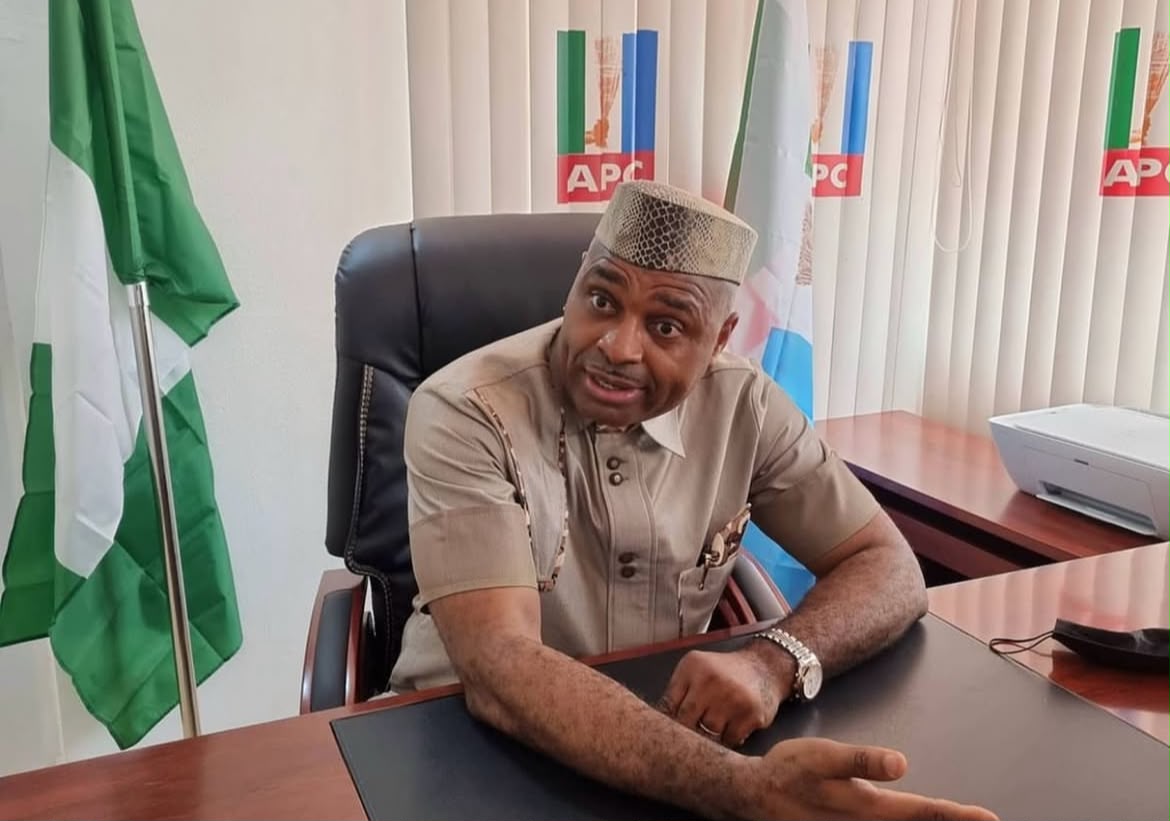
Kenneth Okonkwo, spokesperson for the Atiku Abubakar presidential campaign council, has said the former Vice-President would scrap the Bola Tinubu administration’s floating exchange-rate policy if elected president in 2027.
Okonkwo made the statement on Monday during an appearance on Democracy Today, an AIT programme, where he criticised the government’s decision to allow the naira’s value to be largely determined by market forces.
A free-floating exchange rate is a system in which a currency’s value is primarily determined by supply and demand, without significant government intervention.
Okonkwo argued that allowing the naira to operate without sufficient government intervention was irresponsible, insisting that countries must protect the value of their currencies.
“No country in the whole world leaves their currency undefended,” Okonkwo said.
He said the value of a country’s currency was central to its economic stability, comparing an unprotected currency to leaving citizens’ security in the hands of criminals or private security agencies.
“What did you call macroeconomic policy? The whole idea of macroeconomic policy is to defend your currency, because once your currency becomes like dust, nobody is going to desire it,” he said.
“Have you forgotten when the naira was climbing almost to N2,000 per dollar? This government remembered to start defending the naira. Why wait for it to crumble?
“What makes your naira strong? When your export is more than your import, your currency starts gaining power
The Atiku campaign spokesperson also accused the Tinubu administration of encouraging imports, pointing to a N34 billion import waiver.
However, when confronted with recent National Bureau of Statistics (NBS) figures showing that Nigeria’s exports had exceeded imports, Okonkwo argued that the development did not represent enough progress.
“Not that you made any appreciable increase. It cannot be progress because life is still unaffordable,” he said.
With the 2027 presidential election approaching, opposition candidates have continued to outline their economic policies and explain how they intend to address the country’s challenges.
Atiku’s position differs from that of Peter Obi, the presidential candidate of the Nigeria Democratic Congress (NDC), who has said he would retain the floating exchange-rate system if elected.
Obi has said he would not focus on defending the naira, but would instead increase productivity and strengthen the economy so that the currency becomes more valuable to Nigerians.
The Central Bank of Nigeria (CBN) introduced the “willing buyer, willing seller” model on June 14, 2023, as part of a major foreign exchange reform that brought together the country’s multiple FX market segments.
The reform, introduced shortly after Tinubu assumed office, was designed to give supply and demand a greater role in determining the naira’s value while improving transparency and price discovery in the foreign exchange market.
The CBN later said the policy was aimed at eliminating distortions created by multiple exchange-rate windows and strengthening investor confidence in the FX market.
Following the reform, the naira recorded a sharp depreciation. CBN data showed that the exchange rate at the Investors’ and Exporters’ window closed at N770.88 per dollar at the end of June 2023, compared with N460 per dollar at the end of December 2022.
Source: AIT