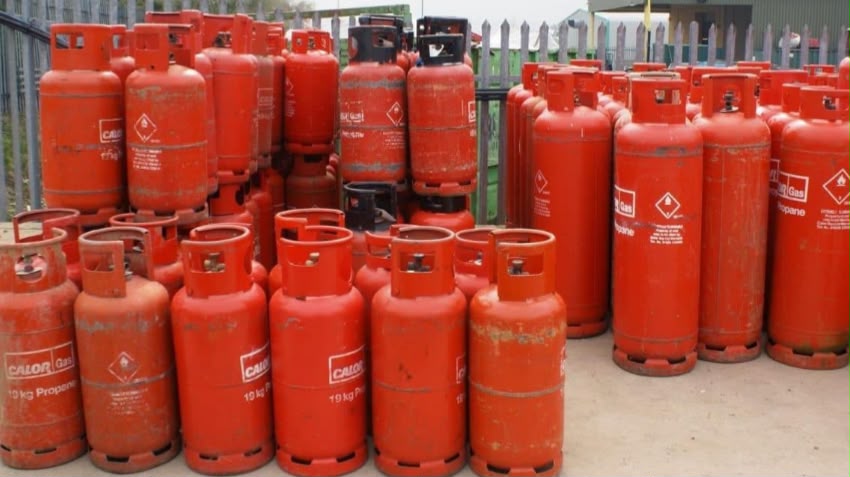
Nigerians are facing another increase in the cost of cooking gas, with the price of Liquefied Petroleum Gas (LPG) rising to about ₦1,300 per kilogram as of September 16, 2026.
The latest figure represents an 8.3 percent increase from the ₦1,200 per kilogram recorded in August, adding further pressure on households and businesses that depend on LPG for cooking and other activities.
Checks across Lagos showed that prices vary from one gas plant to another. Accredited outlets were selling LPG at around ₦1,300 per kilogram, while some smaller plants were charging between ₦1,350 and ₦1,400, depending on their location.
Gas dealers also said consumers in other parts of the country are facing even higher prices.
The National President of the Nigerian Association of Liquefied Petroleum Gas Marketers (NALPGAM) said the latest increase cannot be blamed on a single factor.
According to the association, developments in the international energy market, including geopolitical tensions involving the United States and Iran, have contributed to increased volatility in energy prices.
“For Nigeria, the effect is transmitted through several channels: international energy prices, shipping and insurance costs, foreign-exchange exposure, domestic logistics and, most importantly for LPG, the availability and cost of supply into the domestic market.
“The immediate consequence is that the cost of LPG has increased along the entire supply chain—from the depot to the LPG plant and ultimately to the consumer.
‘‘When the replacement cost of LPG rises at the depot, the marketer cannot continue selling at the previous price without making a loss.
‘‘The cost of transportation, loading, financing, plant operations, personnel, maintenance and other logistics must also be recovered before the product reaches the consumer.”
The association noted that the impact is particularly significant because cooking gas has become an important household and business fuel rather than a luxury.
Millions of families, restaurants, bakeries, food vendors, schools, hotels and other businesses now rely on LPG, meaning that higher gas prices can affect more than just the cost of refilling a cylinder.
Businesses using LPG may have to spend more on their operations, with those additional expenses potentially reflected in the prices of food and other goods and services.
“There is also a social dimension. When LPG becomes unaffordable, some households are forced to reduce consumption or revert to alternative fuels such as firewood and charcoal. That undermines Nigeria’s clean-cooking objectives and can have serious environmental and public-health consequences.
“We have seen the consequences of supply constraints before. In June 2026, the Nigeria Mid and Down Petroleum Regulatory Agency (NMDPRA) reported a year-to-date LPG supply deficit of about 91,966 metric tonnes, demonstrating that the domestic market has been experiencing structural supply challenges in addition to the international price pressures”.
The association further explained that there is no single fixed depot price for LPG, as the cost can differ depending on the depot, supply availability, location, transportation expenses and agreements between suppliers and buyers.
“As at September 16, 2026 publicly available market information indicates that 20 metric tonnes, MT, transactions in the Lagos market are broadly around N20million–N22.7 million range, depending on the depot and supplier. For example, current market listings show approximately N22 million at Ardova, N22.7 million at Stockgap and about N20 million at Panocean. Another current market listing at some places in Lagos 20MT prices stood around N19.9 million–N20.3 million, illustrating the considerable variation between suppliers and transactions”.
With LPG prices continuing to fluctuate, households and businesses that depend on cooking gas are likely to remain sensitive to changes in supply costs and developments in the wider energy market.