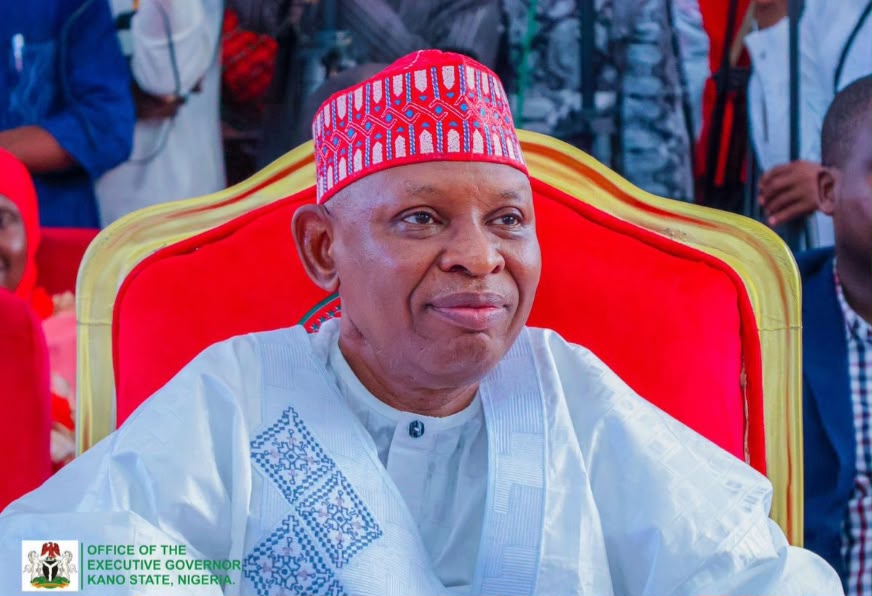
Kano State Governor Abba Yusuf has presented a N1.201 trillion supplementary and amendment budget for the 2026 fiscal year to the state House of Assembly for consideration and approval.
The proposal was contained in a letter read by the Speaker of the House, Isma’il Falgore, during plenary on Tuesday.
Yusuf explained that the supplementary budget became necessary following a shortfall in the state’s expected revenue from the Federation Account.
The governor attributed part of the revenue gap to the implementation of the new tax law, noting that Kano had initially projected higher inflows from the Federation Account, particularly from Value Added Tax (VAT).
He also said some expected receipts, including signature bonuses, exchange-rate differences and NNPC refunds, remained with the Federal Government.
Under the proposal, Kano plans to finance the N1.201 trillion supplementary budget through three major sources: an opening balance of N45 billion, recurrent revenue of N753.440 billion and capital receipts of N402.821 billion.
Together, the three sources are projected to provide the full N1.201 trillion required for the proposed appropriation.
How Kano Plans to Spend the Money
The governor proposed N390.314 billion for recurrent expenditure and N810.946 billion for capital projects.
The recurrent component includes N169.961 billion for personnel costs, N195.207 billion for overhead expenses and N24.616 billion for debt servicing.
Yusuf also disclosed that the supplementary budget contains a new partnership framework between the state government and local governments aimed at promoting economic growth and development.
According to him, the arrangement will allow revenues jointly accruing to the state and local governments to be properly captured and used to finance selected development projects.
The governor urged lawmakers to consider and approve the proposal without delay, citing the provisions of Section 122(a) and (b) of the 1999 Constitution, as amended.
Speaking during plenary, Speaker Falgore confirmed that the House had received the governor’s supplementary budget proposal for legislative consideration.
He then sought the permission of lawmakers to refer the proposal to the Rules and Business Committee for further processing.
The House subsequently approved the referral, directing the committee to examine the proposal and take the necessary legislative action.
The supplementary budget will now undergo the required legislative process before the Assembly decides on its approval.