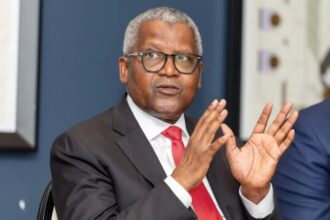

Africa’s richest man, Aliko Dangote, is set to begin construction of a $16 billion oil refinery in Kenya, describing the project as an important step towards reducing Africa’s dependence on imported fuel.
The groundbreaking ceremony for the mega-refinery is scheduled to take place on Wednesday in Lamu, a coastal region where Kenya is also developing a major port.
The planned facility is expected to have a refining capacity of 700,000 barrels per day, which would make it larger than any existing refinery in Europe.
Dangote, who owns Africa’s largest oil refinery in Nigeria, said the Kenyan project is designed to contribute to the continent’s long-term energy security as demand for fuel continues to grow.
The refinery will also feature a 1,000-megawatt power plant, with about half of the electricity expected to be supplied to Kenya’s national grid.
Land Dispute, Environmental Concerns
The project has faced opposition from a local community over land rights, resulting in a legal challenge.
A court ruling published on Monday allowed the groundbreaking ceremony to proceed, although the legal dispute itself remains ongoing.
Environmental organisations, including Greenpeace, have also raised concerns about the potential environmental impact of the development.
Dangote, however, dismissed the challenges surrounding the project.
“There’s actually no problem with these sort of cases… There are people who don’t want the development of Africa,” he said.
Tanzania and Mombasa had previously been considered as possible locations for the refinery, but Dangote said Lamu offered better conditions for the project.
He cited its cleaner water, solid land and deep-sea location as some of the reasons for choosing the site.
Dangote Targets African Fuel Self-Sufficiency
Dangote said the refinery is part of a broader vision to reduce Africa’s dependence on imported petroleum products and foreign expertise.
He predicted that most African countries could become self-sufficient in fuel production by 2030 if more refining capacity is developed within the continent.
“By 2030, the majority of African countries will be self-sufficient (in fuel). It does not matter where it is refined, but it should be in the African continent, on the soil of Africa,” Dangote said.
He also argued that future major projects in Africa should increasingly involve the development of local expertise rather than relying heavily on foreign contractors.
“If anybody is doing a big project going forward, you don’t have to go and bring Chinese or Indians and build it for you,” he said.
Where Will the Crude Come From?
Questions have been raised about how the refinery will secure enough crude oil, particularly because several East African countries are only beginning to develop their emerging oil reserves.
Dangote said the facility would source crude from different regions, including the Middle East and the United States.
He added that the refinery would also be positioned to process crude from countries such as Kenya, Tanzania and Mozambique as their oil production expands.
Dangote said Africa cannot afford to wait until its population and energy needs grow further before addressing its fuel supply challenges.
“Are we going to wait until (Africa has) one quarter of the world’s population before we start thinking of what to do? We have to start addressing that issue today,” he said.
He also pointed to concerns surrounding possible restrictions on fuel exports by major producing countries as another reason for Africa to develop greater refining capacity locally.
Despite its planned 700,000-barrel-per-day capacity, Dangote said the refinery would represent only a fraction of the future fuel demand expected across Africa.
“When you talk about 700,000 barrels per day, it’s actually small. For the region, it’s a big refinery, it’s a big investment, but it is a start-up,” he said.
Source: AFP.