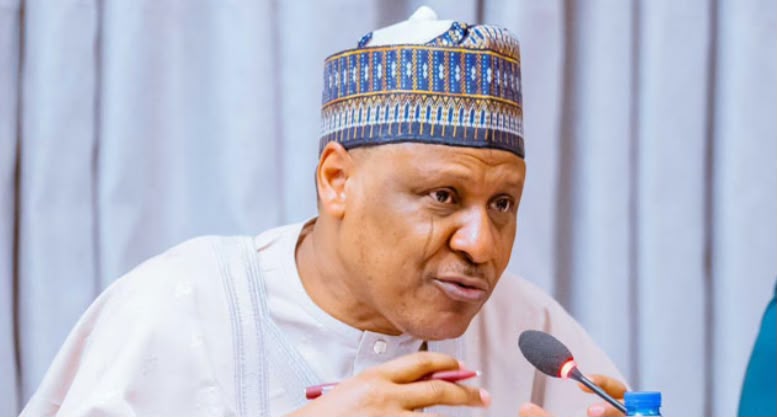
Minister of Information and National Orientation, Mohammed Idris, has warned that the growing use of Artificial Intelligence (AI) to create and spread fake photographs, videos, audio recordings and documents poses a serious challenge to democracy and public trust.
Idris spoke through the Managing Director of the News Agency of Nigeria, Ali M. Ali, at the 22nd Annual All Nigeria Editors Conference in Enugu on Thursday. He said the danger goes beyond people believing false information, as widespread AI-generated content could eventually make the public lose trust even in genuine information. (Vanguard News)
The two-day conference, organised by the Nigerian Guild of Editors, is themed “The Ballot, The Media, and the Task of Keeping Democracy Alive,” with the sub-theme “When Lies Look Real: Detecting and Debunking AI Misinformation Before, During, and After Elections.”
With the 2027 general elections approaching, Idris stressed that voters would need access to reliable information to make informed choices.
He said editors occupy an important position in shaping public discussion because they determine which issues receive attention, what enters public conversation and how those issues are presented.
According to the minister, AI has made it increasingly difficult to distinguish between genuine and fabricated content.
“Artificial intelligence has made it possible to create convincing photographs, videos, audio recordings and documents that may appear genuine when they are not.”
He gave examples of how false statements could be produced using the voice of public officials, fabricated videos could spread within minutes and old photographs could be presented as if they were recent events.
Idris urged media organisations to make verification a permanent part of newsroom operations rather than something done only after a story has been published.
He advised journalists to establish who made a claim, what evidence supports it, when a photograph was taken, whether a video is original and whether the source has been independently verified.
He also urged journalists to ensure that headlines accurately reflect the stories beneath them and to clearly distinguish between facts, allegations and opinions.
Idris Speaks on Government Performance
The minister said the media should apply the same level of scrutiny to government performance as it does to other public institutions.
He highlighted reforms carried out under President Bola Tinubu’s Renewed Hope agenda, including the removal of petroleum subsidy and changes to the foreign exchange system.
Idris also pointed to reported improvements in revenue mobilisation, increased funds available to state and local governments, stronger investor confidence and increased investments in different sectors.
On infrastructure, he said the Federal Government reported that more than 2,700 kilometres of highways and major roads were under construction, reconstruction or rehabilitation as of May 2024.
He also mentioned interventions in education and human capital development, including increased access to higher education financing through the Nigerian Education Loan Fund (NELFUND), alongside programmes focused on youths, small businesses, digital skills and entrepreneurship.
However, Idris said the media should neither exaggerate government achievements nor overlook them.
“A responsible press should neither exaggerate achievements nor ignore them. It should examine them, verify them, ask the difficult questions, and allow citizens to understand both the progress and the shortcomings. This is how public trust is built,” he said.
Minister Urges Media to Examine Electoral Reforms
Speaking on electoral reforms, Idris noted that President Tinubu signed amendments to the 2022 Electoral Act into law in February 2026, with the State House confirming the signing on February 19.
He said the changes to the electoral framework deserved careful public examination regardless of political affiliation.
According to him, journalists should explain what has changed, what remains unchanged and what the amendments mean for political parties and the electoral process.
Idris also cautioned journalists against becoming participants in political contests.
“The job of a professional journalist is not to amplify every claim simply because it is politically attractive. The job is to establish what is true, provide context, and allow citizens to make their own judgments,” he said.
He urged editors and journalists to ensure that AI and other technologies do not become tools for deceiving voters ahead of the 2027 elections.
“The ballot belongs to the people. The responsibility of the media is to help ensure that information surrounding that ballot is worthy of a democracy,” Idris said.