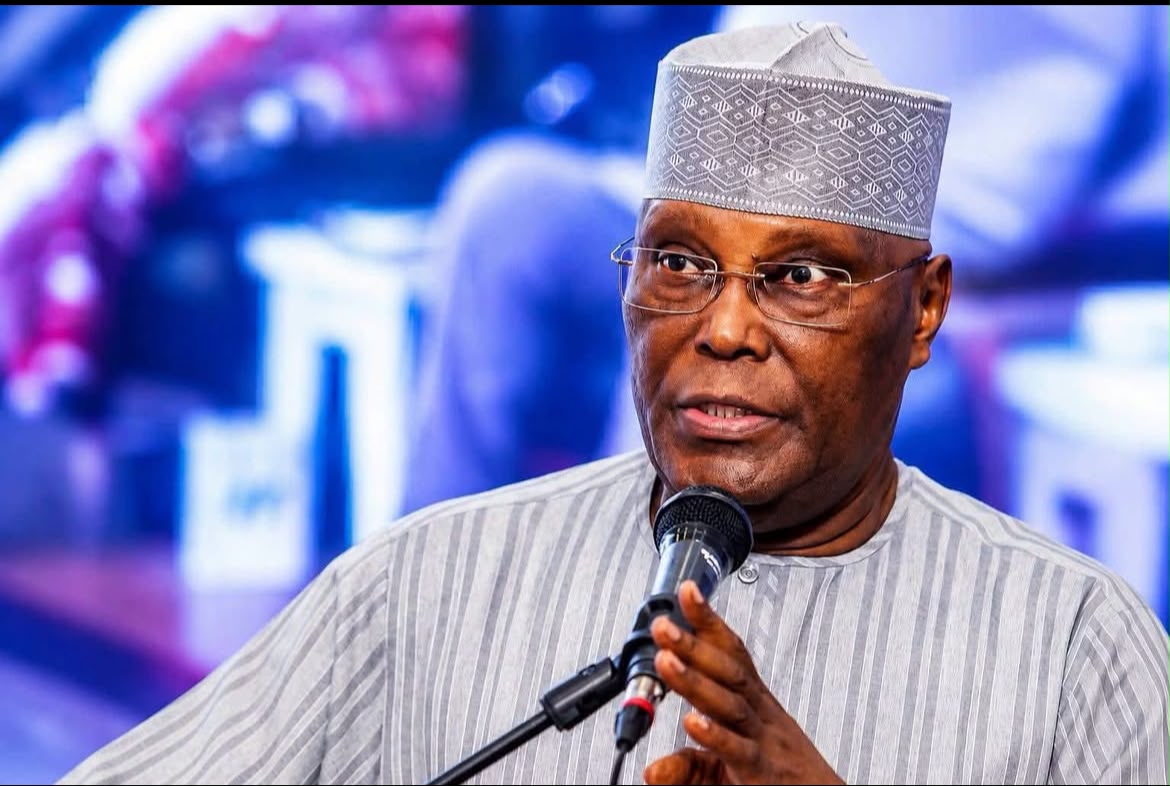
Former Vice-President and presidential candidate of the African Democratic Congress (ADC), Atiku Abubakar, has argued that the rising allocations from the Federal Account Allocation Committee (FAAC) have not translated into improved living standards for Nigerians.
Atiku, in a statement issued on Wednesday by his media aide, Phrank Shaibu, described the increase in FAAC disbursements as an “illusion”, saying the figures must be considered alongside naira depreciation, high inflation, declining purchasing power and rising government debt.
According to figures cited by Atiku from Agora Policy, FAAC disbursements increased from N4.43 trillion in the first half of 2021 to N18.72 trillion in the corresponding period of 2026, representing an increase of about 322 per cent.
The figures showed that allocations rose from N5.53 trillion in H1 2022 to N6.76 trillion in H1 2023, N13.46 trillion in H1 2024, N17.43 trillion in H1 2025 and N18.72 trillion in H1 2026.
However, Atiku said the larger naira figures should not be interpreted as evidence that Nigerians or the country had become wealthier.
“The arithmetic is brutal. In 2019, FAAC distribution was approximately N7.85 trillion, worth about $25.6 billion at the prevailing exchange rate.
By 2025, FAAC had risen on paper to approximately N21.9 trillion, yet its dollar value had fallen to roughly $14.6 billion.
“So while government parades almost three times as many naira, the underlying dollar value is more than 40 per cent lower,” he said.
The ADC presidential candidate described the situation as “money illusion”, arguing that inflation and the weakening naira had reduced the real value of the higher allocations.
“That is not an economic miracle. That is money illusion,” he said.
“You cannot batter the currency, allow inflation to ravage purchasing power and then wave bigger naira figures before Nigerians as evidence that the country has become richer. Bigger numbers do not cancel smaller value.”
Minimum wage comparison
Atiku said the effect of the declining purchasing power could also be seen in the value of workers’ wages, using the national minimum wage as an example.
He said the N30,000 minimum wage was worth about $83 in 2019 and approximately $65 by May 2023, while the current N70,000 minimum wage was worth about $53 at an exchange rate of N1,320 to the dollar.
“Think about that: the number written on the worker’s payslip has risen from N30,000 to N70,000, but its dollar value has fallen from about $83 to about $53,” Atiku said.
“That is Tinubu’s money illusion in its simplest form. The figure in your hand is bigger, but the value in your pocket is smaller.”
The former vice-president questioned why increased FAAC allocations had not produced noticeable improvements in the daily lives of Nigerians.
“If FAAC is truly booming, then where is the boom?” he asked.
“Where is it in the price of food? Where is it in transport? Where is it in electricity, healthcare, housing and jobs? Where is it in the purchasing power of salaries?”
Government spending questioned
Atiku also questioned why states continued to accumulate debt despite what he described as unprecedented FAAC allocations.
He called for greater scrutiny of government spending, including tax concessions, import waivers, revenue exemptions, duplicated projects and abandoned projects.
“You cannot defend concessions for the powerful, tolerate waste within government and then suddenly become an apostle of fiscal discipline when ordinary Nigerians ask for relief from unbearable living costs,” he said.
“Fiscal responsibility that operates only against the poor is not reform. It is cruelty dressed up in economic grammar.”
According to Atiku, Nigerians judge the economy through the prices of food, transportation, school fees, medicines and other essential goods rather than through government statistics and FAAC communiqués.
“Nigerians do not eat FAAC figures. They do not pay school fees with percentages. They do not buy medicine with press conferences, and they do not enter buses with government charts,” he said.
“They live in the real economy, and the real economy is measured by what their money can buy.”
Atiku maintained that higher FAAC allocations should not automatically be regarded as evidence of prosperity while Nigerians continue to face weak purchasing power and government liabilities remain high.
Source: Statement by Atiku Abubakar’s Media Office