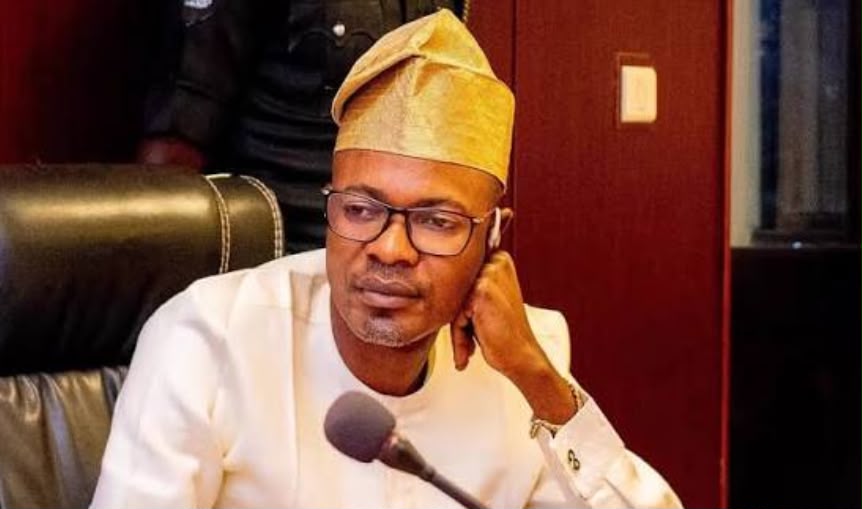
The embattled Director-General of the controversial Presidential Foreign Investment Promotion Council (PFIPC), Adeniyi Matthew Adeyemi, has appealed to the House of Representatives to allow him appear before its investigative panel, insisting that any report on the controversy would be incomplete if he is denied the opportunity to testify.
Adeyemi, who is currently in custody, made the appeal through a statement issued by his legal team led by Festus Akhigbe, following the Inspector-General of Police’s disclosure that he could not be presented before the House committee without court clearance.
According to the statement, the legal team maintained that their client is being unfairly portrayed as the sole architect of the PFIPC, arguing that the council’s existence and operations were backed by actions taken by several government institutions.
The lawyers alleged that Adeyemi is being made a scapegoat for wider institutional failures within the Federal Government.
“Our client is being made a scapegoat to cover up deep-seated institutional lapses, procedural breakdowns and internal approvals within the government structure,” the statement said.
The legal team also argued that it would have been impossible for one individual to create and operate a government agency without the involvement of relevant institutions.
According to them, the Office of the Secretary to the Government of the Federation (SGF) acknowledged official documents relating to the council and facilitated office allocation within the Federal Secretariat.
They further claimed that the Office of the Accountant-General of the Federation (OAGF), the Central Bank of Nigeria (CBN) and the Office of the Head of the Civil Service of the Federation (OHCSF) acted on official documentation by issuing administrative codes, approving recruitment and posting civil servants to the council.
The lawyers also alleged that the Budget Office and the National Assembly processed documents that resulted in a ₦1.302 billion allocation for the PFIPC in the 2026 Appropriation Act, while several security agencies and anti-graft institutions participated in programmes organised by the council.
“It was an administrative impossibility for an unassisted individual to mislead multiple agencies of the Federal Government,” the legal team stated.
Adeyemi’s lawyers urged the House of Representatives to grant the necessary administrative clearance to enable him appear before the investigative panel, stressing that fairness demands hearing directly from the person at the centre of the controversy.
“Any investigative outcome or final legislative report produced without affording our client a direct hearing would be fundamentally flawed, incomplete and a breach of the constitutional right to fair hearing,” they added.
The PFIPC controversy began after the Presidency publicly disowned the council, stating that it was never established through any law, executive order or presidential directive despite operating publicly as a Federal Government agency.
The Presidency subsequently directed the Independent Corrupt Practices and Other Related Offences Commission (ICPC) to investigate the council’s establishment, funding and operations.
The ongoing investigations by the House of Representatives and the ICPC are expected to determine how the PFIPC secured official recognition, received budgetary allocations and operated within the federal bureaucracy despite later being declared unauthorised.