
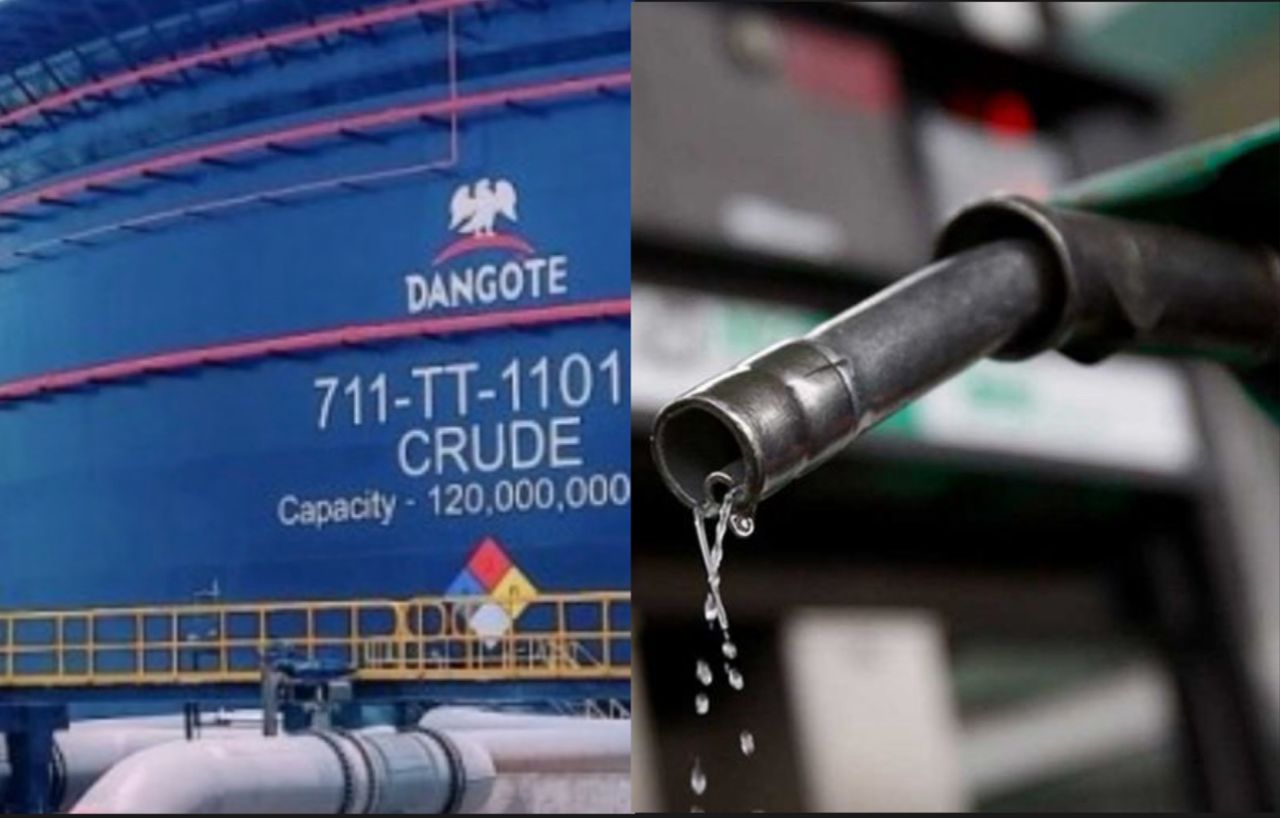
Motorists may soon get some relief at the pumps as the Dangote Petroleum Refinery has reduced its ex-depot (gantry) price of Premium Motor Spirit (PMS), popularly known as petrol.
The refinery lowered the price from ₦1,275 per litre to ₦1,250 per litre, representing a ₦25 reduction as global crude oil prices continue to decline.
The latest adjustment comes as competition heats up among players in Nigeria’s deregulated petroleum sector, where prices are increasingly influenced by international market conditions.
A refinery official who confirmed the development explained that the decision was driven by the continued drop in crude oil prices, which remains the refinery’s primary raw material.
According to the official, price changes are expected in a deregulated market, adding that the company will continue to review and adjust prices based on prevailing market realities.
Despite the reduction at the depot level, many Nigerians may not immediately feel the impact, as checks indicate that several filling stations across the country are still selling petrol above ₦1,350 per litre, depending on location and marketer.
Industry observers say the adjustment could eventually trigger further price competition among fuel marketers if the decline in global oil prices is sustained.
Meanwhile, Dangote Refinery has continued to position itself as a major player in Nigeria’s energy sector and economic recovery efforts.
The company recently welcomed Nigeria’s sovereign credit rating upgrade by S&P Global Ratings, which raised the country’s long-term credit rating from “B-” to “B.”
According to the refinery, the rating agency cited stronger economic growth, improved external reserves, rising oil production, and increased domestic refining capacity as key reasons behind the upgrade.
Dangote Refinery noted that its 650,000 barrels-per-day facility was specifically highlighted as an important factor helping to improve Nigeria’s balance of payments and reduce dependence on imported petroleum products.
With the refinery reportedly operating close to full capacity, analysts believe further stability in local fuel supply could help strengthen the country’s energy security and support broader economic growth.