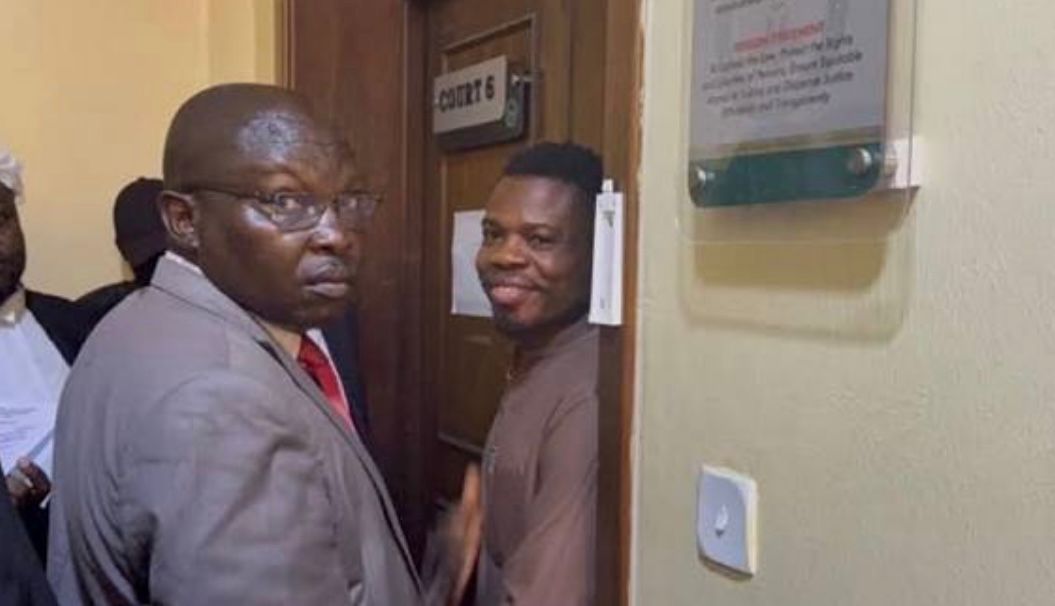
The Federal High Court in Abuja has granted ₦5 million bail to activist and social media commentator, Justice Chidiebere, popularly known as “Justice Crack.”
Justice Joyce Abdulmalik, while ruling on the bail application, ordered that the defendant must provide one surety in the same amount.
The court stated that the surety must have lived within the court’s jurisdiction for at least four years and must provide proof of residence through either a tenancy agreement or certificate of occupancy.
The judge also directed that the surety must be a federal civil servant not below Grade Level 15, submit evidence of three months’ salary, provide a letter from their department confirming employment status, and show proof of pensionable service.
In addition, the surety is expected to file an affidavit of means and submit a recent passport photograph, while Justice Crack must deposit his international passport with the court.
During the hearing, prosecution counsel told the court they were prepared to begin trial.
The first prosecution witness, DSS operative Uruntu Douglas, explained that he became involved in the case after being transferred from the Nigerian Army Intelligence Corps to the DSS for investigation duties.
According to him, Justice Crack voluntarily gave a statement in the presence of his lawyers during interrogation.
The witness alleged that some soldiers forwarded images to the activist, who then reportedly created videos from the materials and shared them online without verifying their authenticity with military authorities.
He further told the court that forensic investigators extracted several items from the defendant’s phone, including videos allegedly uploaded online, chats with certain soldiers, conversations with a man described as his godfather regarding protests, and records from his social media accounts.
Douglas added that after the digital examination was completed, a certificate of compliance was signed by a senior officer.
Defence lawyer Sam Amadi, however, informed the court that the defence team had not received copies of the investigation report and other documents the prosecution intended to present.
The prosecution admitted the omission was an oversight and apologised before the court.
Justice Abdulmalik later admitted the DSS investigation report as evidence. The court also accepted an iPhone allegedly recovered from the defendant, a flash drive said to contain social media videos, extracted conversations, and a certificate of compliance.
The defence opposed the admission of the flash drive, arguing that its contents were neither properly described nor played in open court.
The case was adjourned until May 25 for continuation of trial, while the prosecution’s first witness remains under examination.