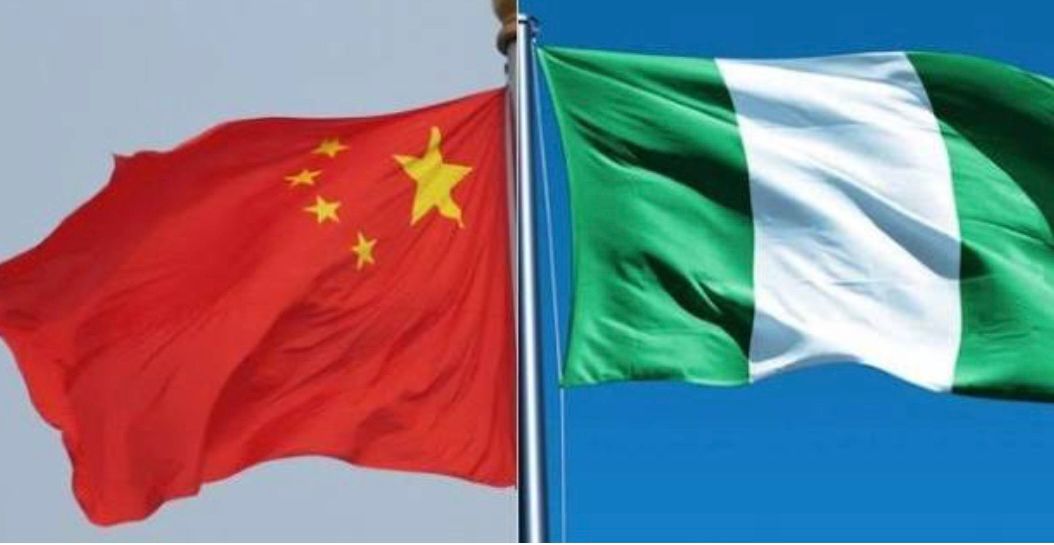
China has reaffirmed Nigeria’s growing strategic importance in its global economic and development agenda, officially describing the country as its largest engineering contracting destination in Africa and one of its most important trade and investment partners on the continent.
The declaration was made in Beijing during the opening ceremony of the Seminar for Renowned Nigerian Commentators, organised by the Institute of International Studies and Advanced Training under the China International Communications Group and sponsored by China’s Ministry of Commerce.
The high-level engagement brought together Nigerian journalists, National Assembly officials, foreign affairs representatives, and communication experts in what organisers described as an initiative designed to strengthen bilateral understanding, cultural exchange, and long-term cooperation between both nations.
Speaking during the opening session, Deputy Director of the China International Communications Group, Li Hengtian, said Nigeria occupies a critical position in China’s African engagement strategy due to its economic potential, expanding infrastructure market, and increasing influence across the continent.
According to him, Nigeria currently stands as China’s largest engineering contracting market in Africa, while also ranking as China’s second-largest export destination and third-largest trading partner on the continent.
Li explained that the relationship between China and Nigeria has continued to expand steadily over the years, transforming from diplomatic cooperation into a broader strategic partnership covering infrastructure, trade, transportation, education, technology, and investment.
He stated that the seminar was organised to deepen communication between both countries through storytelling, media collaboration, and people-to-people engagement, stressing that stronger narratives and cultural understanding are now becoming as important as economic cooperation in modern international relations.
Quoting renowned Nigerian author Chimamanda Ngozi Adichie, Li emphasised that stories remain one of the most powerful tools for building human connection, understanding, and cooperation between nations.
According to him, the goal of the seminar was not only to tell China’s story to Nigerians but also to listen to Nigeria’s experiences and jointly create a new chapter of friendship and development between both countries.
Li further described China and Nigeria as “civilisational partners” whose diplomatic relationship dates back to 1971, noting that over five decades of cooperation have helped strengthen mutual trust and economic collaboration.
Using symbolic imagery, he compared the relationship between both countries to two great rivers flowing from different regions but eventually converging into a shared future built on cooperation and mutual development.
The Chinese official highlighted several major infrastructure projects as visible evidence of deepening China-Nigeria cooperation, especially under the Belt and Road Initiative and the Forum on China-Africa Cooperation framework.
He pointed to projects such as the Lagos Light Rail, Abuja Rail Mass Transit, Lekki Deep Sea Port, and the Zungeru Hydropower Station as examples of large-scale infrastructure partnerships shaping Nigeria’s economic transformation.
According to Li, these projects represent more than physical structures, as they symbolise long-term economic cooperation, industrial growth, and shared development goals between China and Nigeria.
He added that China-Nigeria cooperation has become one of the most significant components of China’s broader engagement strategy in Africa, especially in sectors linked to transportation, energy, logistics, and industrial development.
The Chinese official also noted the increasing exchange between citizens of both countries, particularly among young Nigerians studying in Chinese institutions and Chinese professionals working on development projects across Nigeria.
He explained that educational partnerships and cultural exchanges are helping strengthen mutual understanding while creating opportunities for future cooperation in business, diplomacy, and technology.
Li stressed the growing importance of the media in shaping public perception and breaking stereotypes between countries, warning against what he described as the dangers of relying on “single narratives” in global communication.
Again referencing Adichie’s famous views on storytelling, he said journalists have a responsibility to present balanced and diverse perspectives capable of reflecting the true complexity of societies and international partnerships.
He described media practitioners as “bridges of understanding” between nations and called for stronger collaboration between Nigerian and Chinese journalists to promote accurate reporting, cultural understanding, and constructive engagement.
According to him, closer cooperation between media professionals in both countries would help tell the real story of China-Nigeria relations while countering misinformation and simplistic narratives.
Li further revealed that the China International Communications Group currently publishes more than 4,000 books annually in over 40 languages and produces dozens of multilingual publications aimed at strengthening international communication and cultural understanding globally.
A representative of the Nigerian delegation, Olunkwa Felix, commended the organisers for creating what he described as a valuable platform for professional learning, knowledge exchange, and international cooperation.
He stated that the seminar would help participants gain deeper insight into China’s development model while also promoting stronger engagement between both countries in areas such as communication, governance, trade, and diplomacy.
According to him, the initiative demonstrates the growing commitment of both nations to building stronger bilateral ties based on mutual respect, collaboration, and shared development goals.
China’s renewed emphasis on Nigeria’s strategic importance comes at a time when both countries are expanding economic cooperation across multiple sectors, including infrastructure financing, rail transportation, power generation, manufacturing, technology transfer, and industrial development.
Analysts believe Nigeria’s large population, expanding economy, and growing infrastructure needs continue to position the country as one of China’s most important long-term partners in Africa.