
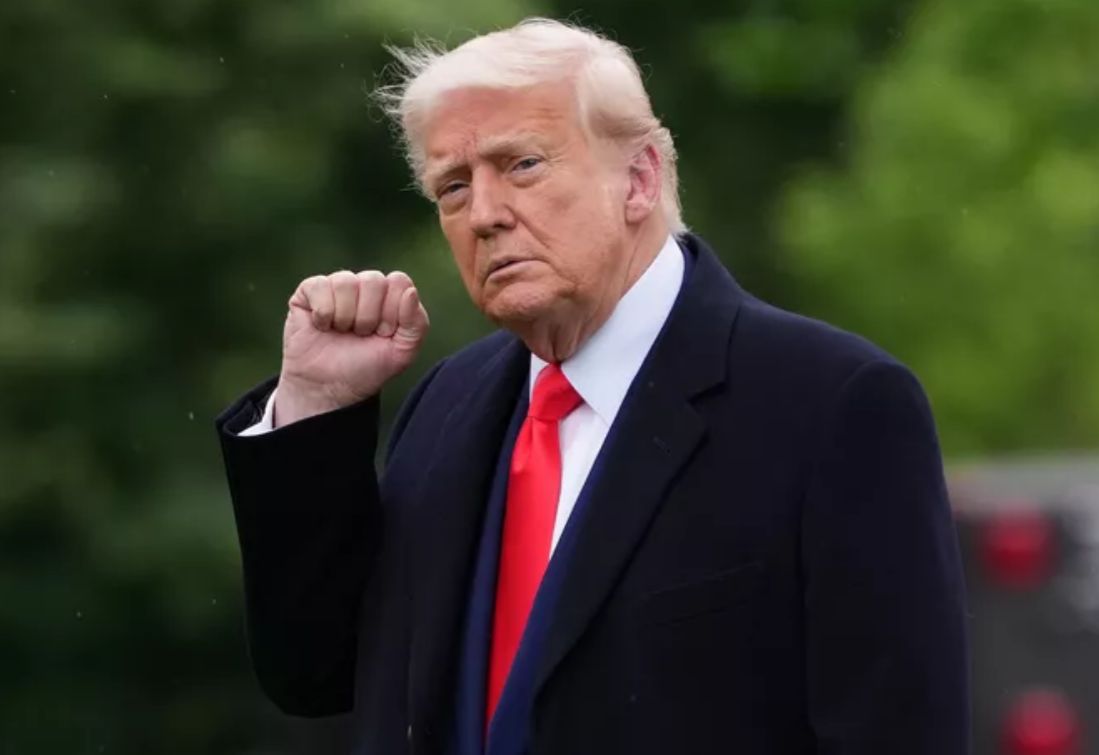
US President Donald Trump has announced a three-day ceasefire between Russia and Ukraine beginning on Saturday, expressing hope that the temporary halt in fighting could become the first step toward a broader agreement to end the war.
The announcement came as diplomatic efforts to reduce hostilities in the four-year conflict continue to face major obstacles.
According to Trump, the ceasefire will run from May 9 to May 11 and will also include a mutual exchange of prisoners between both countries.
He said Russia and Ukraine had agreed to swap 1,000 prisoners each as part of the arrangement.
Trump disclosed the development in a post on his Truth Social platform, where he said he personally requested the ceasefire.
According to him, both Russian President Vladimir Putin and Ukrainian President Volodymyr Zelensky accepted the proposal.
The US president said he hopes the temporary truce could mark the beginning of a larger diplomatic process capable of bringing an end to what he described as a long, deadly and difficult war.
Ceasefire comes amid Victory Day tensions
Before Trump’s announcement, Russia had already declared a separate unilateral two-day ceasefire to coincide with its annual May 9 Victory Day celebrations marking the Soviet Union’s role in the defeat of Nazi Germany during World War II.
Victory Day remains one of the most significant political and symbolic events in Russia and has become a central part of President Putin’s national narrative.
Ukraine had earlier said it also proposed a temporary halt in hostilities this week, but maintained that Moscow did not respond positively to that offer.
President Zelensky had described the proposal as a test of whether the Kremlin was genuinely interested in creating even a brief humanitarian pause in the fighting.
Kyiv had also repeatedly criticised Moscow’s earlier truce announcement, arguing that it appeared designed mainly to secure the annual military parade in Moscow rather than create meaningful progress toward peace.
Fighting continued before announcement
Despite diplomatic exchanges, military activity continued on Friday before the ceasefire was announced.
Russia and Ukraine traded attacks overnight, further underlining the fragile and uncertain state of the battlefield.
Ukraine’s air force said Russian forces launched 67 drones during the night, the lowest overnight drone count recorded in almost a month.
Even so, President Zelensky said Russian military pressure had not eased.
According to him, despite the declared ceasefire, Russian forces had continued assault operations along parts of the frontline.
He said Ukrainian forces were responding proportionately to ongoing attacks.
On the Russian side, authorities said air defence systems had intercepted more than 400 Ukrainian drones since midnight.
Russian officials added that about 100 of the drones were directed toward Moscow.
The Russian military said its forces were responding symmetrically to what it described as continued Ukrainian attacks.
Casualties and infrastructure damage reported
In the Russian-occupied part of Ukraine’s Kherson region, the Moscow-backed administration said a Ukrainian drone strike killed a 41-year-old man and his 15-year-old daughter.
Ukraine also claimed responsibility for a strike on an oil depot in Russia’s Yaroslavl region, located about 200 kilometres northeast of Moscow.
President Zelensky praised the operation, describing it as part of Ukraine’s continuing military response against strategic Russian targets.
In southern Russia, authorities temporarily shut down 13 airports after a Ukrainian drone reportedly struck an air navigation facility in Rostov-on-Don.
Russia’s transport ministry later said partial flight operations had resumed.
The latest incident prompted President Putin to convene a meeting of Russia’s security council.
According to the Kremlin, Putin described the strike as an act of terrorism that could have endangered civilian aviation.
Kyiv dismisses Russian threats
In the days leading up to Victory Day, Russia warned that any disruption of the annual parade in Moscow could trigger a major retaliatory strike on central Kyiv.
Russian authorities also reportedly urged foreign diplomats to leave the Ukrainian capital ahead of the commemorations.
However, in Kyiv, many residents appeared unmoved by the warnings.
Some residents told reporters that the threats were not new and had become part of everyday life after years of war.
A Ukrainian lawmaker, speaking anonymously, also said there had been no major new security instructions issued by authorities as of Friday.
Ukrainian officials told reporters there were no immediate additional security measures beyond existing wartime protocols.
Prisoner exchange seen as rare breakthrough
One of the notable parts of the ceasefire arrangement is the agreement to exchange 1,000 prisoners from each side.
The proposed swap is being viewed as one of the largest prisoner exchanges since the war began in February 2022.
Analysts say that although temporary, the arrangement could provide a rare opening for confidence-building measures between both governments.
Humanitarian groups have also long pushed for broader prisoner exchanges and civilian relief arrangements as part of any ceasefire framework.
Peace efforts still face major uncertainty
Despite the latest announcement, broader negotiations aimed at ending Europe’s largest military conflict since World War II have made limited progress.
Trump had previously promised he would quickly bring an end to the war, but diplomatic efforts have repeatedly struggled against deep mistrust, battlefield escalation and competing strategic demands from both sides.
The conflict, which began after Russia’s full-scale invasion of Ukraine in February 2022, has claimed hundreds of thousands of military casualties and tens of thousands of civilian lives, most of them in Ukraine.
The war has also caused widespread destruction of infrastructure, large-scale displacement and severe economic disruption across the region.
Victory Day parade expected without heavy military display
This year’s May 9 Victory Day celebrations in Moscow are also expected to look different.
For the first time in nearly two decades, major military hardware is not expected to feature prominently in the parade.
Reports also indicate that only a limited number of foreign dignitaries are expected to attend.
Observers say the absence of large-scale military displays reflects the pressures created by the ongoing war and security concerns surrounding the event.
For now, international attention remains focused on whether the three-day ceasefire will hold and whether it can create momentum for broader negotiations.
Diplomats and analysts say even a short pause in hostilities could help test the willingness of both Russia and Ukraine to move toward a more durable political settlement.