
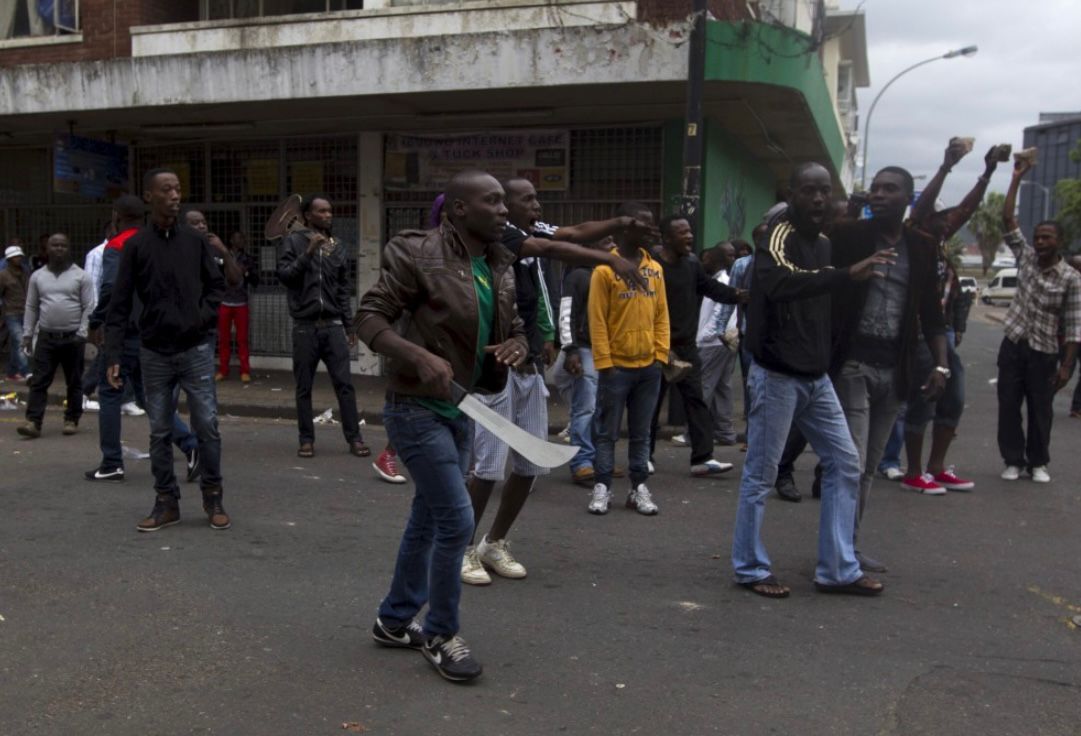
For many Nigerians living in South Africa, daily life has become a difficult struggle marked by fear, uncertainty and survival.
As anti-foreigner protests spread across parts of Johannesburg, Durban and Pretoria in recent weeks, many Nigerians say they now live in constant anxiety—worried not only about protesters on the streets but also about law enforcement officers they accuse of harassment, intimidation and extortion.
Some have abandoned homes, shops and businesses. Others have remained indoors, hoping for an opportunity to return to Nigeria after years of trying to build a life abroad.
Although South African authorities maintain that the unrest has not escalated into widespread violence in many areas, memories of previous xenophobic attacks—which claimed lives and destroyed businesses—continue to haunt foreign nationals, especially Nigerians.
Families forced indoors
For Oriyomi Philip, a Nigerian resident in Rosettenville, Johannesburg South, the recent tension forced his family into hiding for several days.
He explained that he has lived in South Africa for more than a decade, but during the latest wave of protests his family could not go out because of growing fear and “foreigners must go” demonstrations.
Philip said many Nigerians followed an advisory issued by the Nigerian Consulate General, which urged citizens to remain indoors for safety.
According to him, his family stayed inside throughout the period and remained unharmed, but fear spread widely among foreign residents.
Economic survival under pressure
Philip said life has become increasingly difficult for undocumented Nigerians trying to survive in South Africa.
He explained that many foreigners create their own small businesses because formal employment opportunities are limited. He added that many Nigerians are unable to renew passports or secure residence permits because of financial hardship, leaving them vulnerable.
According to him, undocumented migrants now live with constant fear of arrest.
He alleged that some police officers target foreigners, especially those unable to speak local languages. He said in some cases, officers allegedly demand money, and when payments cannot be made, arrests and court appearances may follow.
Philip said the worsening climate of fear pushed him to register for the Nigerian government’s proposed voluntary evacuation programme.
He explained that he registered himself and his family immediately after hearing about the repatriation plan. According to him, many Nigerians want to return home, but after spending 10 to 15 years in South Africa, rebuilding life in Nigeria remains a major concern.
He appealed to the Nigerian government to support returnees financially so they can restart businesses and settle back home.
Business destroyed, survivor left stranded
Another Nigerian, identified simply as David, said the unrest cost him almost everything.
He explained that his business was attacked and that he was chased away because he was Nigerian. According to him, he was not even allowed to collect his pay before fleeing.
David said protesters also destroyed and burnt his vehicle while he narrowly escaped with injuries to his head.
Now staying temporarily in a friend’s apartment, he said he has received no formal support from either government agencies or organised groups.
He added that the only assistance he has received so far came from individuals who volunteered to help.
David also accused the police of worsening the already tense situation.
He explained that many Nigerians are running not only from street protesters but also from security personnel whom they sometimes fear even more.
Like many others, he appealed for evacuation assistance and reintegration support in Nigeria.
Fear becoming psychological
For another Nigerian resident in Johannesburg, Temitayo, the fear has become deeply psychological.
He said his family stayed indoors throughout the protests after receiving security warnings.
According to him, the fear has now become part of everyday life.
He explained that even people with valid documents are often harassed once officers realise they cannot understand local languages. He added that those unable to pay money risk detention.
Temitayo said many Nigerians no longer feel protected and instead believe the actions of some police officers are intensifying tensions.
He appealed for urgent help to enable Nigerians return home safely and rebuild their lives.
Nigerian community says situation not nationwide
Despite the growing concern, leaders of the Nigerian community in South Africa say the unrest has not spread nationwide.
Ekos Akpokabayen, chairman of the Board of Trustees of the Nigeria Union South Africa, said the situation remains worrying but is relatively calmer than previous xenophobic outbreaks.
He explained that South Africa has nine provinces and that the recent protests have mainly affected Gauteng, KwaZulu-Natal and parts of the Eastern Cape.
According to him, many of the demonstrations have been driven by complaints over illegal migration, unemployment and crime.
He said some South Africans believe foreigners are taking jobs and contributing to criminal activity, but stressed that such claims should not be used to judge all foreign nationals.
Akpokabayen said many Nigerians have voluntarily shut their businesses whenever protests approach their communities to avoid attacks.
He noted that the biggest concern is the possibility of escalation, given that previous xenophobic attacks led to killings, looting and destruction of property.
He disclosed that more than 200 Nigerians and their families have already registered with the Nigerian mission for possible return home.
According to him, community leaders have been working closely with the Nigerian Consulate and South African authorities to reduce tensions.
He urged the Nigerian government to deepen diplomatic engagement and provide financial support for stranded citizens.
He also stressed that not everyone can leave immediately, noting that among Nigerians in South Africa are students, professionals, lecturers, doctors and legitimate business owners.
At the same time, he appealed for support for vulnerable citizens who genuinely wish to return but cannot afford travel costs.
Advocacy groups demand urgent intervention
Concern over the safety of Nigerians in South Africa has also drawn reactions from advocacy groups in Nigeria.
Osita Osemene, executive director of Patriotic Citizen Initiatives, said many distressed Nigerians have been reaching out urgently for help.
He explained that the organisation has raised the matter through migration management platforms involving officials of the Ministry of Foreign Affairs and refugee agencies.
While acknowledging reports of evacuation plans, Osemene criticised suggestions that stranded Nigerians might have to finance their own return.
He argued that in emergency situations, citizens should not be expected to raise money for evacuation and insisted that the Nigerian government has a constitutional duty to protect Nigerians wherever they are.
He also warned that the threats facing Nigerians in South Africa are serious and require immediate action.
Federal Government seeks investigation
The Federal Government of Nigeria recently demanded a thorough investigation into the deaths of two Nigerians in South Africa—Nnaemeka Matthew Andrew Ekpeyong and Kelvin Chidiebere Amaramiro—who reportedly died after sustaining injuries while in the custody of South African security agencies.
The Ministry of Foreign Affairs also expressed concern over rising anti-foreigner protests and confirmed that diplomatic engagements with South African authorities are ongoing.
Officials said both countries are working to fast-track an early warning mechanism aimed at preventing xenophobic violence and improving responses to threats against foreign nationals.
“We just want to come home”
For thousands of Nigerians living in South Africa, diplomatic discussions may not immediately ease the fear that now shapes daily life.
Many say they feel exhausted, stranded and uncertain about what comes next.
For many of them, the demand is simple: safety, support and a chance to return home.
“We sleep with fear every day. We just want to come home.”