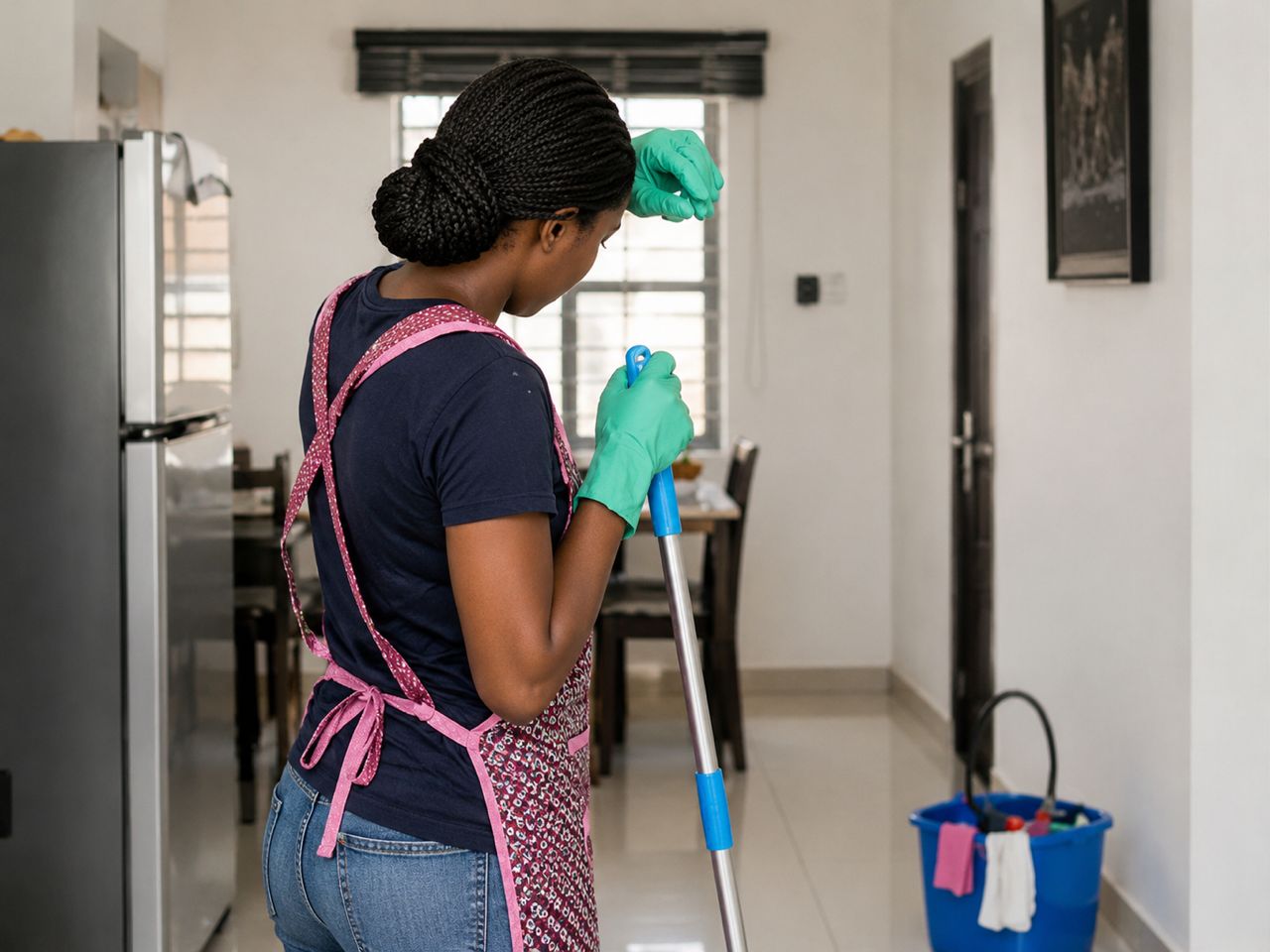
The growing insecurity and worsening economic hardship across Nigeria are steadily changing the long-established culture of employing domestic maids in many households, especially among working-class families, career mothers and dual-income homes.
Across several states, concerns over safety, trust and the rising cost of living are pushing many families to reconsider domestic help. What was once seen as an essential support system for childcare and household management is increasingly becoming a difficult decision for many Nigerian homes.
Findings show that rising reports of theft, child abuse, kidnapping, burglary and other crimes allegedly linked to domestic workers have heightened anxiety among households. As a result, many families have either stopped hiring domestic maids altogether or introduced stricter screening processes before bringing anyone into their homes.
Many respondents said the country’s security challenges have created a climate of suspicion in which both strangers and familiar faces are now approached with caution. A resident explained that because of the prevailing situation, people no longer feel comfortable taking risks, even when they genuinely need domestic support.
Residents noted that the fear has been intensified by frequent reports on social media and in mainstream news of domestic aides accused of stealing from employers, abusing children, poisoning household members or working with criminal gangs. These reports, they said, have weakened public confidence in domestic workers.
Others attributed the problem to the absence of reliable background checks. In many communities, domestic workers are still recruited informally through relatives, village contacts and unregulated agents. This, they said, often makes it difficult to properly verify the identity, history and character of prospective employees.
Some respondents also argued that poor treatment of domestic workers—including overwork, underfeeding and abuse—sometimes creates resentment that may later lead to hostility or retaliation within homes.
Bayelsa: Financial pressure and security fears reduce demand
In Bayelsa State, Mrs Pauline Oyibe said many families around her have stopped employing domestic maids because of financial strain and security concerns.
She explained that she previously relied on relatives for assistance, but as her children grew older and economic conditions worsened, bringing another person into the home became less practical. She also noted that some of her neighbours had to let go of their house helps simply because they could no longer afford the cost of keeping them.
According to her, many parents now prefer keeping their children in schools or crèches until after work hours instead of employing house helps. She added that under normal circumstances, more parents would still hire maids to care for their children, but current realities have made school-based childcare a cheaper and safer alternative.
Mrs Aqua Akpuruku also said that despite rising insecurity, many working-class women and career mothers still depend on domestic maids because they have limited alternatives.
She noted that many parents are deeply worried about who they leave their children with, especially with constant reports of abuse, kidnapping and killings involving both relatives and trusted persons. However, she said many women continue to hire domestic workers because work schedules leave them with little choice.
Mrs Juliet Uyabara stated that many families now pay closer attention to the background and identity of domestic workers before employment.
She explained that households increasingly rely on recommendations, guarantors and trusted agents to verify domestic workers before bringing them into their homes. According to her, while difficult economic realities and demanding work schedules still make domestic help necessary, insecurity has made families much more careful during the hiring process.
Plateau: Residents express strong opposition
In Plateau State, several residents of Jos South Local Government Area expressed strong reservations about hiring domestic maids.
An elder, Edwin Oji, who lives in K-Vom, said he does not support employing domestic workers because even trusted aides can later turn against their employers.
He pointed out that past experiences have shown that some domestic workers have allegedly killed their employers and stolen jewellery, money and other valuables. He added that many innocent Nigerians have lost both lives and property to such incidents, which is why he would not encourage the practice, even when the domestic worker is a relative.
Mrs Rabi Usman also said reports of child maltreatment by domestic workers have discouraged many parents from using their services.
She acknowledged that some families may be fortunate enough to find responsible and trustworthy domestic aides. However, she said the disturbing stories frequently seen on social media have made many people reluctant to recommend the practice to relatives or friends.
Imo: Families turn to relatives instead of strangers
In Imo State, residents said insecurity has significantly reduced people’s willingness to employ domestic workers.
A resident, Ndubuisi Nwosu, explained that unlike in the past, when families could easily hire helpers from different parts of the country, many households are now hesitant because of security concerns.
He said the growing insecurity has made trust difficult, noting that some kidnappers and armed robbers allegedly disguise themselves as domestic workers. According to him, by the time families discover the true identity of such individuals, serious damage may already have been done.
Nwosu added that he now prefers depending on family members rather than employing strangers. He also urged government authorities to strengthen security measures across the country, describing the current situation as deeply worrying.
Ekiti: Even elites are becoming more cautious
In Ekiti State, residents said even the few elites who still employ domestic workers are beginning to rethink the practice because of growing insecurity.
Speaking in Ado-Ekiti, Mrs Yemisi Aluko recalled that her parents once employed a trusted house help from their hometown to care for her and her siblings because of their demanding work schedules.
She explained that at the time, the domestic worker handled most household responsibilities because both parents left home early and returned late. Since the maid’s family was well known to her parents, there was little reason for concern.
However, she said the situation has changed significantly. According to her, many housemaids can no longer be easily trusted because some have been linked to theft, child abuse and collaboration with criminals to harm members of the household.
Another resident, Mr Olatunji Idowu, said even families that previously relied on relatives for support are now increasingly reluctant to do so.
He explained that the growing insecurity has made it unsafe to bring just anyone into the home, especially at a time when even security agencies are struggling to identify those responsible for many crimes across the country.
Cross River: Demand remains, but trust has fallen sharply
In Cross River State, many residents said domestic maids are still widely used, although employers are now far more cautious.
A resident of Calabar Municipality, Mrs Uduak Nelson, explained that many households still depend on domestic workers for childcare and household chores because of demanding work schedules and the rising cost of formal childcare services.
She noted that the major change is that trust levels have declined significantly. According to her, many employers now prefer referrals from churches, relatives or trusted recruitment agencies instead of relying on informal recruitment channels.
Another resident, Miss Atim Ikpeme, said rising cases of kidnapping and burglary have made families more careful when employing domestic workers.
She disclosed that some households now carry out background checks, request valid identification documents and involve community leaders or police officers in the verification process before employing anyone.
She explained that the domestic worker currently assisting her was employed only after community leaders and a police officer confirmed the person’s identity.
Ikpeme also observed that insecurity has increased the preference for day-only domestic workers who return to their homes after work instead of living with employers.
Also speaking, a resident of State Housing Estate, Mr Linus Ephraim, said economic hardship has sustained demand for domestic help among some middle-income families.
He explained that although many households still require domestic assistance, there is now greater preference for older women or trusted relatives from within the community.
He also revealed that some communities have created WhatsApp groups to help families screen prospective domestic workers before hiring them. According to him, the arrangement helps households share information and avoid employing individuals with questionable backgrounds.
Changing realities in Nigerian homes
The combined impact of insecurity and economic hardship is clearly reshaping domestic employment across Nigeria.
While some families have completely abandoned the use of domestic maids, others continue to depend on them out of necessity. However, the process has become more cautious, more structured and far more deliberate than in the past.
For many Nigerian households today, employing domestic help is no longer just about convenience. It has become a decision shaped by trust, safety, financial survival and the need to protect family members in an increasingly uncertain environment.