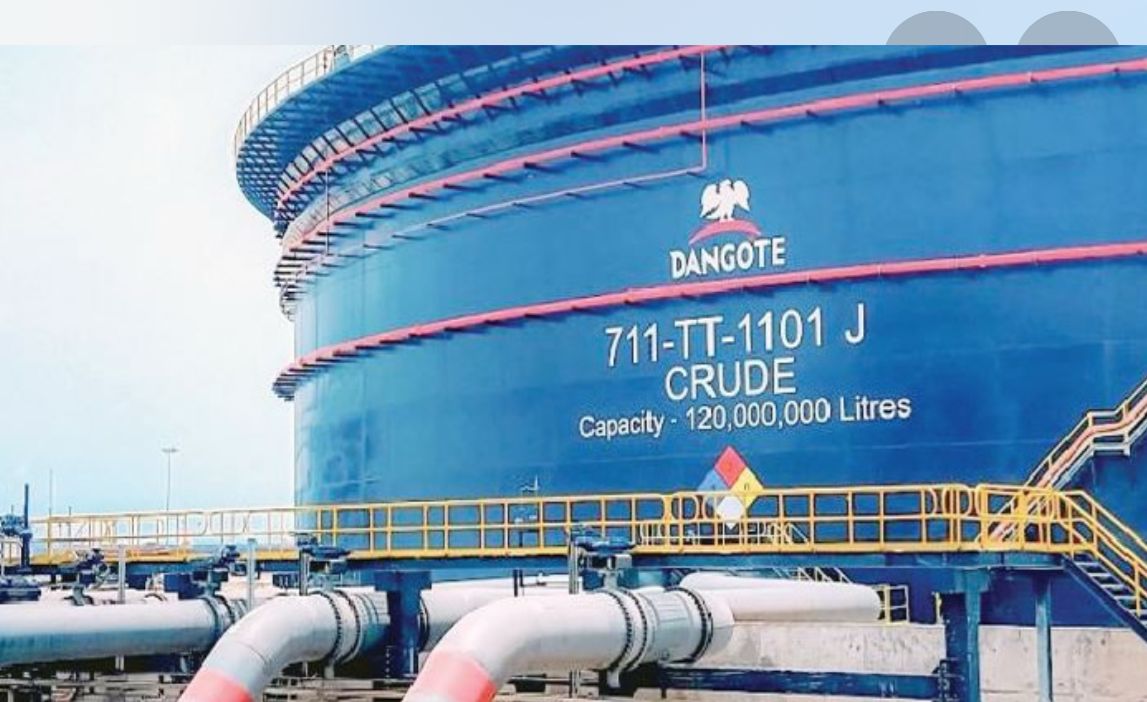
Dangote Petroleum Refinery has reversed its earlier petrol price increase, returning the ex-depot price of Premium Motor Spirit (PMS) to N1,275 per litre.
The decision came just hours after an upward adjustment sparked fresh reactions across Nigeria’s downstream fuel market.
Earlier on Wednesday, the refinery had raised its ex-depot petrol price to N1,350 per litre, a move that immediately triggered adjustments among marketers and depot operators.
However, the increase was quickly reversed, with the refinery confirming a return to the previous rate of N1,275 per litre.
A senior official of the refinery, speaking anonymously, explained that the reversal was influenced by sudden changes in global crude oil prices.
According to the official, the decision was necessary to reflect current market realities and avoid further instability in the downstream sector.
The adjustment followed a notable drop in global crude benchmarks.
Brent crude reportedly fell to around $101.7 per barrel, while West Texas Intermediate (WTI) dropped to approximately $94.11 per barrel, representing significant percentage declines within a short period.
Market analysts suggest that such fluctuations continue to directly influence domestic fuel pricing in countries reliant on international crude trends.
Despite the reversal at the depot level, reports indicate that some filling stations had already adjusted their pump prices upward before the rollback was announced.
In parts of Lagos, retail prices reportedly climbed as high as N1,400 per litre, highlighting the lag between depot pricing changes and retail market responses.
This has created temporary price inconsistency across the fuel distribution chain.
The latest development marks another shift in a pattern of frequent pricing adjustments by Dangote Petroleum Refinery.
Just days earlier, the refinery had increased its ex-depot price from N1,200 to N1,275 per litre before the brief jump to N1,350.
Industry observers note that these rapid changes reflect evolving market conditions, including crude sourcing costs, foreign exchange pressures, and distribution challenges.
The downstream sector continues to experience volatility as Nigeria’s deregulated fuel system adjusts to local refining dominance and global oil price movements.
While domestic refining is helping reduce dependence on imports, prices remain sensitive to international crude fluctuations.
For consumers, the immediate effect remains rising transport and living costs, as pump prices continue to fluctuate across regions.
The quick reversal by Dangote Petroleum Refinery highlights the unstable nature of Nigeria’s current fuel pricing environment. As global oil prices shift and domestic refining expands, both marketers and consumers are likely to continue experiencing frequent price adjustments in the near term.