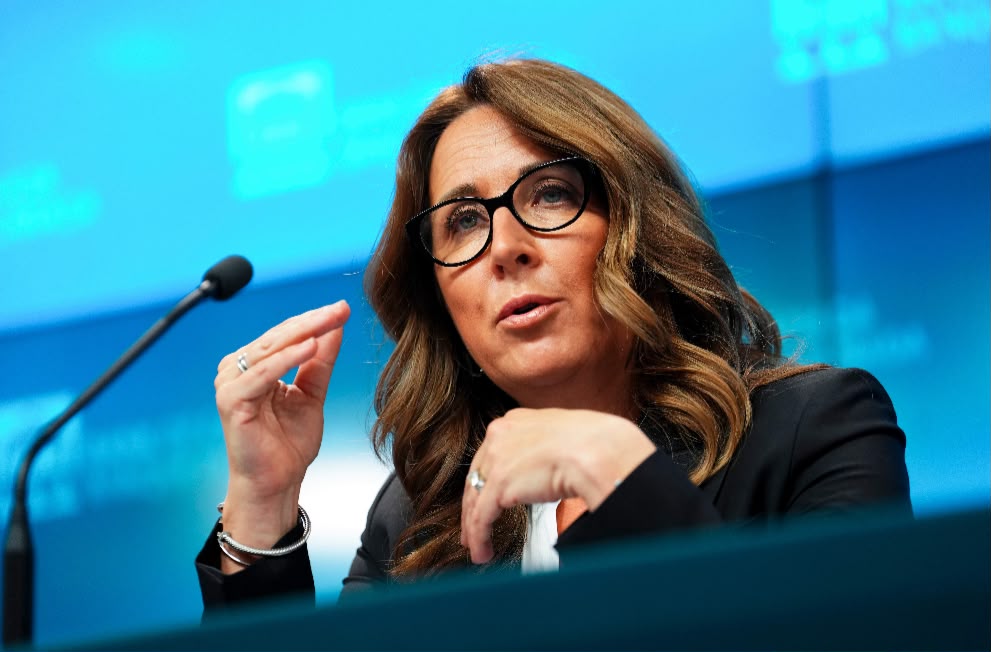
Canada is making progress toward tackling its housing affordability problem, but the country is still far from restoring affordable housing, according to Senior Deputy Governor Carolyn Rogers of the Bank of Canada.
Rogers said solving the problem will require more homes to be built, better planning and infrastructure, regulations that strengthen resilience, and policies that do not increase demand in a housing market already facing supply shortages.
She made the remarks on Thursday while speaking to a business audience in Victoria, British Columbia, where she discussed why Canada’s housing affordability challenge has proved difficult to solve.
Rogers said rising house prices make it harder for people to buy homes and can also push rents higher. However, falling prices can reduce household wealth, weaken spending and slow economic activity.
“It feels a bit like a trap,” she said.
According to Rogers, housing has become closely connected to household wealth, borrowing, financial stability and the wider Canadian economy, making efforts to improve affordability more complicated.
She said the solution cannot depend on a single policy or institution because responsibilities affecting housing are spread across different levels of government, regulators and agencies.
Rogers pointed to several factors that have contributed to Canada’s housing pressures, including limited housing supply, population growth, zoning and infrastructure constraints, low interest rates and the growing use of housing as an investment.
She also discussed the mortgage stress test introduced in 2017, saying it helped protect borrowers and banks by ensuring borrowers could still afford their mortgages if interest rates increased.
However, she noted that the measure did little to improve affordability because house prices continued to rise.
Rogers said the COVID-19 pandemic further complicated the situation as emergency interest rate cuts and fiscal measures supported the economy while demand for larger homes increased. Strong population growth later added further pressure to a market already facing supply constraints.
She said Canadian households and banks were able to withstand the sharp increase in interest rates that followed the surge in inflation, although some borrowers experienced significant financial pressure.
However, the policies that strengthened financial stability did not stop housing affordability from deteriorating.
Rogers also addressed criticism that central banks were largely responsible for high house prices because of prolonged periods of low interest rates.
She acknowledged that low rates played a role by making borrowing cheaper and increasing demand, but said they were not the only factor behind the housing problem.
The Bank of Canada’s review also examined whether monetary policy should play a larger role in controlling rapidly rising house prices.
Rogers said interest rates can influence housing demand, but using them specifically to control house prices would have consequences across the wider economy.
“If the Bank raises the policy interest rate, credit becomes more expensive,” she explained, adding that higher rates can reduce pressure on house prices but also make mortgages more difficult to obtain and increase payments for some existing borrowers.
On the other hand, lower interest rates can make borrowing cheaper but could increase demand and push prices higher when housing supply remains limited.
Rogers therefore described monetary policy as a blunt tool for directly tackling housing affordability because the Bank sets one interest rate for the entire economy rather than a separate rate for housing.
She also said there was no simple adjustment to the way shelter costs are measured in Canada’s inflation figures that would fully capture the affordability pressures facing households.
The Bank’s review concluded that housing affordability requires a broader policy response rather than relying on interest rates alone.
“We’re on the right track on many of these things, but we have a way to go and it will take time,” Rogers said.
She said the goal should be a combination of policies that increases housing supply, protects financial resilience and reduces Canada’s dependence on rising house prices.
For the Bank of Canada, Rogers said maintaining low, stable and predictable inflation remains its most important contribution to the housing market and the wider economy.
She stressed that housing affordability would require patience, coordination and consistent policies over time rather than expecting one policy tool to solve the problem.