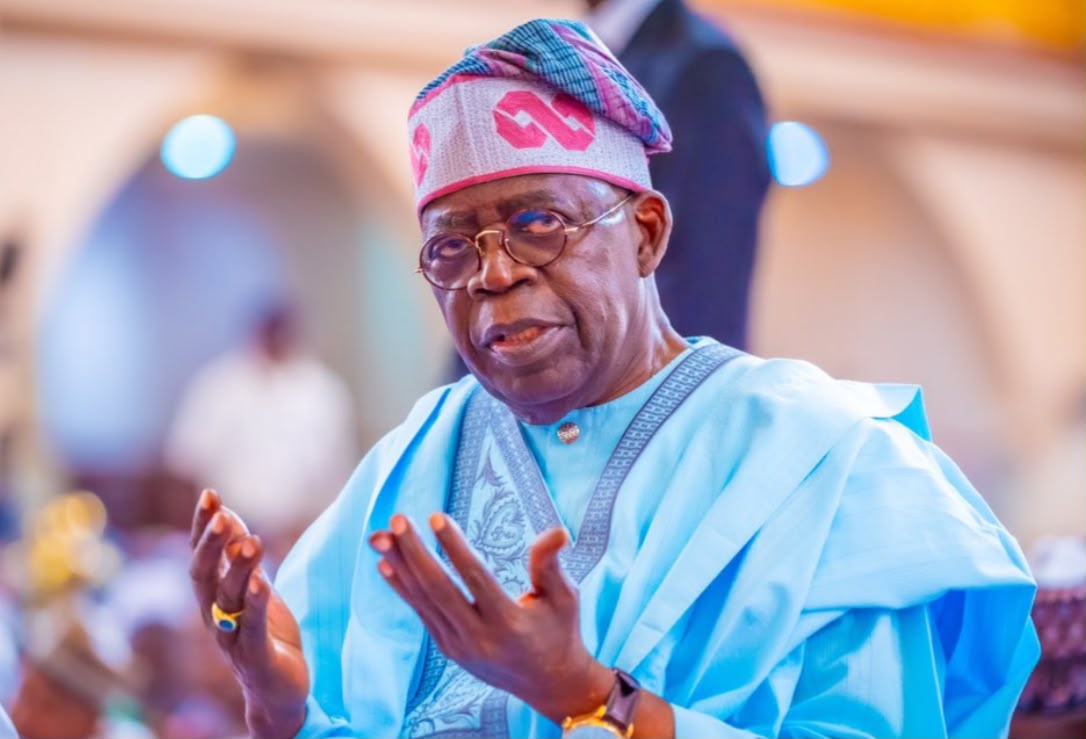
President Bola Tinubu has told Nigerians that the country is moving beyond the difficult phase of economic reforms and into a period focused on delivering broader prosperity.
Tinubu gave the assurance in his Independence Day address on Thursday, October 1, as Nigeria marked its 66th anniversary of independence.
The President defended the economic policies introduced by his administration, saying the reforms were necessary to confront weaknesses that already existed in the economy rather than create them.
“When this Administration assumed office, we resolved to do things differently. We chose to excise the cancer. The reforms that followed were difficult. The side effects were real. Yet, we must never confuse the medicine with the disease,” Tinubu said.
He argued that abandoning the reforms and returning to what he described as unsustainable subsidy policies would reverse the progress already made.
“Our reforms did not create the weaknesses in our economy. They confronted them,” he said.
Tinubu highlights economic indicators
According to the President, Nigeria’s economic outlook has improved after more than three years of reforms.
He said the economy has grown by more than four per cent this year, with both the oil and non-oil sectors contributing to what he described as a period of more stable growth.
Tinubu also said oil theft had declined, inflation had fallen substantially from its peak, foreign reserves had been rebuilt and the foreign exchange market had stabilised.
He further disclosed that Nigeria recorded more than $6 billion in non-oil export revenue in 2025, describing it as the highest such figure in the country’s history.
“Our foreign exchange market has stabilised, and in 2025 this country recorded its highest revenue from non-oil exports in its history, exceeding $6 billion. This is real money being made by real Nigerian businesses,” he said.
Tinubu said international observers, journalists, civil society organisations and multilateral institutions had recognised what he described as improvements in Nigeria’s economic stability and resilience.
He also pointed to continued foreign direct investment as another indication that confidence in the Nigerian economy was improving.
‘The emergency treatment is over’
The President said the focus of his administration had now shifted after three years of correcting what he described as structural weaknesses in the economy.
“The emergency treatment is over. The foundation has been repaired. The central economic task before us has changed,” Tinubu said.
He explained that the government’s priority was now “shared and widespread prosperity.”
Tinubu said prosperity should not simply be measured by GDP figures or other economic statistics but by whether Nigerians experience tangible improvements in their daily lives.
He described the kind of Nigeria his administration wants to build as one where farmers can work safely, produce more at lower costs and earn better returns.
He also spoke of an economy where factories have reliable electricity, businesses can access credit and young Nigerians can find productive employment.
According to the President, food and transportation should become more affordable, education should be accessible and hardworking families should be able to look to the future with greater confidence.
Government targets lower cost of living
Tinubu said reducing the cost of living would be one of the major priorities in the next phase of his administration.
He said the government would pursue this by reducing the cost of producing and transporting goods consumed by Nigerians.
The President highlighted plans to expand mechanised irrigation and dry-season farming, improve access to seeds and fertiliser, increase agricultural mechanisation and invest in storage and transportation.
He also pointed to ongoing investment in roads, railways and ports to improve connections between farms, factories and markets.
Tinubu said the government had continued to pay salaries and pensions on time since 2023 and had also reformed the national pension programme to provide greater benefits to retirees and vulnerable Nigerians.
He stressed, however, that such programmes should not be viewed as the final solution to poverty.
“These programmes are not substitutes for prosperity. They are a bridge to aid our nation’s citizens on their path towards it. Our objective is not to manage poverty more efficiently,” he said.
“We will defeat it.”
The President acknowledged that achieving widespread prosperity would take time, discipline and sustained economic growth, alongside the creation of millions of productive opportunities.
Tinubu reflects on Nigeria at 66
The President also used the anniversary to reflect on Nigeria’s journey since independence in 1960.
He recalled the country’s experiences with civil war, military rule, economic crises, insecurity and political instability, while highlighting the resilience of Nigerians through those difficult periods.
“Sixty-six years ago today, our flag was raised, for the first time, over a free and sovereign nation,” Tinubu said.
He described Nigeria as a country blessed with significant natural resources, cultural diversity and a large population capable of building a strong and prosperous nation.
Tinubu also paid tribute to ordinary Nigerians whose daily efforts contribute to the survival and development of the country.
He mentioned farmers, traders, teachers and young entrepreneurs, as well as members of the Armed Forces and security agencies who risk their lives to protect others.
The President thanked Nigerians for continuing to believe in the country despite the difficulties they have experienced.
“Through every difficulty, generations of Nigerians have continued to believe in one thing: that this country of ours will be better,” he said.
He said that belief represents part of the inheritance of independence and argued that Nigeria’s founding generation sought more than a national flag, anthem and international recognition.
According to Tinubu, independence was also about giving Nigerians the freedom to shape their own future and build a country capable of providing opportunity, dignity and a better life.
“Sixty-six years later, Almighty God has made it our responsibility to deliver that promise,” he said.
The President concluded by urging Nigerians to look forward rather than return to the difficult conditions that prompted the reforms.
“The age of reform has done its work. Now begins the age of prosperity,” Tinubu said.
He added that Nigeria had corrected its economic course and called on citizens to move forward together with renewed confidence in the country’s future.