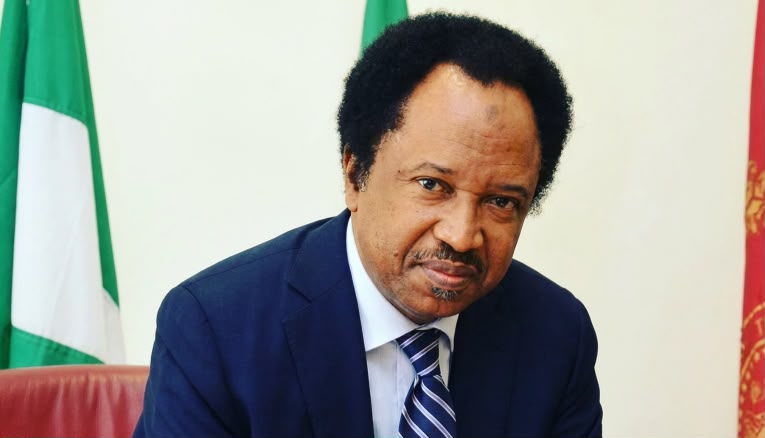
Former Kaduna Central Senator Shehu Sani has argued that an Atiku Abubakar victory in the 2027 presidential election would bring Nigeria’s informal power-sharing arrangement between the North and South to an end.
Sani made the comment while speaking on Channels Television’s Politics Today on Friday, where he maintained that the South should be allowed to complete an eight-year presidential cycle before power returns to the North.
Although he acknowledged Atiku’s constitutional right to contest the election, Sani said political parties should consider the principle of rotation when deciding who should occupy the presidency in 2027.
“I never said Atiku should not run. Constitutionally, he has the right to run for any election. But what I said was that the southern part of Nigeria should be allowed to have its eight-year tenure in office, just like the way the North has from 2015 to 2023,” Sani said.
He argued that southern candidates should be allowed to compete among themselves in 2027 and that power should remain in the region until 2031.
Sani mentioned Peter Obi and Seyi Makinde as examples of southern politicians who could contest, while suggesting that the North would then have what he described as an “unchallengeable opportunity” to produce the president after 2031.
He stressed that rotational presidency is not a provision of Nigeria’s Constitution, but said political leaders should still consider the practice in the interest of fairness, equity and national stability.
“It’s very important because we should look at our history where we come from. Some things are not written in our constitution, but in the interest of justice, fairness, equity, and peace, we need to consider all these things here,” he said.
According to Sani, Nigeria should avoid allowing political dominance to be determined solely by population or electoral strength.
He pointed to former President Muhammadu Buhari’s eight years in office from 2015 to 2023, arguing that the South did not mount a serious challenge to his presidency during that period.
Sani said he therefore believed the South should also be allowed to complete an eight-year period before the presidency returns to the North.
On Atiku specifically, Sani repeated that he was not calling for the former vice-president to be prevented from contesting.
“About Atiku, the Constitution has not stopped him from contesting the election. He can contest the election, that is my position, and I’m not backing down on it,” he said.
However, Sani said an Atiku victory would have wider political implications for the informal rotational arrangement.
“If Atiku wins, it means that is the end of rotational presidency in Nigeria,” he said.
He further argued that such an outcome could generate resentment in parts of Southern Nigeria and make governance more difficult for a northern president succeeding President Bola Tinubu.
Sani said Nigeria was already dealing with several political challenges and expressed concern that another shift in the presidency to the North in 2027 could create additional tensions.
“Right now, the political system is managing a lot of crises. And I don’t think a Northerner taking over power here will come in with ease and convenience to the people in the Southern part of Nigeria,” he said.
Sani’s comments reflect his personal political position on zoning and rotational presidency, which remains an informal political practice rather than a constitutional requirement. Atiku, meanwhile, has previously said he would support making rotational presidency a constitutional provision if elected.
Source: Channels Television.