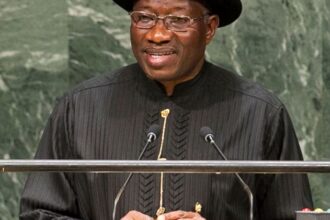
Nigeria has warned world leaders that strong national defences alone cannot protect countries from terrorism, cyber threats and other dangers that operate across international borders.
Vice-President Kashim Shettima delivered the warning on Thursday in New York while presenting Nigeria’s national statement on behalf of President Bola Tinubu at the 81st United Nations General Assembly. (Channels TV)
Shettima drew on Nigeria’s experience in confronting Boko Haram, ISWAP and other armed groups, arguing that security threats that cross national borders require cooperation between countries.
He said Nigeria’s experience had demonstrated the limitations of relying solely on military operations or national security measures to defeat violent extremism.
“No nation, however formidable its defences, can secure itself completely against dangers sustained beyond its borders,” Tinubu said in the statement delivered by Shettima.
The Nigerian government called for stronger cooperation in intelligence sharing, disrupting the financing of terrorism and preventing the movement of illegal weapons across borders.
Nigeria calls for broader approach to security
Shettima said military action remained necessary in the fight against terrorism but should be supported by measures that address the conditions that allow extremist groups to recruit and operate.
He pointed to education, economic opportunities, accountable governance and respect for human rights as important elements in creating sustainable security.
Nigeria, he said, remained prepared to work with neighbouring countries and international partners to tackle terrorism and other threats affecting regional and global stability.
He also highlighted Nigeria’s participation in regional and international security efforts through organisations and partnerships including ECOWAS, the African Union and Gulf of Guinea initiatives.
The Vice-President recalled Nigeria’s contributions to peacekeeping and conflict-resolution efforts across Africa, including engagements in Liberia, Sierra Leone, Darfur, Mali and The Gambia.
According to him, such experiences have reinforced Nigeria’s position that instability in one country can create consequences for neighbouring states and the wider international community.
Shettima warns against ignoring distant conflicts
Shettima also warned that conflicts occurring far from a country’s borders could still have significant consequences.
He said wars can disrupt trade, increase humanitarian pressures, force people to flee their homes, strengthen extremist networks and create broader economic and security challenges.
He therefore called for renewed commitment to dialogue, mutual respect, collective responsibility and international law.
Nigeria also reaffirmed its support for resolving disputes peacefully under the United Nations Charter and urged greater diplomatic attention to conflict-affected countries, including Sudan.
The Nigerian delegation further called for stronger international institutions capable of coordinating responses to terrorism, cyber threats and other challenges that do not respect national boundaries.
Shettima said Nigeria’s experience with insurgency had strengthened its belief that lasting peace requires both effective security measures and social and economic conditions that reduce opportunities for violent groups to operate.
He urged countries to strengthen international solidarity, regional cooperation and investment in the foundations of peace and stability.
Source: NAN