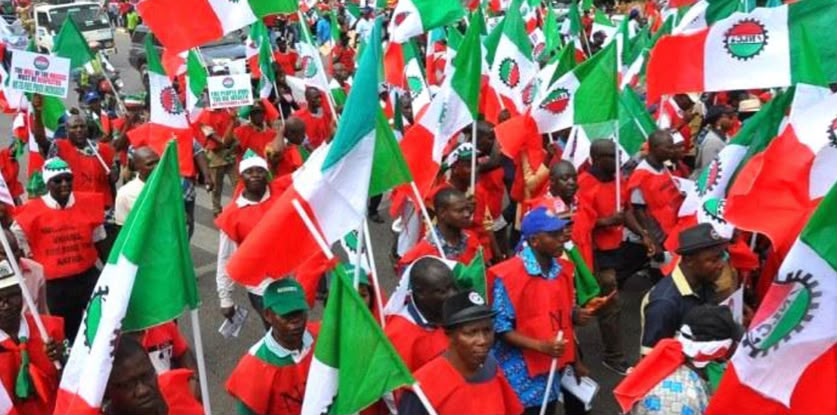
The Nigeria Labour Congress (NLC) has called for a major overhaul of Nigeria’s energy sector, arguing that the current system has failed to provide reliable and affordable electricity while leaving millions of Nigerians to bear the cost of persistent power shortages.
The call was made by Eche Asuzu, National Coordinator of the NLC’s Climate Change, Green Jobs and Just Transition Programme, on the sidelines of the New Energy for Africa II Convening in Nairobi, Kenya.
The event, organised by the International Trade Union Confederation (ITUC-Africa), focused on the contribution of African workers to energy sovereignty, green industrialisation and a common African position ahead of COP31.
Asuzu said Nigeria needs to move away from a system in which energy policies are largely determined from the top and instead adopt a people-centred approach that recognises energy as a public good.
He argued that communities experiencing energy poverty should have a stronger voice in determining the country’s energy policies because they understand the impact of unreliable electricity better than policymakers sitting far from the affected communities.
“Clearly, the models we have adopted have not worked, and that calls for a lot of political will to do the right thing,” Asuzu said.
According to him, Nigeria needs to replace the existing top-down approach with a system that allows citizens and communities to actively participate in energy planning and decision-making.
“We need to democratise energy in Nigeria. We need to put people at the centre of energy policy, energy considerations and energy action.”
Asuzu criticised the country’s electricity privatisation model, arguing that Nigerians continue to experience inadequate power supply despite the reforms introduced to improve the sector.
“People are making profit out of darkness instead of generating enough power to unlock our potential as a country. People are making profit out of darkness instead of generating enough power to unlock our potential as a country.”
He further questioned the outcome of the privatisation programme, saying Nigeria must urgently rethink how the energy sector is managed.
“We privatised. What has become of it? We privatised, but we are producing megawatts of darkness, and that is very unfortunate.”
The NLC official urged the Federal Government to reassess its energy policies and place greater emphasis on using the sector to drive industrialisation, economic transformation and the creation of quality jobs.
He maintained that government still has an important role to play in the energy sector and should not completely withdraw from responsibility for providing energy to Nigerians.
“The Constitution says government must have business in business. In the area of energy provision and the role of government in the economy, especially as it relates to energy, government must have a role.”
Asuzu also called for a stronger shift towards green energy, arguing that Nigeria must take advantage of the global movement towards green industrialisation.
“We must have energy, and not just any kind of energy, but green energy, so that we can position ourselves to take advantage of the current drive towards industrialisation and green industrialisation around the world.”
He stressed that Africa’s youthful population makes industrialisation an urgent priority and warned that the continent cannot afford to remain economically underdeveloped.
“A continent with the youngest population in the world cannot afford not to industrialise. We must also transform our economies.”
The NLC coordinator also called for better conditions for workers in the emerging green economy, stressing that the creation of green jobs alone would not automatically guarantee decent employment.
“Green jobs may not necessarily be decent jobs. So, we must make them decent by ensuring living wages, improved working conditions and, of course, social protection.”
NLC Wants Urgent Action on Energy Poverty
Asuzu said the government must immediately address the growing problem of energy poverty, arguing that Nigerians have been excluded from important conversations about the country’s energy future.
“Our experience is one of exclusion. So far, people have been excluded, as if they do not know anything about energy. But they know energy because they use it every day.”
He said policymakers should begin by addressing the areas where Nigerians are experiencing the greatest hardship.
“We should begin where it hurts us. Energy poverty is real in our country. More than 60 per cent of our population are left without affordable, sufficient and reliable energy.”
Asuzu also warned against excessive dependence on foreign-assisted or foreign-dominated energy policy frameworks, arguing that such approaches have failed to adequately address Nigeria’s unique energy challenges.
“Government must bring every stakeholder on board and avoid all these foreign-assisted and foreign-dominated energy policy frameworks. They have not worked.”
NLC Calls for Mambilla Project, Hydropower to Be Revived
The labour leader also called for the resolution of the long-running issues surrounding the Mambilla Power Project, while urging the government to fully develop Nigeria’s hydropower potential and other renewable energy sources.
“We must be able to untangle all these issues and ensure that our green energy sources are activated.”
Although he advocated for greater investment in renewable energy, Asuzu said Nigeria should not immediately abandon fossil fuels, arguing that natural gas could serve as an important transition fuel.
However, he said the government needs to introduce innovative policies around gas pricing and utilisation to ensure Nigerians benefit from the country’s resources.
He particularly criticised the dollarisation of gas pricing in Nigeria, arguing that gas is a domestic resource and should not expose Nigerians to unnecessary foreign exchange pressures.
“Until we de-dollarise our gas pricing structure, we will not get it right. It is a Nigerian asset. Why do we need to dollarise the payment? It is quite strange.”
According to Asuzu, issues surrounding gas pricing are among the technical factors contributing to instability and economic pressure in the energy sector.
“These are some of the technical issues that people do not know about, but they are at the heart of the instability, pressure and hardship being transferred to Nigerian workers and the people. That must stop.”
The NLC’s position comes amid continuing concerns over electricity supply, energy costs and the broader impact of Nigeria’s energy challenges on households, businesses and workers.
The labour body is therefore calling for a more inclusive energy policy that prioritises reliable electricity, green industrialisation, decent jobs and meaningful participation by Nigerians in decisions affecting the country’s energy future.