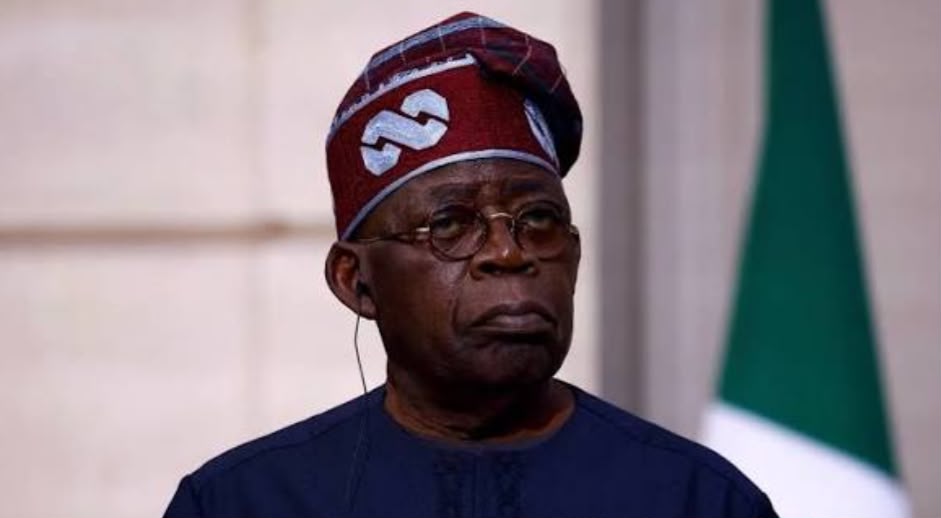
President Bola Ahmed Tinubu has directed the Economic and Financial Crimes Commission (EFCC) to immediately return to court and seek the reversal of the order freezing the Osun State Government’s statutory allocation account, saying the timing of the action could undermine public confidence ahead of the state’s governorship election.
The President’s intervention comes amid growing controversy over the EFCC’s decision to place a restriction on one of the Osun State Government’s bank accounts just days before the August 15 governorship election.
In a statement issued by his Special Adviser on Information and Strategy, Bayo Onanuga, President Tinubu said he was not opposed to the EFCC carrying out its constitutional responsibilities, but expressed concern over the timing of the commission’s action.
According to the President, although anti-corruption agencies must be allowed to operate independently, their actions should not create the impression that federal institutions are being used to influence an electoral process.
“I have consistently maintained that anti-corruption and law enforcement agencies must be allowed to discharge their statutory responsibilities independently, professionally, without fear or favour,” Tinubu said.
The President explained that he had deliberately avoided interfering in the activities of agencies such as the EFCC since assuming office because strong institutions are essential to democracy and the rule of law.
However, he noted that with the Osun governorship election only days away, the freezing of the state’s account could easily be interpreted as political interference.
“Nothing ought to be done to give an impression that the EFCC or any other Federal Government agency is being used to interfere with the election,” he stated.
Tinubu therefore directed the anti-graft agency to immediately approach the court to vacate the freezing order and discontinue the legal action against the Osun State Government.
Following the directive, the President personally called Osun State Governor Ademola Adeleke to inform him of the decision and reassure him of his commitment to a free, fair and credible election.
The development came barely a day after the EFCC confirmed that it restricted access to one of the Osun State Government’s accounts over an ongoing investigation into the alleged diversion of about ₦11 billion in ecological funds, intervention funds and Federation Account Allocation Committee (FAAC) allocations.
The commission maintained that the restriction affected only one account and was intended to preserve funds while investigations continued.
Speaking on Arise Television, EFCC spokesperson Wilson Uwujaren said the agency observed suspicious financial transactions involving the account and acted within the powers granted to it under the EFCC Act and the Money Laundering (Prevention and Prohibition) Act.
According to him, the law allows the commission to place a temporary restriction on an account for up to 72 hours before obtaining a court order where necessary.
He insisted that the restriction did not amount to freezing all of Osun State’s accounts or shutting down government operations.
Meanwhile, the Osun State Government welcomed President Tinubu’s intervention, describing it as a victory for democracy and the rule of law.
The state’s Commissioner for Information and Public Enlightenment, Kolapo Alimi, commended the President for listening to public concerns and reversing what he described as an unfair action.
“What the President has done is a triumph for the rule of law,” Alimi said.
Despite the President’s directive, Governor Adeleke has proceeded with legal action against the EFCC.
The Osun State Government filed a ₦2 billion lawsuit at the Federal High Court in Abuja, challenging the freezing of its statutory allocation account.
The suit seeks a declaration that the EFCC acted unlawfully, an order setting aside the restriction placed on the account and ₦2 billion in exemplary and aggravated damages for the alleged unlawful interference with public funds.
The state government also rejected the EFCC’s allegation that the account was linked to the diversion of ₦11 billion, insisting the action was politically motivated.
According to Alimi, the restriction was aimed at disrupting government activities and preventing the payment of palliatives promised to workers ahead of the election.
The development has continued to generate mixed reactions across Nigeria.
Former Vice President Atiku Abubakar criticised the timing of the EFCC’s action, describing it as an assault on democracy and warning against the use of anti-corruption agencies as political tools.
The African Democratic Congress (ADC) also questioned President Tinubu’s intervention, arguing that it raises fresh concerns about the independence of the EFCC.
According to the party, if the President can direct the commission to withdraw a court action for political reasons, it raises questions about claims that anti-graft agencies operate independently.
While the controversy continues, the EFCC has maintained that its actions were lawful and carried out strictly in line with its statutory powers to investigate suspected financial crimes.
The agency insisted that the restriction was purely investigative and had nothing to do with the forthcoming governorship election.