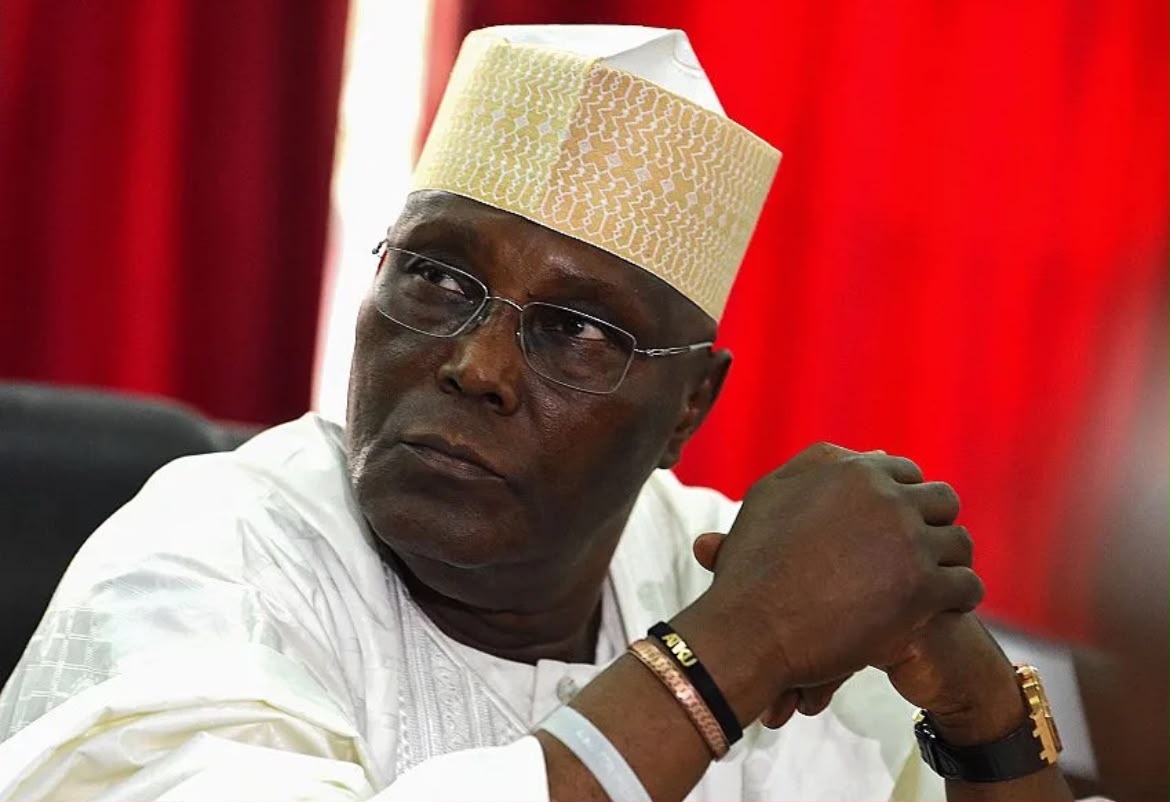
Former Vice-President and African Democratic Congress (ADC) presidential candidate Atiku Abubakar has called on President Bola Tinubu to increase Nigeria’s N70,000 minimum wage, arguing that rising fuel, food, transportation and housing costs have significantly reduced workers’ purchasing power.
Atiku also backed organised labour’s demand for a substantial increase in workers’ salaries, saying the current wage no longer adequately reflects the cost of living.
In a statement issued on Sunday, Atiku blamed the removal of the petrol subsidy for adding to the financial pressure faced by Nigerian households. He argued that the increase in workers’ salaries had not kept pace with the rise in essential expenses.
“The government pulled away the floor, offered workers a flimsy umbrella and now applauds itself while the rain beats down on them.”
He said the cost of fuel, transportation, food and rent had consumed a large portion of workers’ earnings.
“Fuel, transport, food and rent have devoured their earnings. This is a callous way to govern people who work hard and ask only for the means to live.”
Atiku compared the purchasing power of the former N30,000 minimum wage with the current N70,000 wage. He noted that when the national average petrol price was N254.06 per litre in April 2023, N30,000 could purchase about 118 litres of petrol.
He said the situation is different under the current fuel price of N1,400 per litre, arguing that N70,000 can now buy only about 50 litres.
“At ₦1,400 a litre, the entire ₦70,000 monthly minimum wage buys just 50 litres of petrol. What does the worker take home to feed the children? What pays the rent? What gets that worker back to work on Monday?”
Atiku said the nominal increase in the minimum wage had therefore not translated into a similar improvement in workers’ purchasing power.
“The payslip has grown, but the fuel it can buy has more than halved. Tinubu has given workers a larger number and left them with a smaller life. That is hardship dressed up as a wage increase.”
The ADC candidate also compared Nigeria’s minimum wage with figures from other African and oil-producing countries. Using exchange rates from July 24, 2026, he put the equivalent monthly minimum wages at approximately N213,000 in Libya, N245,000 in Algeria, N302,000 in Equatorial Guinea and N351,000 in Gabon.
He also said the minimum wage in neighbouring Benin Republic was higher than Nigeria’s when converted using the cited exchange rates.
Atiku acknowledged that wage structures and living expenses differ from one country to another but maintained that those differences did not make N70,000 sufficient for Nigerian workers facing current prices.
“The Nigerian worker is the engine of this country’s productive life, yet Tinubu expects that engine to run without fuel.”
He said the effect of petrol prices goes beyond transportation because higher fuel costs can raise the cost of farming, food production, transportation and other everyday activities.
“Petrol does not stay at the pump. Its price follows the farmer to market, enters the baker’s oven and appears in the fare a parent pays to take a child to school.”
Atiku challenged the Federal Government to agree to a substantial increase in the minimum wage that reflects the prevailing costs of food, transportation, rent and electricity.
He also argued that any meaningful improvement in workers’ welfare would require measures aimed at reducing the broader cost of living, rather than focusing only on the amount written on workers’ payslips.
The former vice-president’s demand comes amid renewed calls from organised labour and other stakeholders for a review of the N70,000 minimum wage, with concerns over the rising cost of basic goods and services.
Source: Atiku Abubakar.