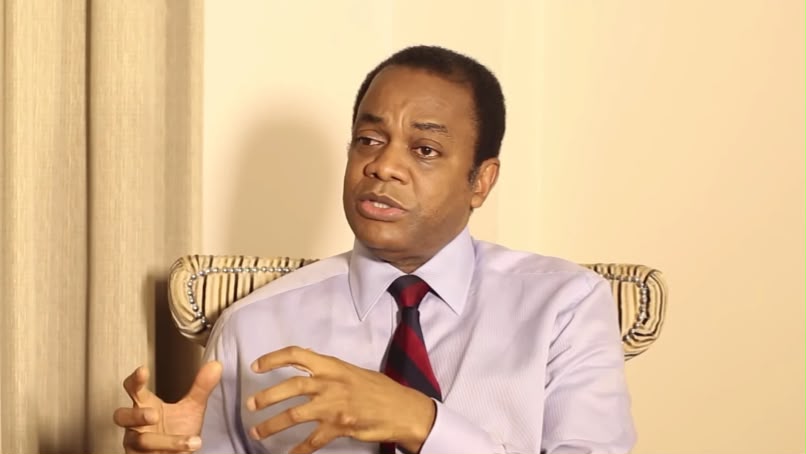
Former Cross River State Governor and Peoples Redemption Party (PRP) presidential candidate Donald Duke has explained why he is challenging President Bola Tinubu in the 2027 presidential election despite describing the president as his friend.
Duke said personal relationships should not prevent political disagreement, arguing that democracy allows people to hold different views and support different political parties.
“President Tinubu is my friend. But I disagree with the direction he’s taking Nigeria. Even within a family, we all don’t have to think and act the same way.”
Duke, who served as Cross River governor from 1999 to 2007 during the same period Tinubu governed Lagos State, said his decision to contest was based on his concerns about Nigeria’s current direction rather than personal differences with the president.
He also defended his decision to run on the PRP platform despite the party having a smaller national profile than some of the other parties preparing for the 2027 election.
When asked why he chose the platform, Duke challenged the assumption that only established political parties could provide a vehicle for a presidential campaign.
“Tell me a better vehicle. Huh? Tell me a better vehicle.”
He said his immediate objective was to contribute to the national political conversation and offer Nigerians, particularly younger people, a different direction to consider.
“I want to be in the field of discussion. Right? I want to change the trajectory of our discussion.”
A major part of Duke’s argument centred on Nigeria’s economic management and the use of the country’s natural resources. On the petrol subsidy debate, he rejected the idea of returning to the previous subsidy arrangement but argued that locally produced crude should be made available to Nigerians at its cost of production rather than being priced according to international market rates.
Duke said Nigeria produces significantly more crude oil than it needs for domestic consumption and could use the various products derived from crude to reduce the cost of petrol for Nigerians.
He argued that diesel, aviation fuel, kerosene and other petroleum products could be sold commercially while petrol for domestic consumption is priced around production costs, with reasonable distribution and operating margins added.
“I don’t believe there should be subsidy and I have spoken on this in several forums.”
According to Duke, Nigeria should take advantage of its energy resources to improve productivity instead of making energy too expensive for citizens and businesses.
He also criticised the continued pricing of locally consumed gas at international rates, arguing that Nigeria should process more of its gas domestically and make it available to industries and households at prices that support economic activity.
Duke pointed to years of gas flaring as another example of what he described as Nigeria’s failure to fully utilise its natural resources. He argued that more investment in gas processing and distribution could help the country turn its energy resources into economic opportunities.
The former governor also questioned the argument that cheaper petrol would inevitably lead to increased smuggling into neighbouring countries. He suggested that authorities could introduce measures to identify Nigerian fuel if it crosses the borders illegally rather than making the product more expensive for citizens.
Duke said the central responsibility of government should be to create conditions in which citizens can be productive, with security, healthcare, education and other public services supporting that objective.
He argued that Nigeria’s economic difficulties have also contributed to insecurity and the growth of criminal activities, saying poverty and a lack of opportunities can push people towards kidnapping, banditry and other illegal activities.
On security, Duke called for greater decentralisation of policing and expressed support for state and local policing structures, provided they operate under clear rules and stronger judicial oversight.
He said intelligence gathering should receive greater attention because local communities are often better positioned to identify security threats within their areas.
Duke also criticised what he described as the absence of a clear long-term national vision, arguing that government decisions should be guided by their economic impact and priorities.
He used major infrastructure projects as an example, questioning whether some projects should take precedence over urgent needs such as education, poverty reduction and security.
The PRP candidate said Nigeria’s economic challenges should also be viewed in the context of productivity. He compared government spending today with spending during the administration of former President Shehu Shagari, arguing that the size of Nigeria’s economy has not grown sufficiently relative to its population.
Duke said the country needs policies that create jobs, increase incomes and make citizens more productive rather than simply focusing on government revenue.
He also rejected the idea that Nigerians are inherently tribalistic, arguing that citizens often turn to ethnic or religious identities when access to opportunities and resources is limited.
“I don’t believe that we’re tribalistic or we’re ethnic. We just use things because it is advantageous to us.”
According to him, Nigerians would be less concerned about the ethnic or religious identity of political leaders if citizens could access opportunities and public services based on merit.
On his decision not to join other former governors supporting Tinubu, Duke said political relationships should not eliminate differences of opinion.
“We all don’t have to be. President Tinubu is my friend. But I disagree with the direction he’s taking Nigeria.”
He maintained that supporting different political parties is part of democratic freedom and said political disagreement should not automatically be interpreted as personal hostility.
“We don’t have to be in one party. And that’s the beauty of democracy. We express ourselves.”
Duke’s comments come as political parties and presidential aspirants intensify their preparations for the 2027 election, with economic policy, security, fuel pricing and the future direction of the country among the major issues being debated.