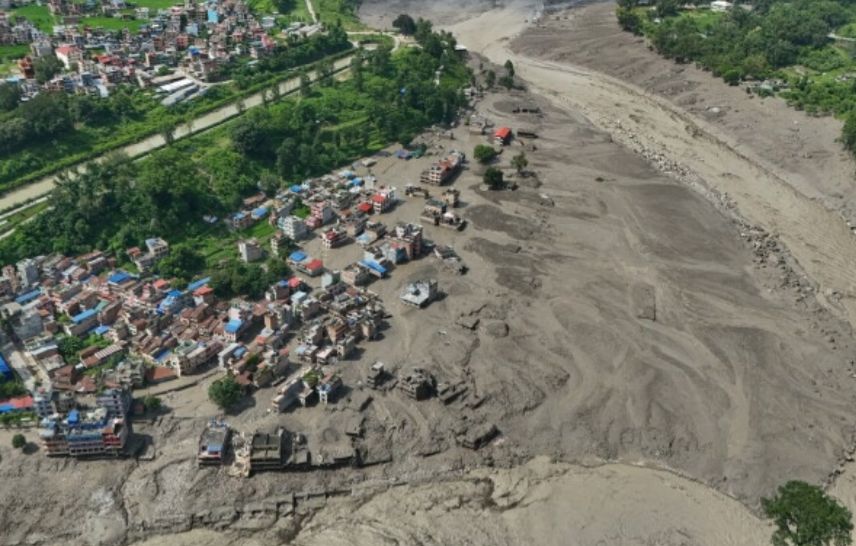
A devastating wave of water, mud and debris that swept through parts of Nepal and Tibet in China has left nearly 3,000 people missing, with hundreds of bodies already recovered as rescue teams continue a desperate search for survivors.
The disaster struck on Wednesday, destroying homes, roads and infrastructure across parts of the Himalayan region. The scale of the destruction has made rescue operations extremely difficult, while fears of further flooding remain.
Nepal’s disaster authorities reported 626 deaths, with 2,426 people still unaccounted for, including foreigners, trekkers, pilgrims and workers at hydropower projects.
In Tibet, Chinese state media reported seven deaths and 554 people missing. Authorities also said hundreds of tourists and residents had been evacuated from affected areas.
Hydropower Workers Among Missing
Nepal added 933 hydropower workers to its missing persons list as authorities expanded the search around major energy projects in the region.
At the Trishuli 3A hydropower project, soldiers were working to reach people trapped inside tunnels after floodwaters struck the area.
More than 350 workers and residents had reportedly been brought to safety, while rescue efforts continued for more than 100 people believed to remain trapped.
Survivors described the flooding as sudden and overwhelming, with entire settlements near rivers swept away.
Further Flooding Threatens Rescuers
Rescue operations have been complicated by the formation of large lakes created by ice, mud and floodwater.
Nepali authorities temporarily warned rescuers to move to safer areas after receiving reports that another water barrier had burst on the Tibetan side.
Chinese authorities also suspended rescue operations in the worst-hit area of Gyirong because of renewed flooding concerns before later reporting that the immediate threat had eased.
The Red Cross said the disaster may have affected as many as 93,000 people, warning that the psychological and humanitarian impact would be enormous.
Food and clean water were also becoming increasingly difficult to access in some devastated communities.
Pilgrims Among Those Missing
The disaster has also affected international pilgrims travelling towards Mount Kailash in Tibet, a major religious destination.
One survivor, travelling with dozens of others by bus, described seeing floodwaters and debris suddenly rushing towards the vehicle before passengers scrambled to safety on higher ground.
Authorities in India have also recovered seven bodies from rivers flowing from Nepal, with the victims believed to be connected to the disaster.
With thousands still missing, rescue teams across the region remain focused on locating survivors and accounting for those who have lost contact with their families.
Source: AFP, Nepal disaster authorities and China’s Xinhua news agency.