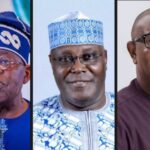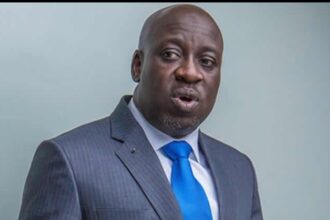
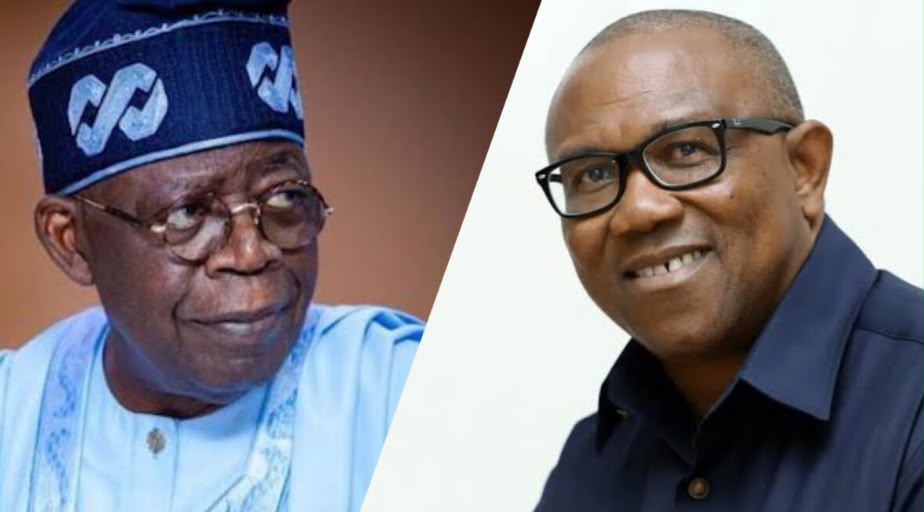
President Bola Ahmed Tinubu and several presidential candidates, including Peter Obi, Dumebi Kachikwu and Omoyele Sowore, have signed the first National Peace Accord ahead of the 2027 general elections.
The agreement was signed in Abuja on Tuesday, August 18, ahead of the commencement of public campaigns on August 19. By signing the accord, the political actors committed themselves to peaceful campaigns and rejected violence, hate speech and other actions capable of undermining the electoral process.
The ceremony was attended by representatives of several political parties and candidates, who were urged to place national interest above personal and partisan ambitions.
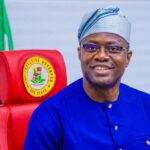
Former Vice President and African Democratic Congress (ADC) presidential candidate Atiku Abubakar was absent and did not send a representative. Oyo State Governor and Allied Peoples Movement (APM) presidential candidate Seyi Makinde was also absent, although his running mate, Lawal Daura, attended.
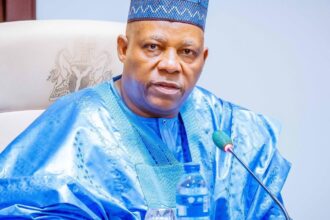
Representing President Tinubu, Secretary to the Government of the Federation (SGF), Senator George Akume, urged political actors to avoid ethnic, religious and other divisive sentiments during the campaign.
Tinubu said disagreements and competing political visions were normal in a democracy but warned that political competition must not damage national unity.
“Let us campaign on superior ideas. Let us debate issues and promote the best policies to expand opportunities for our people,” Tinubu said.
He also rejected violence, hate speech, misinformation, incitement and the misuse of artificial intelligence and social media to manipulate public opinion.
“Win or lose, our country, Nigeria, must be the ultimate winner,” he added.
Peter Obi, presidential candidate of the Nigerian Democratic Congress (NDC), called on Nigerians to reject politicians who fail to honour the commitments contained in the Peace Accord.
Obi said political actors must ensure that the agreement is reflected in their conduct throughout and after the campaign. He also condemned the violence recorded during the recent Osun governorship election and insisted that elections must never be won through violence or destruction of property.
INEC Warns Parties to Honour Accord
INEC Chairman, Professor Joash Amupitan, said the credibility of the 2027 elections would depend not only on the electoral commission but also on political parties, candidates and their supporters.
With August 19 marking the official start of public campaigns, Amupitan urged candidates to present measurable manifestos focused on Nigerians’ welfare and avoid character assassination, identity manipulation and inflammatory rhetoric.
He described campaigns as a “competitive job interview” rather than a “war theatre”, warning that the Peace Accord would have little meaning if political leaders failed to ensure that their supporters respected its provisions.
“It is not the signatures written on this Accord today that preserve democracy; it is the character of the leaders who hold the pen,” Amupitan said.
He urged presidential candidates and party leaders to extend the obligations of the accord to their state structures, local government executives, ward canvassers and grassroots supporters.
Police Promise Neutrality
The Nigeria Police Force also pledged to remain professional, impartial and neutral throughout the electoral process.
DIG Umar Shehu Nadada, representing the Inspector-General of Police, said security agencies would not allow political thugs to arm or recruit young Nigerians for political violence.
He urged political leaders to sign the accord sincerely and settle political disagreements through superior arguments rather than violence.
European Union Ambassador and Head of Delegation to Nigeria and ECOWAS, Gautier Mignot, also called for peaceful and issue-based campaigns, noting that Nigeria’s democracy has implications for the wider African continent.
Mignot urged INEC to demonstrate fairness and impartiality and called on security agencies to operate professionally.
National Peace Committee: 30 Accords Since 2015
Former Head of State and Chairman of the National Peace Committee, General Abdulsalami Abubakar, represented at the event by General Martin Luther Agwai, disclosed that the committee has facilitated 30 peace accords since 2015.
Five were signed nationally ahead of the 2015, 2019 and 2023 general elections, while 25 were facilitated at the sub-national level.
Agwai urged politicians to compete fairly, respect opposing views, mobilise supporters peacefully, protect voters and respect electoral institutions.
Parties represented at the ceremony included the APC, Accord Party, APGA, APM, DLA, Labour Party, NDP and NDC, among others.
The signing comes five months before the 2027 general elections. The presidential and National Assembly elections are scheduled for January 16, 2027, while governorship and State Houses of Assembly elections are scheduled for February 6, 2027.
CSOs Demand Issue-Based Campaigns
As campaigns began, civil society organisations and political scientists urged presidential and National Assembly candidates to focus on policies and practical solutions instead of personality attacks.
They called on candidates to explain how they intend to tackle insecurity, the cost of living, unemployment, education, healthcare, corruption, power and the economy.
They also urged candidates to participate in televised debates and town-hall meetings where Nigerians can scrutinise their policies and assess whether their promises are realistic.
INEC fixed August 19 as the commencement date for campaign activities for the January 16, 2027 presidential and National Assembly elections.
Yiaga Africa
Yiaga Africa Executive Director Samson Itodo called for campaigns that move beyond slogans, personalities and attacks.
He urged parties and candidates to make concrete and measurable commitments on insecurity, unemployment, the cost of living, education, healthcare, corruption, power and the economy.
Itodo also warned against inflammatory ethnic, religious and regional rhetoric, saying political competition must not become an excuse for intimidation, violence or attacks.
He urged parties to respect democratic institutions, the Electoral Act, INEC regulations and the Code of Conduct for Political Parties.
He also cautioned incumbents against using public institutions, security agencies or state resources for partisan advantage.
CISLAC and Transparency International
The Civil Society Legislative Advocacy Centre (CISLAC) and Transparency International Nigeria also urged candidates to demonstrate commitment to democratic values, accountability and issue-based governance.
CISLAC Executive Director and Transparency International Nigeria head Auwal Musa Rafsanjani called on candidates to avoid insults, personality attacks, ethnic and religious sentiments, misinformation, intimidation and political violence.
He said Nigerians deserve campaigns focused on insecurity, unemployment, poverty, inflation, corruption, healthcare, education, infrastructure, agriculture, taxation, public debt and the cost-of-living crisis.
Rafsanjani said campaign promises should be realistic, measurable and supported by clear implementation plans.
He also called for credible internal party processes, transparent campaign financing and greater participation by women, young people and persons with disabilities.
He urged candidates to participate in debates and town halls where citizens, journalists and civil society groups could scrutinise their manifestos.
Rafsanjani further called on INEC and security agencies to enforce electoral laws fairly and urged voters to assess candidates beyond party affiliation, ethnicity, religion and financial inducements.
Experts Call for Development-Focused Campaigns
Professor Elijah Agbaje of Osun State University urged parties and candidates to make development, policy alternatives and national challenges central to their campaigns.
He said campaign discussions should address the cost of living, unemployment, insecurity and corruption while urging parties to develop a national consensus on tackling insurgency, banditry and kidnapping.
Agbaje also called on candidates to educate voters and offer practical solutions while discouraging misinformation, misrepresentation, character assassination and personal attacks.
Political science lecturer at Nnamdi Azikiwe University, Dr Christian Okeke, similarly called for robust, issue-based and solution-oriented campaigns.
He said the ruling party should defend its policies and demonstrate their impact, while opposition parties should offer credible alternatives.
Professor Emmanuel Aiyede of the University of Ibadan, President of the Nigerian Political Science Association, said political debates should play a bigger role in the campaign.
He said debates allow candidates to explain their policies and answer questions about how they intend to implement their programmes.
“Political debates are very important aspects of the campaign,” Aiyede said.
He urged presidential and governorship candidates to make themselves available for debates so Nigerians can properly scrutinise their plans.
Senior lecturer at Kaduna State University, Godwin Atile, also called for issue-based campaigns and an end to vote-buying through money and food items.
He urged candidates to explain what they would do differently, avoid attacks on opponents and promote peaceful campaigns.
Professor Hassan Saliu, President of the Nigerian Society of International Affairs and former President of the Nigerian Political Science Association, said Nigeria’s current challenges require serious and substantive campaigns.
Saliu urged parties and candidates to demonstrate urgency, preparedness and clarity in presenting programmes capable of addressing the country’s problems.
He noted that political campaigns in the current democratic era have often failed to generate the level of excitement and substantive debate needed to help voters make informed decisions.
Source :AFP