
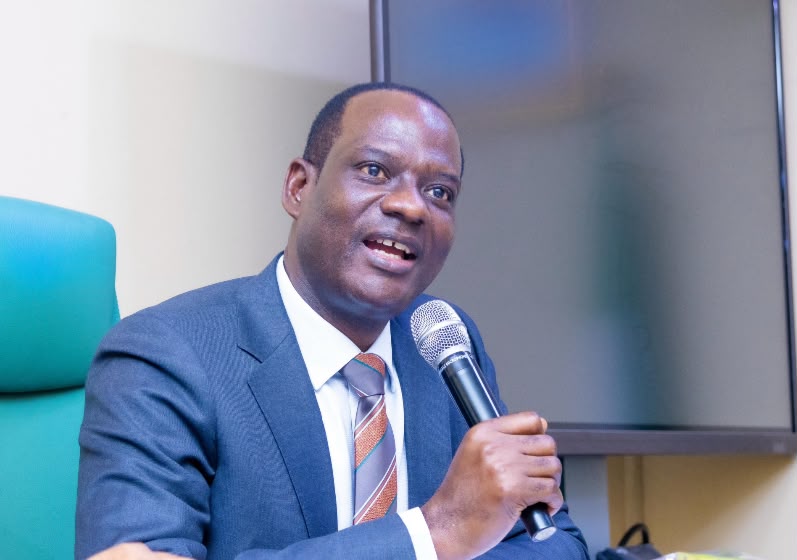
Minister of Finance and Coordinating Minister of the Economy, Prof. Taiwo Oyedele, says the Federal Government’s economic reforms have increased monthly Federal Account Allocation Committee (FAAC) disbursements to more than N2 trillion, compared with an average of about N300 billion under previous administrations.
Oyedele disclosed this on Monday in Owerri while declaring open the 2026 National Council on Finance and Economic Development retreat, themed “Strengthening Fiscal Federalism for Equity, Sustainable Development and Economic Resilience in a Volatile Global Economy.”
The minister attributed the increase in government revenue to major economic decisions under President Bola Tinubu, particularly the removal of fuel subsidy and the unification of the foreign exchange market.
He said the reforms contributed to a record N2.8 trillion disbursement in June 2026, adding that the improved revenue position had eased salary payment pressures across the states.
According to Oyedele, many states struggled to meet salary obligations for decades, but the current revenue arrangement has improved their ability to meet such commitments.
However, he warned governors that higher FAAC allocations alone would not guarantee economic prosperity.
Oyedele Urges States to Boost Internally Generated Revenue
The finance minister challenged state and local governments to reduce their dependence on monthly allocations by investing in productive sectors, infrastructure, human capital and basic public services.
He urged states to strengthen their internally generated revenue and transform themselves into economic platforms capable of attracting investment and creating jobs.
“Ultimately, the federation cannot share its way into prosperity,” Oyedele said.
He also called for a review of the country’s revenue allocation formula to promote greater equity among the 774 local government areas.
Oyedele said fiscal responsibility and debt sustainability should remain key priorities as governments seek to manage available resources more effectively.
FG Expands Support for Vulnerable Nigerians
The minister also highlighted government interventions designed to cushion the impact of economic reforms on vulnerable citizens.
Among the measures he mentioned were cash transfers targeting 15 million vulnerable households and the NG-CARES programme.
He said such interventions were necessary to protect vulnerable Nigerians while the country continues with its economic reform programme.
Governor Hope Uzodimma, represented by his deputy, Chinyere Ekomaru, commended the Federal Government’s fiscal reforms and called for stronger fiscal federalism.
She said states must be empowered to generate more revenue while ensuring that allocations are distributed equitably and managed prudently.
The retreat brought together stakeholders including the Revenue Mobilisation Allocation and Fiscal Commission, Office of the Accountant-General of the Federation, state Ministries of Finance, the Central Bank of Nigeria and NNPC Ltd.
Participants are expected to develop recommendations on revenue mobilisation, fiscal responsibility, debt sustainability, economic diversification and improved resource allocation.
Source: News Agency of Nigeria (NAN).