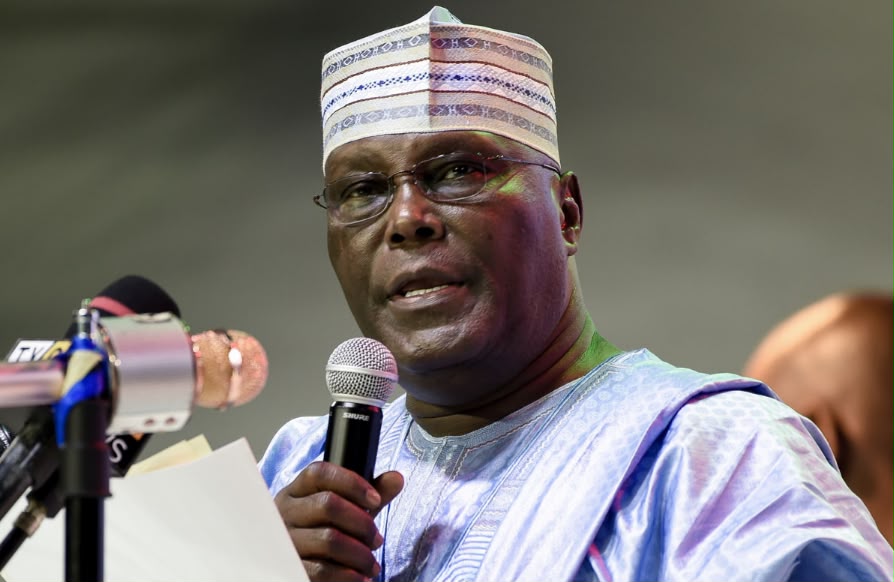
The Presidency has dismissed former Vice President Atiku Abubakar’s claim that the Federal Government earned a ₦7.98 trillion oil windfall under President Bola Tinubu’s administration, challenging him to provide evidence to back the allegation.
In a statement issued on Sunday, Bayo Onanuga, Special Adviser to the President on Information and Strategy, described Atiku’s economic analysis as “deficient”, insisting that the figures presented by the former vice president do not reflect the realities of Nigeria’s oil revenue.
The response follows Atiku’s recent criticism of the Federal Government’s continued domestic borrowing despite what he described as higher-than-expected oil earnings.
In an earlier statement released through his spokesman, Phrank Shaibu, Atiku accused the Tinubu administration of lacking fiscal discipline and transparency.
He claimed that with crude oil production averaging 1.5 million barrels per day, Nigeria generated an estimated $5.76 billion (about ₦7.98 trillion) in additional revenue between March 1 and July 14, 2026.
Atiku argued that despite the alleged windfall, the government still borrowed about ₦5 trillion from the domestic bond market during the first half of 2026, questioning the rationale behind the borrowing.
However, the Presidency rejected the calculation, insisting there was no such ₦7.98 trillion windfall.
“Former Vice President Atiku Abubakar, in his typical pastime, has accused the administration of President Bola Ahmed Tinubu of fiscal recklessness… concocting an oil windfall of ₦7.98 trillion and suggesting that Nigeria is drifting economically,” Onanuga said.
He explained that simply multiplying crude oil prices by daily production does not represent the revenue available to the Federal Government.
According to him, such calculations ignore several important factors, including production costs, the share of revenue belonging to international oil companies and existing crude oil sales agreements.
“The convenient mistake many analysts make is to multiply the oil price by the daily crude production volume to determine revenue to the government. Such analyses ignore the cost of production, the share of crude belonging to the oil-producing companies and the impact of crude sale contracts,” he stated.
Onanuga also noted that although crude oil prices averaged around $90 per barrel in the first half of 2026—above the government’s benchmark of $64.85—Nigeria’s oil production remained below target at approximately 1.6 million barrels per day, compared to the projected 1.84 million barrels per day.
He added that part of the country’s crude production had already been committed to servicing loans obtained under previous fuel subsidy arrangements, reducing the amount of revenue available to the government.
Challenging Atiku to substantiate his figures, Onanuga said:
“Atiku will do well to show the workings for his ₦7.98 trillion oil windfall.”
The presidential spokesman also defended the Tinubu administration’s borrowing strategy, dismissing claims that Nigeria has accumulated excessive debt.
According to him, the country’s debt-to-GDP ratio of about 40 percent remains within acceptable limits, while recent economic reforms have improved revenue generation, expanded the tax base and strengthened public financial management.
“The debt debate should examine not only how much Nigeria borrows but also whether the country’s capacity to generate and manage revenue continues to improve,” Onanuga added.
The latest exchange is part of the growing war of words between the Presidency and Atiku ahead of the 2027 general election, with both sides repeatedly clashing over the Tinubu administration’s economic policies and governance record.