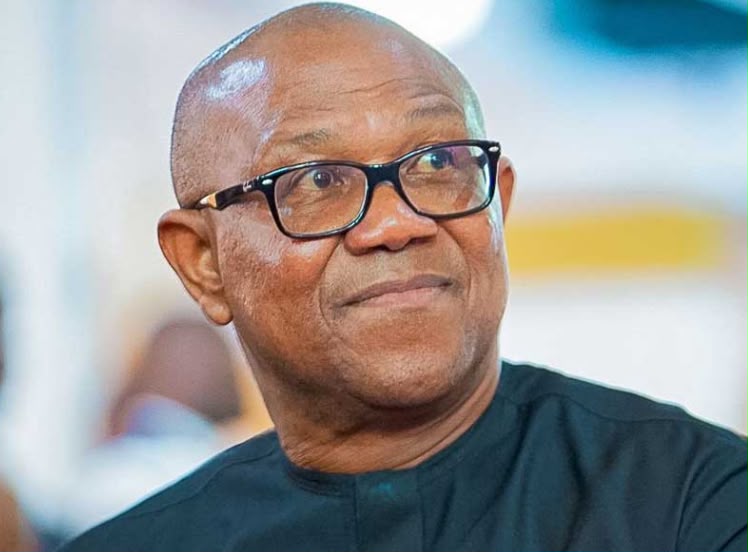
The Anambra State Government has said deductions are still being made from the state’s monthly Federation Account Allocation Committee (FAAC) revenue to repay loans it says were obtained during the administration of former Governor Peter Obi.
Commissioner for Information and Value Reorientation, Law Mefor, made the claim on Friday while appearing on Arise Television’s The Morning Show, as the dispute over the financial record of Obi’s administration continues.
Mefor said the fact that some of the loans were guaranteed by the Federal Government did not mean they were grants or funds that did not have to be repaid.
“First and foremost, a loan is a loan, and whether it is sovereign or not, even an interest-free loan is still a loan. The FAAC allocations to Anambra State are being deducted every month to service the separate loans taken by the Peter Obi administration,” he said.
The commissioner said the loans were among eight external facilities guaranteed by the Federal Government, adding that state governments had the option of participating in the various lending programmes.
He cited Governor Chukwuma Soludo’s decision not to participate in the Nigeria CARES programme funded by the World Bank as an example of a state choosing whether or not to take such facilities.
“So Obi had the opportunity to either take or not to take. So if you take, you take the responsibility,” Mefor said.
He put the external facilities attributed to the Obi administration at $123 million and argued that the outstanding obligations should be considered when assessing the former governor’s financial record.
Mefor said the controversy was not about whether governments should borrow money for development but about whether Obi was correct in claiming that his administration did not take loans.
“The point I’m trying to make is simple: he took loans, and he said he didn’t take,” he said.
The commissioner also disputed Obi’s claim that he handed over Anambra without financial liabilities, insisting that some obligations linked to the loans remained outstanding after he left office.
“And he said also that he did not pass down any financial liabilities that accrued from loans that he took. That is also not correct,” Mefor added.
The latest development is part of an ongoing dispute between Obi and the Anambra State Government over the financial position of the state when he handed over power in 2014.
Obi has denied leaving behind outstanding debts, salary arrears, pension obligations, gratuities or unpaid commitments to contractors when his tenure ended.
The Anambra government, however, has maintained that records from the Debt Management Office show eight external loans associated with projects undertaken during Obi’s tenure, with the outstanding balance estimated at about N127.4 billion as of June 30, 2026.
The state government has also maintained that the loans were obtained for various development programmes and that their repayment obligations remain relevant to the state’s finances.
Obi had challenged the government to produce evidence contradicting his account, saying he would stop campaigning for the 2027 presidential election if it could establish that he left Anambra in debt.
The disagreement has consequently shifted from a dispute over historical financial records to a broader political argument over the management of Anambra’s finances and the obligations inherited by successive administrations.
Source: Arise TV