
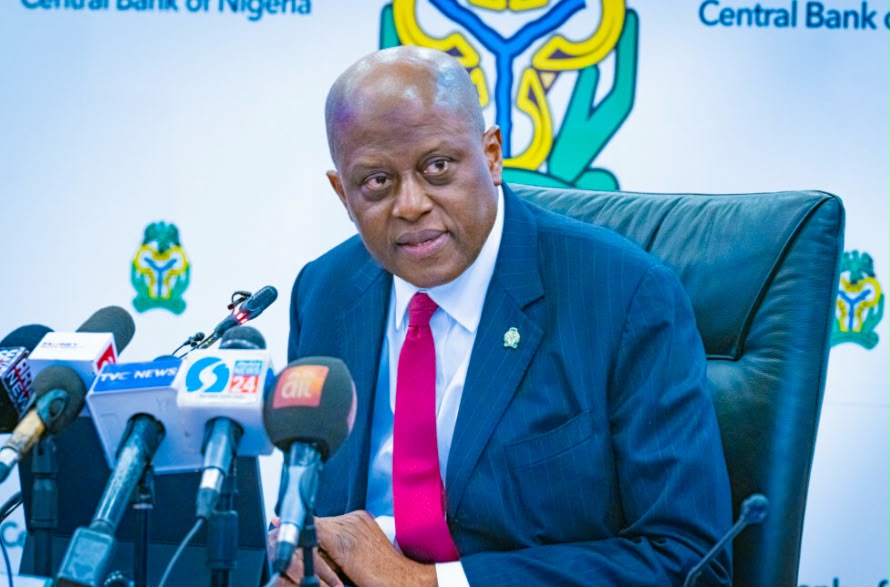
The Governor of the Central Bank of Nigeria (CBN), Olayemi Cardoso, has expressed confidence that interest rates in Nigeria will gradually decline as ongoing economic reforms take deeper effect, making it easier for businesses—especially small and medium enterprises (SMEs)—to access credit.
Cardoso made the remarks on Wednesday during a fireside chat with the Director-General of the World Trade Organization (WTO), Dr. Ngozi Okonjo-Iweala, at the 7th Africa Emerging Markets Forum in Abuja.
Responding to concerns over the high cost of borrowing for SMEs, the CBN governor acknowledged that current interest rates remain high but described the situation as a temporary consequence of reforms aimed at restoring macroeconomic stability.
“Interest rates are high. Exchange rates have moderated and are stable. Into the future, my expectation is that over time, interest rates will begin to moderate,” Cardoso said.
He attributed the current borrowing costs to years of inconsistent economic policies, stressing that the country is now paying the price for past policy reversals.
Cardoso explained that the CBN has strengthened development finance institutions by giving them greater flexibility to provide loans to businesses while maintaining tighter supervision of commercial banks.
He also said the ongoing banking recapitalisation exercise would improve lending to the real sector, particularly small businesses.
“Now that we have finished a banking recapitalisation exercise and the banks have a lot of money at their disposal, you’re likely to find that there will be more interest in SMEs as rates begin to drop,” he said.
According to the CBN governor, commercial banks are expected to adjust their lending strategies as opportunities for easy profits continue to decline.
“Banks are in the business to make money. They will look at how they can tweak their risk models and ensure they can support SMEs, and we will encourage them,” Cardoso added.
He assured entrepreneurs that the apex bank is already working on measures that will improve access to finance for smaller businesses.
“These are all temporary issues. We will get to a situation where rates will become more moderate, and where it will be easier for SMEs to access credit,” he said.
Cardoso also defended the CBN’s decision to reduce intervention lending, arguing that development finance should not be the primary responsibility of a central bank.
He noted that previous intervention programmes placed excessive fiscal responsibilities on the apex bank and limited its ability to focus on its core mandate.
The CBN governor maintained that the return to orthodox monetary policy has helped restore stability to Nigeria’s financial system and laid the foundation for sustainable economic growth.
CBN to Publish Economic Reform Document
Cardoso also disclosed that the Central Bank of Nigeria will soon publish a document detailing the economic reforms implemented under the current administration.
According to him, the publication will serve as a reference for future policymakers and help prevent a return to past policy mistakes.
“We’ve finished a draft, and in due course we will publish it, so people can understand the reforms that have brought us to where we are today,” he said.
Source: 7th Africa Emerging Markets Forum, Abuja.