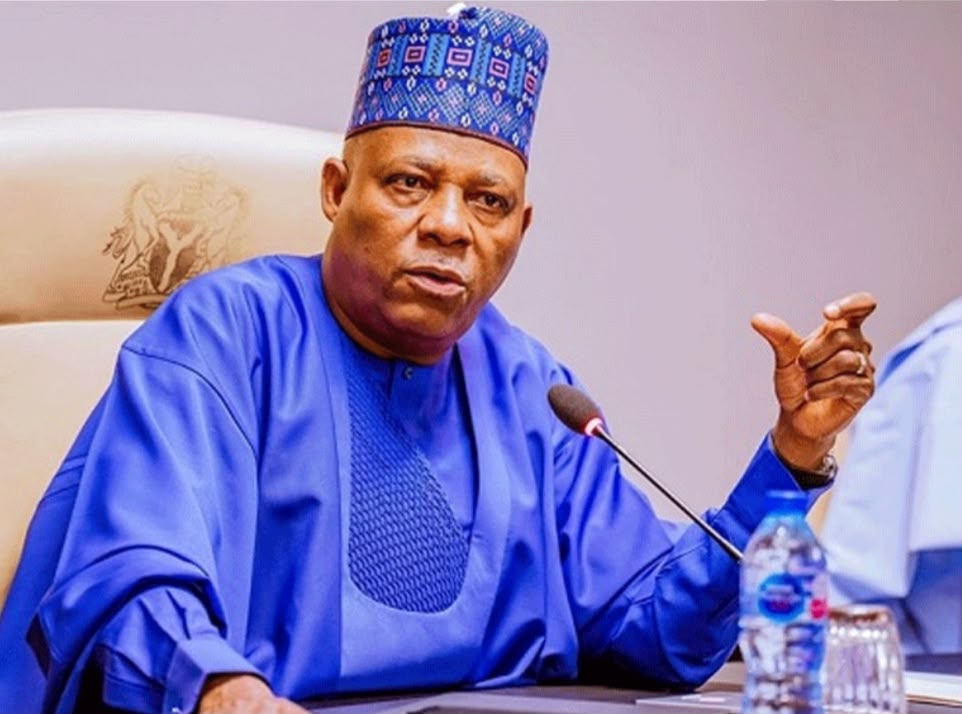
Vice President Kashim Shettima has called on African countries to stop exporting raw materials without processing them, urging the continent to embrace industrialisation and create more value from its natural resources.
Speaking during a visit to the Glo-Djigbé Industrial Zone (GDIZ) in Cotonou, Republic of Benin, on Friday, Shettima said Africa must take greater control of its resources by developing industries that turn raw materials into finished products.
He noted that the continent has enormous natural wealth but continues to earn only a small share of the global market because many of its resources are exported without value addition.
“We are here essentially at the behest of President Tinubu, in the spirit of his Renewed Hope Agenda, to see and peer-review global best practices,” Shettima said.
The Vice President praised Benin’s industrial development, describing the Glo-Djigbé Industrial Zone as an African success story for transforming locally produced cotton, cashew and soya beans into finished products for local use and export.
He expressed concern that Africa currently earns only about one percent of the 370 billion-dollar global cotton industry, stressing that reviving Nigeria’s textile sector could create millions of jobs, increase non-oil exports and boost economic growth.
According to Shettima, Nigeria is already taking steps to strengthen its industrial sector by establishing eight agro-industrial zones across eight states.
“We have learnt a lot of lessons through this visit, and we are going to replicate a lot of that in Nigeria,” he said.
The Vice President added that the Federal Government remains committed to making Nigeria one of the world’s leading industrial economies under President Bola Tinubu’s Renewed Hope Agenda.
During the visit, Shettima and his delegation toured cotton, textile, cashew and soya bean processing facilities and received briefings on the industrial zone’s production capacity and investment opportunities.
He was accompanied by the governors of Kwara, Imo, Katsina, Plateau, Zamfara and Jigawa states as part of Nigeria’s efforts to learn from Benin’s successful model of linking agriculture with manufacturing and attracting private investment.
Source: NAN.