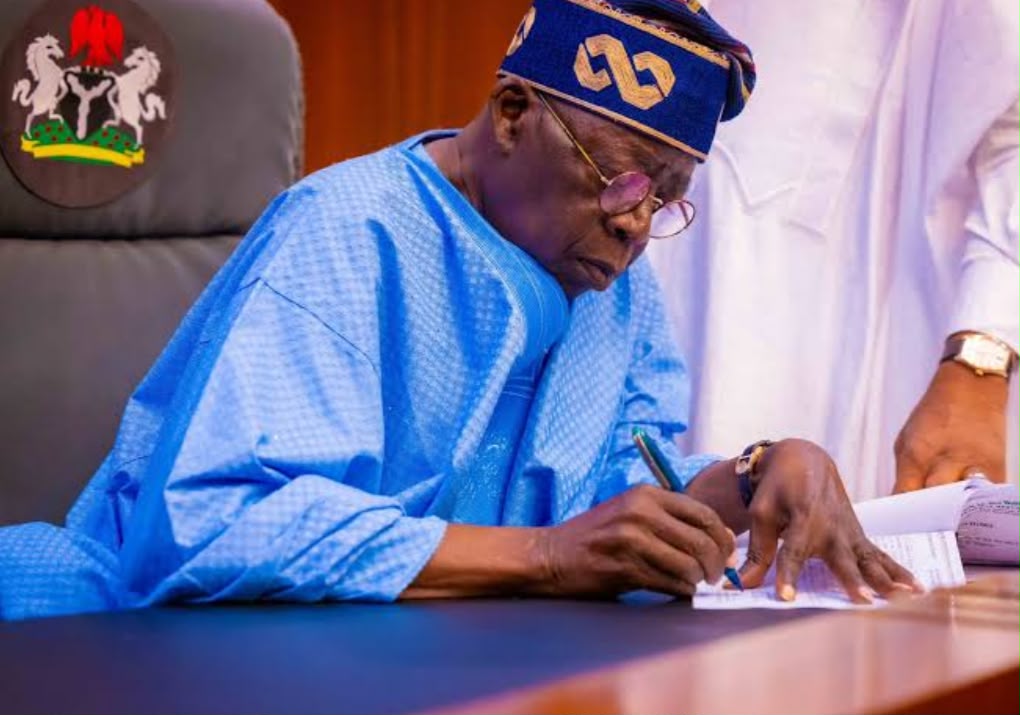
President Bola Tinubu has declined to sign into law two bills passed by the National Assembly, citing constitutional, legal and drafting shortcomings that must be corrected before they can receive presidential approval.
The affected bills are the Chartered Institute of Purchasing and Supply Management of Nigeria (Amendment) Bill, 2026 and the Raw Materials Research and Development Council (Amendment) Bill, 2026.
The President’s decision was formally communicated to the Senate on Thursday through separate letters read during plenary by Senate President Godswill Akpabio.
Tinubu Raises Concerns Over Procurement Institute Bill
In his letter on the Chartered Institute of Purchasing and Supply Management of Nigeria (Amendment) Bill, Tinubu acknowledged that several of the proposed amendments were well-intentioned but expressed concern that some provisions granted excessive regulatory powers to the institute.
According to the President, the bill seeks to empower the institute to require organisations to report procurement appointments, penalise employers who appoint non-members as heads of procurement units, compel organisations to notify the institute whenever procurement staff are removed, initiate legal action against non-members and conduct inspection visits to companies.
Tinubu argued that these provisions go beyond the institute’s statutory responsibilities and could impose unreasonable obligations on both public and private organisations.
“The institute is not the statutory regulator of procurement practice in Nigeria and therefore lacks the authority to impose such obligations on independent organisations,” the President stated.
He advised lawmakers to review the contentious provisions and return the revised bill for presidential assent.
Following the reading of the letter, Senate President Akpabio referred the bill to the Senate Committee on Rules and Business, directing the committee to review the President’s observations and report back within two weeks.
“The reasons given for the decline are here for the committee on rules and business to rework on. This should be done and returned to the Senate within two weeks,” Akpabio said.
Raw Materials Bill Also Returned
Tinubu also declined assent to the Raw Materials Research and Development Council (Amendment) Bill, 2026, citing drafting and legal defects.
According to the President, the bill failed to clearly reflect its principal objectives in its long title and contained several drafting errors that require correction before it can become law.
“The reasons are all here, clause by clause, so subject to the correction of the above issues, the bill may be suitable for retransmission and assent,” the President wrote.
Akpabio subsequently referred the second bill to the Senate Committee on Rules and Business, giving the committee four weeks to address the identified issues and present its report to the Senate.
The rejection means both bills will undergo further legislative review before they can be reconsidered for presidential approval.