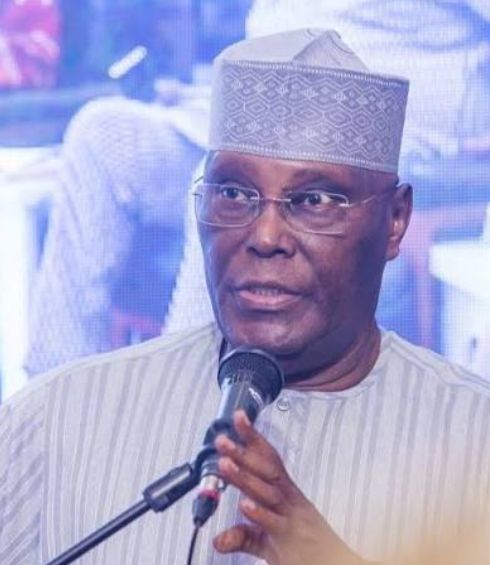
Former Vice-President and African Democratic Congress (ADC) presidential candidate, Atiku Abubakar, has accused former Secretary to the Government of the Federation, Babachir Lawal, of promoting ethnic profiling, insisting that political debates should be centred on policies, competence, and leadership rather than ethnicity.
Atiku, through a statement issued by his media aide, Phrank Shaibu, said Lawal’s recent criticisms were built on prejudice and conspiracy theories instead of facts, warning that attempts to judge individuals based on ethnic identity could further deepen divisions in the country.
The former vice-president was reacting to allegations by Lawal that the ADC’s primary election process was manipulated in his favour and that the party should consider replacing him as its presidential candidate ahead of the 2027 election.
According to Atiku, the most disturbing aspect of Lawal’s comments was what he described as an attempt to associate an entire ethnic group with the actions of a few criminal elements.
“It is dangerous and irresponsible to suggest that any Nigerian should be judged or condemned because they share a common ancestry with criminals,” Atiku said.
He argued that applying such logic would mean holding entire communities responsible for the actions of a few individuals, a situation he said could threaten national unity and social cohesion.
Atiku also questioned Lawal’s position, pointing out that the former SGF served under a Fulani president without publicly raising similar concerns at the time.
“At no point did Mr. Lawal object to receiving such trust and elevation from a Fulani President. He accepted the office, the privileges, and the prestige that came with it,” Atiku stated.
The ADC candidate further accused Lawal of contradicting himself, referencing remarks in which the former SGF reportedly claimed that several governors were trying to lure him back into the All Progressives Congress (APC).
“Nigerians are entitled to ask a simple question: which Babachir should they believe?” Atiku asked.
“The Babachir who claims to be a victim of political conspiracies and ethnic domination, or the Babachir who boasts that governors are scrambling for his services?”
Atiku also dismissed claims that he has remained silent on issues of insecurity, terrorism, banditry, and kidnappings, insisting that he has consistently spoken out against violence regardless of the ethnic or religious identities of those affected.
The former vice-president said leadership should not be defined by tribe or religion but by the ability to stand with citizens during difficult times.
“Leadership is not about counting tribes or measuring faith. It is about standing with people in moments of difficulty regardless of their ethnic or religious identity,” he said.
Atiku also highlighted efforts he made to support some of the released Chibok schoolgirls through scholarships at the American University of Nigeria, saying nation-building requires action, compassion, and a commitment to healing rather than exploiting tragedies for political gain.
Calling for a more constructive political discourse ahead of future elections, Atiku urged political actors to focus on solutions to Nigeria’s challenges instead of promoting ethnic suspicion and division.
“Babachir may see tribe. I see Nigerians. Babachir may see division. I see a nation that must come together if it is to overcome its present challenges,” he said.
The former vice-president maintained that Nigeria’s future should be built on unity, inclusion, and purposeful leadership rather than resentment and identity politics.
Source: Atiku Media Office.