
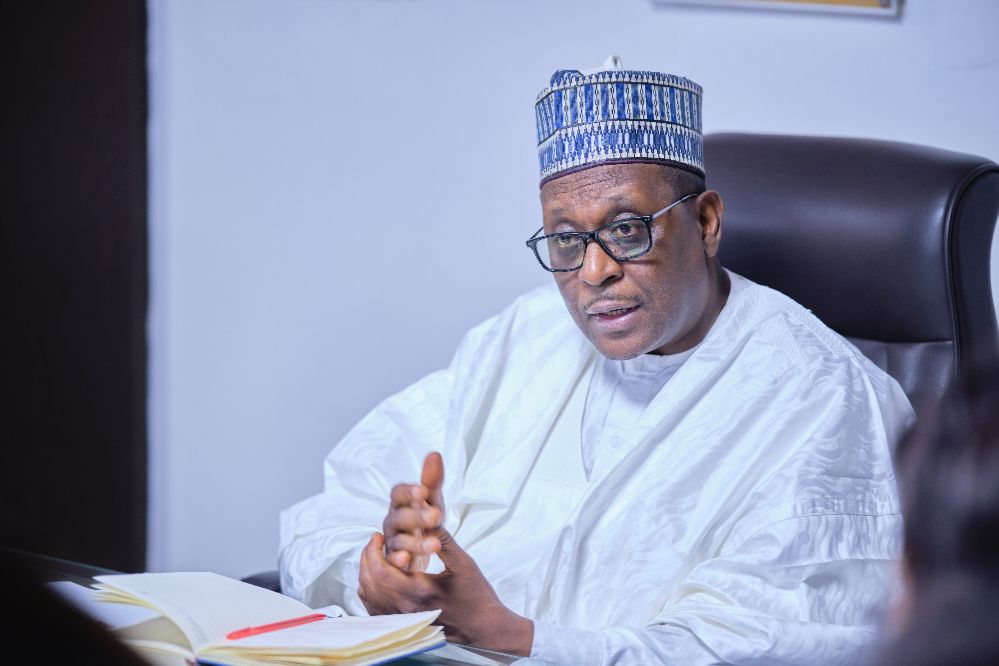
The Coordinating Minister of Health and Social Welfare, Muhammad Ali Pate, has directed striking workers at the University of Uyo Teaching Hospital to immediately suspend their industrial action and return to work following the uproar caused by the recent operation carried out by officials of the Economic and Financial Crimes Commission within the hospital premises.
The directive was contained in an official letter dated May 14, 2026, and addressed to the Chief Medical Director of the hospital, Prof. M.M. Bassey. The minister’s intervention came after top officials of the anti-graft agency reportedly admitted that the operation conducted at the hospital was inappropriate and regrettable.
According to the minister, senior representatives from the EFCC headquarters in Abuja visited the Federal Ministry of Health and Social Welfare where they openly acknowledged that errors were made during the enforcement exercise that triggered tension across the medical facility.
Pate explained that the EFCC leadership expressed deep regret over the development and formally conveyed apologies to healthcare workers, patients, and other individuals affected by the incident through the ministry.
The minister stressed that the apology and acknowledgment of wrongdoing by the commission should pave the way for industrial peace and restoration of healthcare services at the institution.
He appealed to the hospital management to prevail on aggrieved workers to end the strike action without delay and resume medical services in the interest of patients and the general public who depend heavily on the facility for healthcare.
In a strongly worded communication, the minister explained that the federal government considered uninterrupted healthcare delivery a priority, especially in teaching hospitals where emergency and specialist services are constantly required.
He noted that while concerns raised by the workers were legitimate, every effort was being made to address the matter responsibly and prevent similar occurrences in the future.
The controversy erupted after armed EFCC operatives reportedly stormed the University of Uyo Teaching Hospital earlier in the week during what was described as an enforcement operation linked to an ongoing investigation.
Eyewitness accounts from health workers and hospital sources claimed that the sudden appearance of heavily armed security personnel inside the hospital environment caused widespread panic among patients, visitors, and staff members.
Several workers alleged that some healthcare personnel were intimidated during the operation, while frightened patients and their relatives reportedly abandoned treatment areas and fled sections of the hospital for safety.
Medical personnel also claimed that the incident disrupted clinical operations, delayed emergency response services, and created confusion across different units within the facility.
The development immediately sparked outrage among health workers, professional medical associations, and civil society organisations, many of whom condemned the operation as reckless and insensitive considering the sensitive nature of healthcare institutions.
The Nigerian Bar Association also criticised the action, describing the invasion as unacceptable and dangerous within a healthcare setting where patients’ lives could be placed at risk.
Following the incident, some hospital workers embarked on an industrial action to protest what they described as harassment, intimidation, and violation of the sanctity of medical facilities.
The striking workers insisted that hospitals should remain protected environments where security operations must never interfere with patient care, emergency treatment, or the safety of healthcare professionals.
The incident has once again brought national attention to the growing tension between security agencies and healthcare workers across Nigeria.
Over the years, the Nigerian Medical Association alongside other health sector groups has repeatedly complained about alleged intimidation and harassment of medical personnel by security operatives during investigations involving patients, contractors, or public institutions.
Many healthcare stakeholders have argued that security agencies often fail to follow proper operational procedures when carrying out investigations within hospitals, thereby endangering lives and disrupting essential medical services.
In response to the growing concerns, Pate announced the formation of a special ministerial committee to investigate recurring cases involving clashes and confrontations between security agencies and healthcare workers in hospitals across the country.
According to the minister, the committee will consist of senior representatives from the Nigerian Medical Association, the Joint Health Sector Unions, the National Association of Nigerian Nurses and Midwives, human rights organisations, the Committee of Chief Medical Directors, as well as top officials from the Federal Ministry of Health and Social Welfare.
He explained that the committee has been tasked with examining both the immediate and underlying causes of such incidents and recommending practical solutions that would prevent future occurrences.
The minister further revealed that the panel would begin work immediately and is expected to submit its findings and recommendations within two weeks.
Observers say the latest incident has reignited urgent conversations about the need for clearly defined operational guidelines regulating how law enforcement agencies conduct activities inside medical institutions.
Many experts believe stronger collaboration between security agencies and healthcare authorities is necessary to ensure criminal investigations do not compromise patient safety, hospital operations, or the rights of healthcare professionals.
The resolution of the dispute is expected to restore calm at the University of Uyo Teaching Hospital as patients and residents hope for the full resumption of medical services after days of disruption and uncertainty.