
The Federal Government has announced plans to clear outstanding payments owed to Nigerian students affected by the suspended Bilateral Education Agreement (BEA) scholarship programme, with a total of ₦8 billion set aside to settle beneficiaries studying abroad.
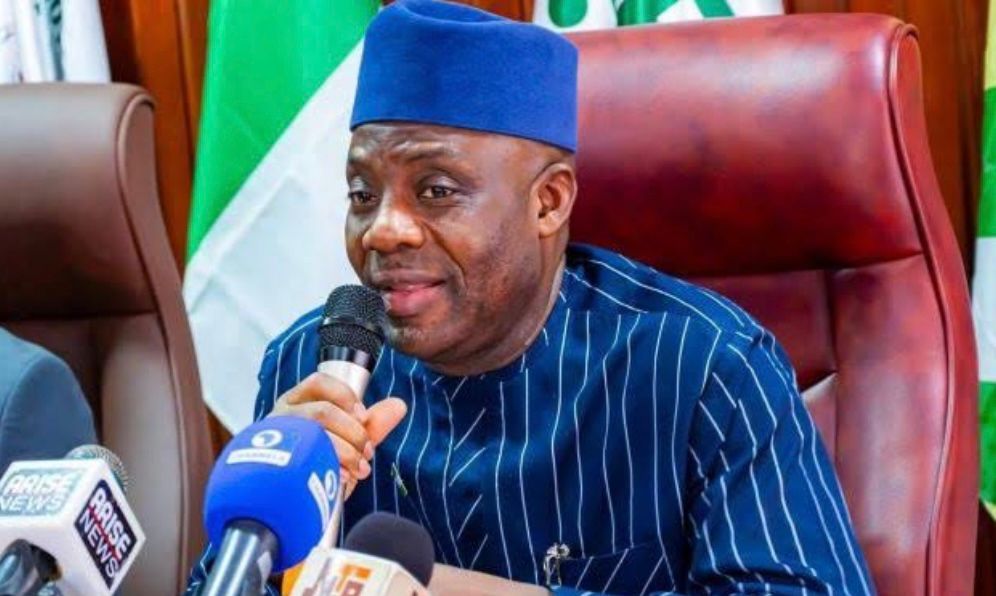
The disclosure was made by Nigeria’s Minister of Education, Tunji Alausa, during an interview on Channels Television on Tuesday, where he revealed that part of the money has already been released while the balance is expected to be approved soon.
According to the minister, the Federal Government has already paid ₦4 billion to affected students and is currently processing another ₦4 billion to completely offset outstanding obligations owed under the now-cancelled scholarship scheme.
Giving an update on the payment process, Alausa explained that discussions with the Ministry of Finance were ongoing and that the remaining funds would soon be released to ensure students receive their entitlements.
In his words:
“We’ve paid four billion of it. We’re disbursing the four billion now. This additional four billion will be approved. I’ve been in constant communication with the Minister of Finance. It will be approved in the next two weeks. They will be settled.”
The minister’s comments come after months of complaints from Nigerian students studying in countries such as China, Russia, Morocco, Hungary, Egypt, Algeria, and Serbia over delayed stipends, unpaid tuition fees, and worsening living conditions abroad.
Many affected scholars had earlier reported financial hardship, eviction from hostels, inability to pay school fees, and restricted access to university services after the government reportedly stopped payments for several months.
Government Says Scholarship Programme Was Deeply Abused
While confirming the payments, Alausa strongly defended the government’s decision to scrap the BEA scholarship programme, alleging that the scheme had been heavily abused and had drifted away from its original purpose.
The minister explained that the BEA initiative was initially designed as part of diplomatic agreements between Nigeria and foreign countries to train students in highly specialised fields critical to national development, including medicine, engineering, aviation, and technical sciences.
However, according to him, the programme gradually turned into a general sponsorship scheme for courses that could easily be studied within Nigerian universities.
Alausa revealed that one of the first official documents presented to him after assuming office involved a request to approve ₦650 million for only 60 students travelling to Morocco under the scheme.
He expressed shock after reviewing the list of courses attached to the proposal.
The minister said:
“₦650 million for 60 students? And as I was looking at the courses that were going to Morocco, we had Nigerian scholarship beneficiaries going to study English in a French-speaking country.”
He further disclosed that many of the sponsored programmes included courses such as psychology, sociology, zoology, and botany, which he argued were readily available in Nigerian universities and did not justify expensive overseas sponsorship.
Students Allegedly Collected Scholarship Funds While Studying in Nigeria
The Education Minister also alleged that investigations uncovered multiple cases of abuse involving beneficiaries who were simultaneously enrolled in Nigerian universities while still receiving foreign scholarship allowances under the BEA programme.
According to him, the discovery raised serious concerns about accountability and transparency within the system.
Explaining why the government eventually decided to suspend the programme, Alausa stated:
“We also had incidences of kids that got this scholarship that they’re studying in Nigerian universities, getting the money. So, we stopped it.”
The government believes the programme had become financially unsustainable and vulnerable to misuse, especially as the annual cost of maintaining the scheme continued to rise significantly over the years.
Official records showed that Nigeria’s allocation for the scholarship programme increased from about ₦3.2 billion in 2022 to nearly ₦8 billion by 2025 before the eventual cancellation.
Scholarship Crisis Left Hundreds of Students Stranded Abroad
The crisis surrounding the BEA programme began long before the Federal Government formally suspended it in April 2025.
Between September 2023 and August 2024, many students reportedly received no stipends or financial support from the government.
Although payments resumed briefly in September 2024, several students complained that their allowances had been reduced drastically, with reports indicating cuts of more than 50 percent compared to previous payments.
The prolonged delays reportedly left many scholars stranded abroad and struggling to survive.
Despite the official cancellation of the programme in 2025, controversy resurfaced after a fresh ₦1.7 billion allocation linked to the BEA scheme appeared in the 2026 Appropriation Bill.
The Federal Government later clarified that the budgetary provision was merely a procedural rollover connected to outstanding obligations and did not indicate a reversal of the decision to discontinue the scholarship programme.
For now, affected students are hoping the promised ₦8 billion settlement will finally bring relief after months of uncertainty, financial hardship, and disruption to their academic programmes abroad.