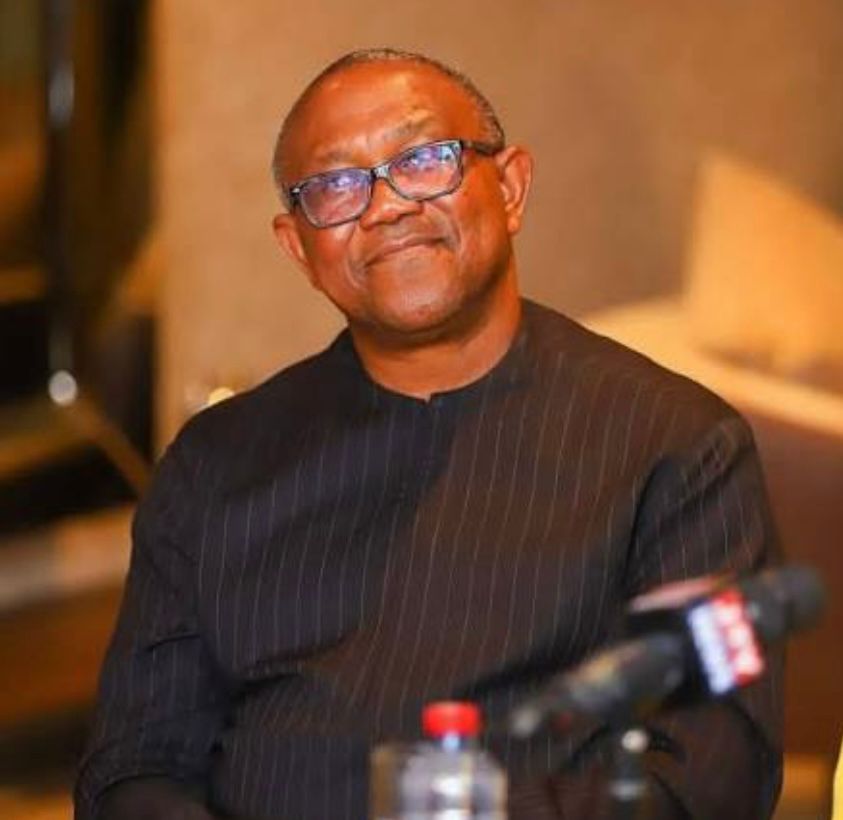
The Labour Party has admitted that the exit of its former presidential candidate, Peter Obi, created a major vacuum within the party as preparations for the 2027 general elections intensify.
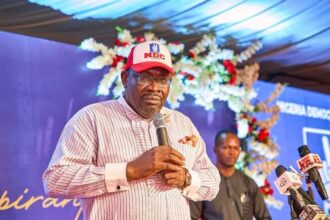
Speaking during an interview on Channels Television’s Sunrise Daily programme on Monday, the party’s National Publicity Secretary, Ken Asogwa, described Obi as a political heavyweight whose influence and popularity played a significant role in the Labour Party’s rise during the 2023 elections.
According to Asogwa, the party could not deny the impact Obi had on its national structure and public appeal, stressing that his departure forced the Labour Party to rethink its political strategy and internal structure ahead of the next election cycle.
He explained that the party had already anticipated Obi’s exit long before he officially aligned himself with the opposition coalition under the African Democratic Congress, ADC.
Asogwa noted that rumours surrounding Obi’s possible departure had circulated within political circles for months, prompting the party leadership to begin taking precautionary steps to reduce the political impact of his eventual exit.
The Labour Party spokesman said the development pushed the party back to what he described as the “drawing board,” where leaders focused on rebuilding internal structures and reconnecting with institutional allies capable of strengthening the party’s foundation.
According to him, the party later identified organised labour groups, particularly the Nigeria Labour Congress and the Trade Union Congress, as its strongest political support base.
He revealed that the current leadership made deliberate efforts to restore relationships with both organisations after they were allegedly sidelined by previous party leadership.
Asogwa stated that rebuilding ties with the NLC and TUC became a major part of the Labour Party’s strategy to reposition itself and remain politically relevant despite Obi’s exit.
Despite acknowledging the vacuum created by the former Anambra State governor’s departure, the party spokesman insisted that the Labour Party still possesses the capacity to produce another formidable presidential candidate capable of competing strongly in 2027.
He maintained that the party’s structure and growing institutional backing place it in a stronger position politically than many critics believe.
The comments come amid ongoing political realignments ahead of the 2027 elections following Obi’s involvement in the opposition coalition under the ADC, which is seeking to challenge President Bola Tinubu and the ruling APC.
Obi’s movement into the coalition had earlier triggered tensions within the Labour Party, with the Julius Abure-led faction reportedly demanding that he formally resign from the party over what it described as conflicting political loyalties.
However, Obi later distanced himself from the Labour Party, citing lingering internal legal disputes and political uncertainty within the party.
He has now aligned with the National Democratic Congress, NDC, which recently agreed to zone its presidential ticket to the South for a single term ahead of the 2027 presidential race.
Meanwhile, another Labour Party spokesperson, Obiora Ifoh, had earlier criticised Obi’s involvement in the coalition, accusing him of maintaining dual political allegiances while describing members of the alliance as politicians driven mainly by power interests.