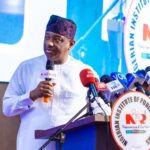
Human rights lawyer Femi Falana has called on journalists and media organisations across Nigeria to intensify efforts toward reopening unresolved murder cases and sustaining public pressure for justice.
Falana made the call on Saturday during an interactive session held in Ikeja, themed “The Role of Media in Promoting People’s Rights, Accountability and Access to Justice in the Context of Growing Insecurity in Nigeria.” The event was organised by Socio-Economic Rights and Accountability Project.
Speaking at the forum, Falana said the media remains one of the most powerful institutions for defending citizens’ rights and demanding accountability from those in authority. He stressed that journalists must continue to use their platforms to keep unresolved murder cases in public focus, particularly incidents involving alleged extrajudicial killings and serious human rights violations.
According to him, many high-profile cases that once generated nationwide attention have gradually disappeared from public discourse without clear closure or justice for victims and their families.
He warned that when public attention fades, investigations often lose momentum, making it easier for important cases to remain unresolved.
“The media must not allow such cases to be forgotten,” he said.
Falana pointed to several incidents in Lagos and other parts of the country, including cases allegedly linked to police officers, noting that some of them have not been revisited despite widespread concern from the public.
Among the cases he said deserve renewed attention is the alleged murder of Sylvester Oromoni, a student of Dowen College. He also mentioned the 2018 Offa bank robbery in Kwara State, the killing of Kudirat Abiola, wife of late MKO Abiola, and the murder of six traders at Owode Onirin Market in August 2025.
He maintained that sustained follow-up by journalists is essential, describing it as part of the press’ watchdog responsibility in a democratic society. In his view, media attention can help prevent such cases from being buried in silence and can push institutions to act.
Falana also criticised what he described as the limited use of the Freedom of Information Act by media practitioners. He said the law remains an important tool for investigative journalism and can help uncover facts, documents and official records capable of advancing justice, accountability and good governance.
According to him, journalists should make greater use of legal mechanisms available to them in order to strengthen public-interest reporting and expose institutional failures.
The senior lawyer further cautioned media organisations against allowing commercial considerations to undermine professional standards. He warned that the growing dependence on wraparound advertisements and similar commercial arrangements could weaken editorial independence and affect objective reporting.
He said the media must remain committed to truth, fairness and professional ethics, regardless of financial pressures.
“The media must not sacrifice truth and objectivity on the altar of commercial gains,” Falana stated.
He also reminded journalists that the Nigerian Constitution places a clear responsibility on the press to hold government accountable and to defend the rights and freedoms of citizens.
Falana urged reporters and editors to place greater emphasis on public-interest journalism, especially at a time of growing insecurity and increasing concerns over human rights abuses across the country. He noted that external pressures—whether political, financial or institutional—should not weaken the media’s role as a guardian of accountability.
Beyond domestic institutions, Falana highlighted the relevance of regional human rights mechanisms, noting that citizens are not limited to seeking justice only within national structures. He said where necessary, victims can pursue redress through broader regional channels.
He also called on the Federal Government to strengthen the country’s justice institutions to ensure timely investigation, prosecution and compensation for victims of rights violations.
Falana further advocated stronger collaboration between civil society organisations and the media, saying both sectors have critical roles to play in protecting citizens and advancing accountability.
He stressed that confronting human rights abuses in Nigeria requires sustained collective action and consistent public engagement from all stakeholders.
According to him, only a determined and independent media can keep important cases alive long enough to secure justice.