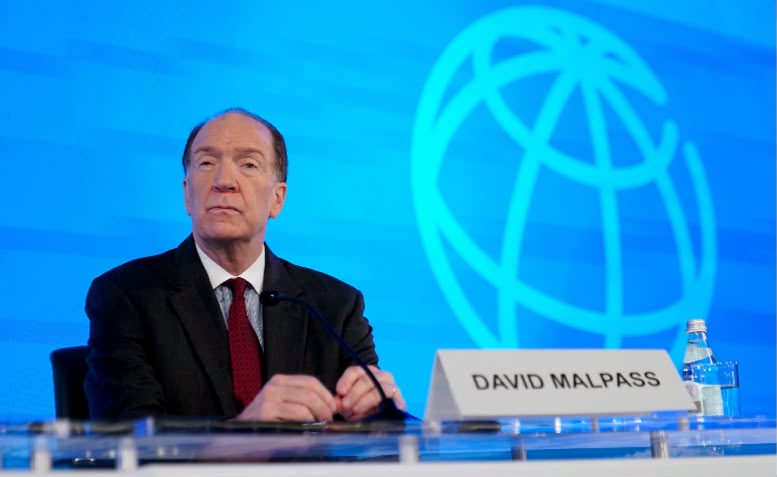
Former World Bank President David Malpass has said Nigeria has the potential to transform its economy through key reforms, including stabilising its currency, reforming the oil sector and overhauling its tax system.
Malpass made the remarks in a World Bank Policy Research Working Paper based on the Stanley Fischer Memorial Lecture, published on the World Bank’s website.
According to him, Nigeria’s per capita income remains around $1,500, while the country’s median income is even lower because a large share of the nation’s wealth is concentrated among a small number of people.
He said Nigeria’s long-term economic growth depends on implementing structural reforms similar to those that helped drive China’s rapid economic expansion in the 1990s.
“We identified several ingredients including currency stabilisation and unification, oil sector reforms, tax reform, and agricultural liberalisation, including rice. These could transform Nigeria’s economy as much as China’s 1993 reforms launched its sustained 10 percent real growth rate,” Malpass said.
The former World Bank chief also warned against continuous currency devaluation, saying it reduces the purchasing power of people who earn in local currency while benefiting those with privileged access to foreign exchange.
He urged international development institutions to prioritise policies that improve people’s incomes and living standards instead of focusing mainly on expanding lending.
“In many ways, this is the problem of multilateral finance as well: the risk of leaving people in developing countries more indebted without improving their living standards,” he said.
Malpass also expressed concerns over the transparency of some debt agreements involving Nigeria and other developing countries, warning that secretive financing arrangements and non-disclosure clauses could make future debt restructuring more difficult.
According to him, experts are still unable to fully assess many sovereign debt agreements, especially those linked to China’s lending programmes, because important details remain undisclosed.
“Specialists are still working in the dark on many large debt contracts, especially related to China’s lending programs,” he said.
He added that some recent collateralised debt deals involving Nigeria, Angola and Senegal could further complicate debt restructuring efforts in the future.
Malpass also criticised the current global debt restructuring system, saying frameworks such as the G20 Common Framework have delivered limited results for many developing countries, leaving them with prolonged negotiations and increasing debt burdens.