
The Budget Office of the Federation has revealed that the controversial Presidential Foreign Investment Promotion Council (PFIPC), now under investigation over allegations of forgery, traces its roots to an initiative established during the administration of former President Muhammadu Buhari.
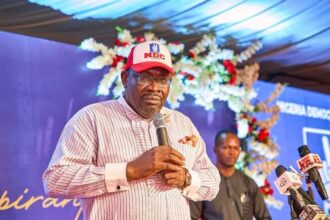
The clarification was made by the Director-General of the Budget Office, Tanimu Yakubu, after appearing before the House of Representatives committee investigating the circumstances surrounding the council’s creation and inclusion in the 2026 national budget.
According to Yakubu, the PFIPC did not emerge on its own but evolved from the Presidential Economic Advisory Council (PEAC) inaugurated by the late President Muhammadu Buhari on October 9, 2019.
He explained that by the time the 2026 budget was being prepared, several government institutions had already processed official documents relating to the council.
These included the assignment of an administrative code by the Office of the Accountant-General of the Federation, an approved establishment and recruitment waiver from the Office of the Head of the Civil Service of the Federation, as well as an existing public service salary structure.
“The Budget Office did not create the Council. It did not assign its code. It did not approve its establishment. It did not grant its recruitment waiver. It received official instruments and did what the law required of it: it measured their fiscal effect,” Yakubu said.
The Budget Office boss also disclosed that the council requested ₦3.85 billion as personnel cost for the 2026 fiscal year.
However, he said the Budget Office rejected the proposal and independently calculated a lower figure of ₦802.98 million using the approved staffing structure and government salary guidelines.
“That estimate did not form the basis of the Budget Office’s recommendation. The Budget Office disregarded it and made an independent calculation… That calculation produced ₦802,978,783. This was not a concession to the Council. It was the Budget Office’s own fiscal judgment,” he explained.
Yakubu stressed that despite the appropriation, no money was released because the council failed to obtain the mandatory Financial Clearance, which is required before recruitment, payroll enrolment and salary payments can begin.
He noted that the 2026 Appropriation Bill only became law after receiving presidential assent on March 31, 2026, while another key requirement—the approval of the National Salaries, Incomes and Wages Commission—was also outstanding.
“There was therefore no Financial Clearance. There was no lawful recruitment. There was no payroll enrolment. There was no salary payment,” Yakubu said.
According to him, the personnel allocation remained untouched, and no government funds were spent.
He explained that personnel allocations are not paid to agencies as lump sums but are disbursed monthly to verified employees through the federal payroll system.
“Not one kobo of the personnel provision could lawfully have been drawn. Not one kobo was drawn. There is no personnel expenditure to recover because there was no personnel expenditure,” he added.
The PFIPC controversy became public in June 2026 after Chief of Staff to the President, Femi Gbajabiamila, declared the council a fake agency and petitioned law enforcement authorities.
The council’s Director-General, Prince Adeyemi Adeniyi, later rejected the presidency’s position and alleged that Gbajabiamila demanded money to facilitate his appointment—an allegation the Chief of Staff denied before filing a ₦15 billion defamation suit against him.
Adeyemi was subsequently arrested by the police over the alleged forgery and is currently in custody.
Before his arrest, he claimed he personally approached officials of the Budget Office to secure the council’s inclusion in the federal budget.
The Central Bank of Nigeria (CBN) also confirmed that it opened two domiciliary accounts for the PFIPC on the instruction of the Office of the Accountant-General of the Federation, but clarified that the accounts were never funded or operated.
Investigations into the establishment and funding of the council are still ongoing.