The United Nations’ nuclear watchdog has stressed that Iran’s pledge not to develop nuclear weapons must be supported by a strong and credible verification process, as negotiations continue between Tehran and Washington to secure a lasting peace agreement.
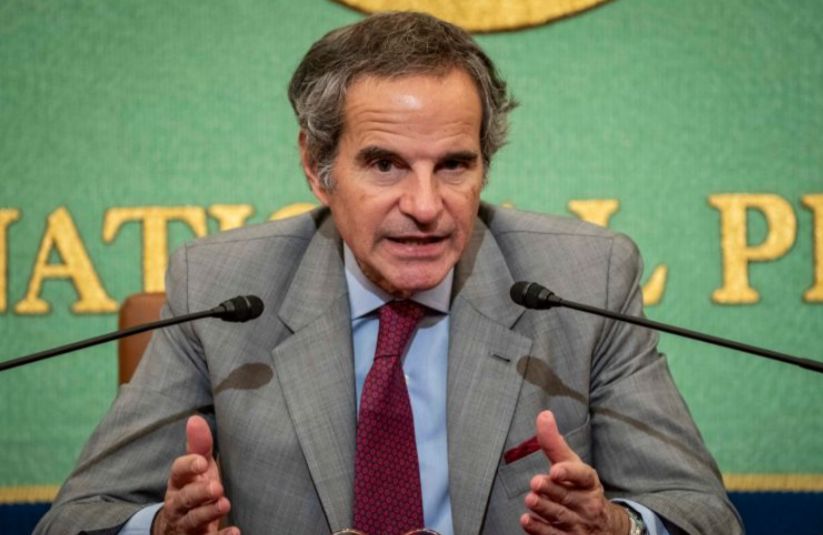
Speaking on Friday, International Atomic Energy Agency (IAEA) Director-General Rafael Grossi said Iran’s assurances alone were not enough and insisted that independent inspections would be essential to build international confidence.
“The government of Iran has declared quite clearly that this is not their intention. But of course, intentions are not enough. We have to have a very strong verification system in place as soon as is practicable,” Grossi said.
The comments come as the United States and Iran continue negotiations following a preliminary agreement aimed at ending months of conflict that began earlier this year.
Iran’s Nuclear Programme Remains A Major Obstacle
Iran’s nuclear programme remains one of the biggest issues standing in the way of a final peace agreement.
While Tehran maintains that its nuclear activities are strictly for peaceful and civilian purposes, several Western nations continue to express concerns that the programme could eventually be used to produce nuclear weapons.
According to Grossi, discussions between the IAEA and Iranian officials have only just begun, with inspectors hoping to resume verification activities as negotiations progress.
“Initial conversations have taken place. We expect this work to pick up soon,” he said.
Questions Remain Over Iran’s Enriched Uranium Stockpile
One of the major concerns is the fate of Iran’s stockpile of highly enriched uranium.
Before the conflict escalated, the IAEA estimated that Iran possessed about 440 kilograms of uranium enriched to 60 percent—well above levels required for civilian energy use but still below the roughly 90 percent enrichment generally associated with nuclear weapons.
Following airstrikes on Iranian nuclear facilities by the United States and Israel, the current status of that uranium remains uncertain.
Under the preliminary agreement, Iran’s enriched uranium is expected to be diluted under IAEA supervision, although Grossi said transporting the material out of Iran could also be considered.
“There are a few technical alternatives to deal with the material,” he explained.
Disagreement Over UN Inspections
Despite optimism from Washington, uncertainty remains over whether Iran will permit UN inspectors back into its nuclear facilities.
U.S. President Donald Trump recently claimed Iran had agreed to allow inspectors to return.
However, Iranian officials have reportedly insisted they have no immediate plans to readmit the IAEA, creating fresh uncertainty over the verification process.
Strait Of Hormuz Still A Key Issue
Beyond the nuclear dispute, negotiations are also focusing on the Strait of Hormuz, one of the world’s busiest energy shipping routes.
The waterway became a major flashpoint during the conflict after Iran temporarily restricted access in response to military strikes.
Iran has also proposed introducing fees for vessels passing through the strait—a move strongly opposed by the United States and several Gulf nations.
U.S. Secretary of State Marco Rubio warned that imposing such charges could trigger further instability, insisting Washington wants a peace deal but “not at any price.”
Iranians Yet To Feel The Benefits
Despite the diplomatic progress, many Iranians say daily life has yet to improve.
Residents interviewed by AFP described continued economic hardship and uncertainty, saying peace negotiations have not yet translated into meaningful changes for ordinary citizens.
Many remain hopeful that ongoing talks will eventually ease sanctions, improve economic conditions and restore stability across the region.
Source: AFP