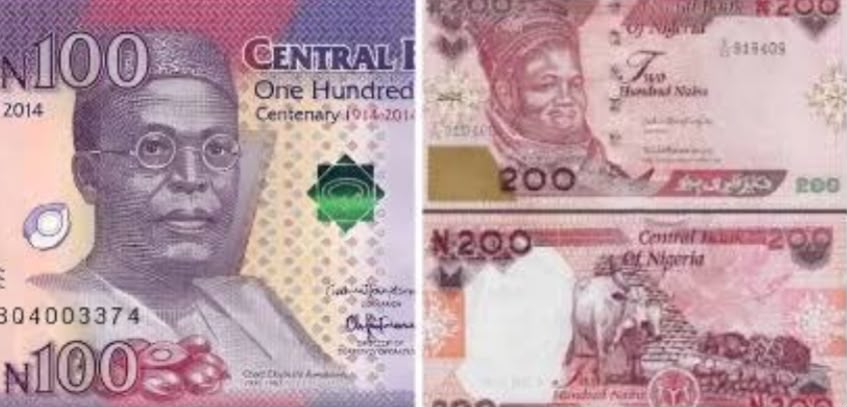
The Governor of the Central Bank of Nigeria (CBN), Olayemi Cardoso, has attributed the scarcity of ₦100 and ₦200 notes to the increasing use of digital payment platforms and the declining purchasing power of lower-denomination currencies.
Speaking after the Monetary Policy Committee (MPC) meeting in Abuja, Cardoso clarified that the affected notes have not been withdrawn and remain valid for transactions.
“They remain legal tender. Unless the Central Bank states otherwise, Nigerians should assume that all existing denominations remain legal tender,” Cardoso said.
He explained that as more Nigerians embrace electronic payments, the demand for lower-value notes has reduced, making it unnecessary to print and circulate them in large quantities.
Cardoso also acknowledged that inflation and currency depreciation have weakened the purchasing power of smaller denominations, contributing to their reduced use.
“We must also acknowledge that currency devaluation has affected the purchasing power of lower-value notes,” he said.
On inflation, the CBN governor reaffirmed the bank’s commitment to achieving single-digit inflation, despite recent global economic shocks that have slowed progress.
He also maintained that the naira’s exchange rate should continue to be determined by market forces, rather than a fixed target, adding that the foreign exchange market is now more transparent and liquid.
According to Cardoso, daily foreign exchange turnover now exceeds $1 billion on some days, reflecting growing confidence in Nigeria’s forex market.