
The Central Bank of Nigeria (CBN) has decided to retain the country’s interest rates amid growing concerns over rising global tensions, inflation risks, and economic uncertainty.
The decision was announced after the Monetary Policy Committee (MPC) concluded its 305th meeting in Abuja on Wednesday.
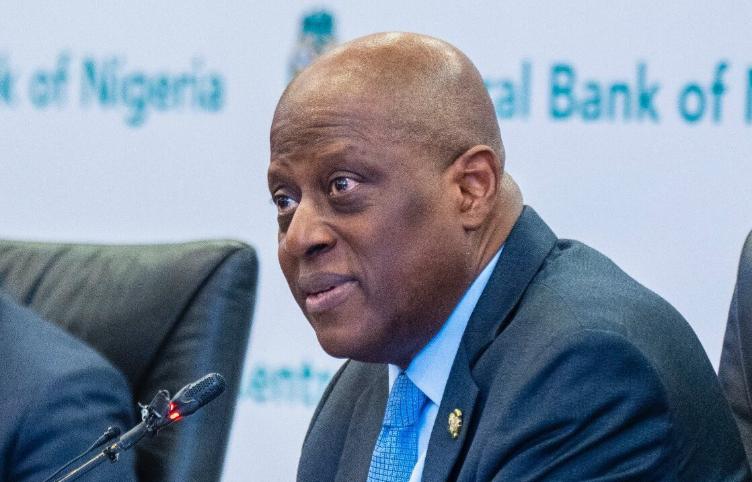
CBN Governor, Olayemi Cardoso, disclosed that the apex bank retained the Monetary Policy Rate (MPR) at 26.5 per cent while keeping other key monetary policies unchanged.
According to the CBN, the move became necessary due to rising inflation concerns, instability in global energy markets, and ongoing tensions in the Middle East that could affect Nigeria’s economy.
Although Nigeria had recorded several months of declining inflation earlier this year, recent figures showed inflation rising again for two consecutive months.
Headline inflation reportedly increased to 15.69 per cent in April 2026 from 15.38 per cent in March, while food inflation also climbed sharply.
Cardoso explained that the recent inflation spike was largely caused by external factors rather than domestic economic failures.
“We believe what we are seeing now resulted mainly from external shocks,” the CBN governor said.
The apex bank also expressed concern that cutting interest rates too quickly could weaken the naira and worsen imported inflation.
According to Cardoso, maintaining exchange rate stability remains one of the CBN’s biggest priorities.
“It is key that our foreign exchange rate remains stable,” he stated.
The CBN noted that global oil supply disruptions linked to tensions in the Middle East and the Strait of Hormuz crisis continue to threaten international markets.
Experts say higher global oil prices may increase Nigeria’s export earnings but could also raise transportation, fuel, shipping, and food costs locally.
Despite the risks, the apex bank insisted that reforms already introduced have helped strengthen Nigeria’s economic buffers and reduce pressure on the economy.
Cardoso also dismissed claims that the CBN was excessively defending the naira through heavy market intervention.
According to him, foreign exchange market liquidity has improved significantly, with daily market turnover increasing sharply compared to previous years.
The CBN further revealed that Nigeria’s external reserves rose to about $49.49 billion as of May 15, 2026.
Meanwhile, analysts say the decision to maintain high interest rates presents a difficult balancing act for the government and businesses.
While higher rates may help control inflation and stabilise the naira, they also increase borrowing costs for businesses and households.
Many small businesses and manufacturers continue to struggle with expensive loans, rising operating costs, insecurity, and weak consumer spending.
Although Nigeria recorded stronger GDP growth figures recently, economic experts warn that prolonged high borrowing costs could slow investments and job creation.
The CBN, however, maintained that inflation control and exchange rate stability remain necessary to protect the economy from further shocks.
Analysts also believe future interest rate decisions may depend heavily on global oil prices, inflation trends, exchange rate stability, and the overall performance of the Nigerian economy in the coming months.
The latest decision has already sparked conversations among businesses, investors, and financial experts monitoring Nigeria’s economic direction.
Source: Central Bank of Nigeria MPC meeting and economic analysis reports.