Nigerians hoping to study in the United Kingdom are facing growing uncertainty as several British universities withdraw admission offers to international students amid a sharp increase in student visa refusals.
The development comes as UK universities worry that rising rejection rates could put their licences to recruit international students at risk under stricter immigration rules.
An analysis of Home Office data by the Financial Times showed that 22.7 per cent of study visa applications from Nigerians were withdrawn in the first half of 2026, compared with just 4.5 per cent during the same period in 2025.
The situation has also affected applicants from other countries, particularly Pakistan and Bangladesh, raising concerns about the future of international student recruitment in Britain.
Nigerian Student Visa Withdrawals Rise Sharply
According to the report, the proportion of withdrawn study visa applications from Pakistani applicants increased from three per cent in the first half of 2025 to 40.9 per cent during the same period in 2026.
For applicants from Bangladesh, the rate rose from 7.1 per cent to 23.5 per cent.
Across all nationalities, withdrawn applications increased from 2.3 per cent in the first half of 2025 to 10.5 per cent in the corresponding period of 2026.
Universities attributed the trend largely to a doubling of student visa refusals during the first six months of the year.
Under the stricter rules, institutions risk losing their licences to recruit international students if more than five per cent of applicants who receive offers have their visa applications rejected.
As a result, some universities have reportedly begun withdrawing admission offers or reducing recruitment from countries where visa refusal rates are high.
UK Universities Take Action to Avoid Losing Recruitment Licences
The crackdown has forced universities to reconsider their international recruitment strategies.
About 15 British universities are believed to have suspended recruitment from Pakistan this year, while data from visa-processing company Enroly suggests that refusal rates at almost half of universities exceed the five per cent threshold.
Sir David Bell, vice-chancellor of the University of Sunderland, said the unexpected increase in visa refusals had prompted some institutions to take preventive action.
“The recent and unexpected spike in visa refusals has prompted pre-emptive action in several universities,” Bell said.
He explained that some universities had reduced their recruitment activities in international markets where authorities were taking a tougher approach to student visa applications.
Jamie Arrowsmith, director of Universities UK International, also raised concerns about the process, saying visa decisions had become less predictable.
“Many refusals appear to rest on flawed, inconsistent and highly subjective reasoning, forcing universities to withdraw offers at scale to avoid breaching compliance thresholds,” Arrowsmith said.
Universities Warn of Job Losses and Course Closures
The growing restrictions have raised concerns about the financial stability of British universities, many of which depend on international students for a significant portion of their income.
Vanessa Wilson, chief executive of University Alliance, warned that the situation could lead to widespread restructuring across the higher education sector.
“This is going to result in restructures, which inevitably results in job losses, course closures, campus closures,” she said.
Universities have also questioned the reasoning behind some visa refusals, with officials arguing that certain decisions appear to be based on misunderstandings or inconsistent assessments.
Professor Steven McGuire, deputy vice-chancellor of the University of East Anglia, said his institution began withdrawing offers from applicants in certain countries late last year after experiencing a sharp rise in visa refusals.
“We were getting some very arbitrary and ill-informed refusals,” McGuire said.
He cited a case in which an applicant was reportedly rejected after an interviewer appeared not to understand that the university was located in Norwich.
McGuire warned that the situation could push universities to concentrate their international recruitment efforts on countries such as China and India, where visa refusal rates are lower.
He added that institutions were running out of options other than significantly reducing their operations.
Universities Say Student Visa Policy Is Damaging Their Reputation
Professor James Miller, vice-chancellor of the University of the West of Scotland, also criticised the visa refusal process, describing some decisions as “extremely spurious”.
According to Miller, the Home Office had not provided a convincing explanation for the increase in refusals beyond concerns about the number of international students claiming asylum.
He said some universities had already stopped recruiting from particular geographical areas to keep their refusal rates below the five per cent threshold.
Miller warned that several institutions could experience a decline of more than 20 per cent in overseas student numbers this year.
Without a change in policy, he said, job losses could become unavoidable.
“It’s harming the UK’s reputation, it’s contrary to other government policies and at an individual level it’s denying opportunity to people who want to advance their careers and their lives,” Miller said.
The situation could therefore affect not only universities and their employees but also international applicants who have invested time and money in pursuing educational opportunities abroad.
UK Government Defends Tougher Immigration Measures
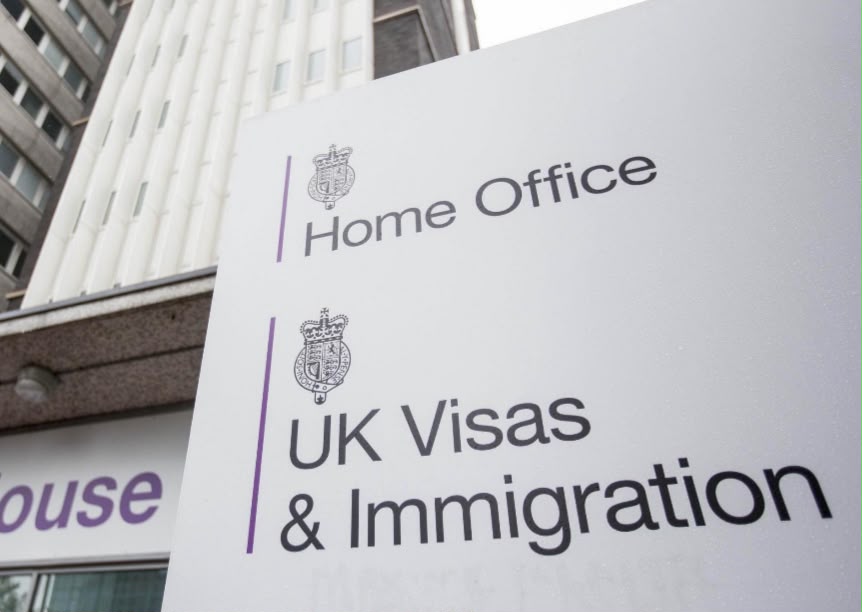
The UK Home Office defended its approach, maintaining that international students make a positive contribution to the country.
However, the department insisted that universities must recruit students responsibly and comply with immigration requirements.
In a statement, the Home Office said international students “make a positive contribution” to Britain but stressed that this must not come at the expense of protecting the integrity of the immigration system.
The department added that it was offering universities support where necessary to improve their recruitment practices.
What This Means for Nigerians Planning to Study in the UK
The latest developments highlight the challenges facing Nigerian students seeking admission to British universities.
With visa withdrawals increasing and institutions under pressure to maintain their refusal rates below the required threshold, some applicants could find their admission offers withdrawn before they have the opportunity to begin their studies.
The situation also raises questions about the future of international recruitment in the UK, particularly if universities continue to restrict applications from countries experiencing higher refusal rates.
For now, universities are balancing their desire to attract international students against the risk of losing their recruitment licences, while applicants face greater uncertainty over their educational plans.
Source: Financial Times