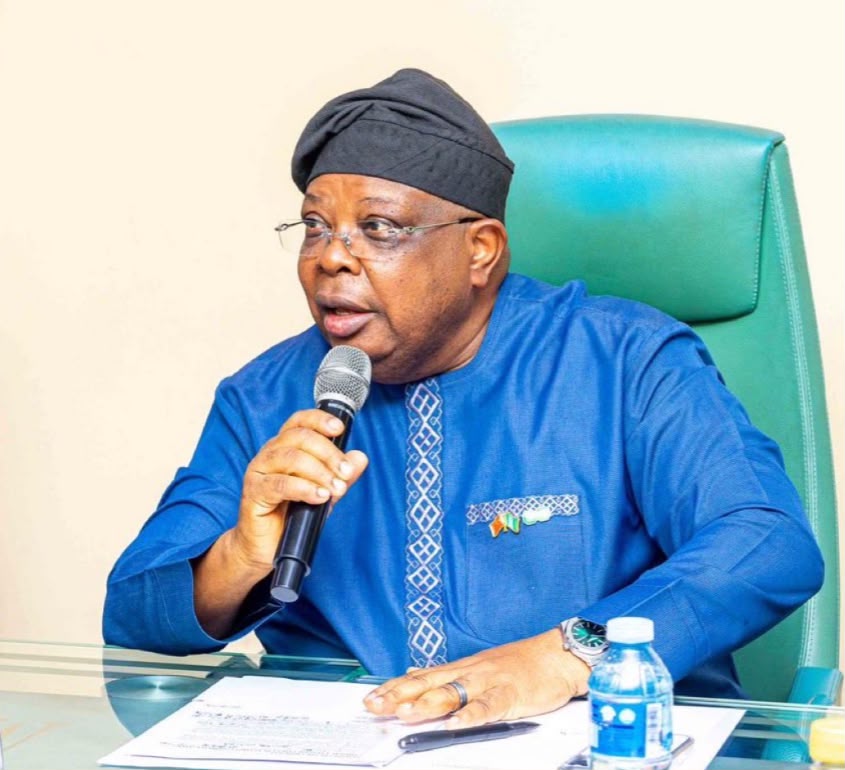
Nigeria must address its gas supply challenges and other weaknesses in the electricity sector to ensure existing power plants deliver reliable electricity to consumers, Minister of Power Joseph Tegbe has said.
The minister made the remarks on Friday at the 2026 Nigerian Association of Energy Correspondents (NAEC) energy conference in Lagos, where industry stakeholders discussed ways to improve investment and performance across the energy sector.
The conference, organised by the Association of Energy Correspondents of Nigeria, was held under the theme, “Access to Assets: Empowering Players and Driving Growth.”
Tegbe argued that increasing electricity generation capacity alone would not solve Nigeria’s power problems without improvements in gas supply, transmission, distribution and payment systems.
According to him, expanding generation without addressing these challenges could leave investors with substantial capital tied up in assets that fail to improve electricity supply.
“The value of an energy asset is fully realised only when it delivers useful energy to a paying customer,” he said.
Tegbe Identifies Key Investment Opportunities in Power Sector
Represented by Clement Ezeorah, the ministry’s acting director of press, Tegbe urged investors to focus on improving existing power infrastructure rather than concentrating only on building new facilities.
He identified four major investment opportunities that could help improve electricity delivery across the country.
These include restoring the output of existing power plants, providing reliable electricity to industrial clusters, upgrading distribution infrastructure and expanding decentralised energy systems to support productive activities.
The minister also called on gas producers to collaborate with power developers and industrial consumers to establish integrated gas-to-power projects.
He explained that improving electricity reliability could stimulate economic activities across manufacturing, logistics and service industries.
Tegbe added that the government would pursue partnerships built around clearly defined responsibilities, realistic project milestones and measurable service outcomes.
FG Moves to Improve Accountability Across Electricity Value Chain
During a panel discussion at the conference, the minister explained that the government was working to strengthen accountability across Nigeria’s electricity market.
He said the approach involved monitoring gas deliveries to power plants, electricity transmission and distribution, as well as payments throughout the market.
According to Tegbe, improving oversight across these areas would help reduce aggregate technical, commercial and collection losses that continue to affect the sector.
These losses include electricity lost through technical inefficiencies, commercial irregularities and difficulties collecting payments from customers.
The minister maintained that addressing these problems was necessary to improve the financial sustainability of electricity distribution companies and strengthen service delivery.
About 350,000 Electricity Meters Deployed in Three Months
Tegbe also disclosed that approximately 350,000 electricity meters had been deployed over the preceding three months.
He said the installation of meters would enable more consumers to pay for electricity based on their actual consumption rather than relying on estimated billing.
Despite the progress, the minister acknowledged that poor collection efficiency and liquidity challenges remained major problems for electricity distribution companies.
He further noted that some outstanding debts in the sector dated back to the 2013 privatisation of Nigeria’s power industry.
According to him, the government was working to address these legacy liabilities, which continue to affect the financial position of market participants.
FG Introduces Performance Dashboard to Track Electricity Services
The minister revealed that a performance dashboard was being introduced to help stakeholders assess service delivery across the electricity sector.
The proposed system is expected to provide a clearer picture of performance and help identify areas requiring improvement.
Tegbe also stressed that embedded and decentralised power generation should complement the national electricity grid rather than replace it as demand for electricity continues to increase.
He said expanding alternative power solutions alongside improvements to the national grid could help meet the needs of households, businesses and industries.
Vandalism Slows Electricity Infrastructure Expansion
Tegbe identified vandalism as another major challenge affecting the development of electricity infrastructure in Nigeria.
He explained that resources that could otherwise be used to expand transmission lines and improve the network were being diverted to repair or replace damaged equipment.
The minister said the government was pursuing public awareness campaigns to encourage communities to protect electricity infrastructure.
He emphasised that safeguarding existing facilities was essential to ensuring that investments in the power sector translated into improved electricity supply.
As the government continues its efforts to reform the electricity market, Tegbe maintained that fixing gas supply, strengthening infrastructure, improving payment systems and promoting accountability would be crucial to getting more value from Nigeria’s existing power assets.