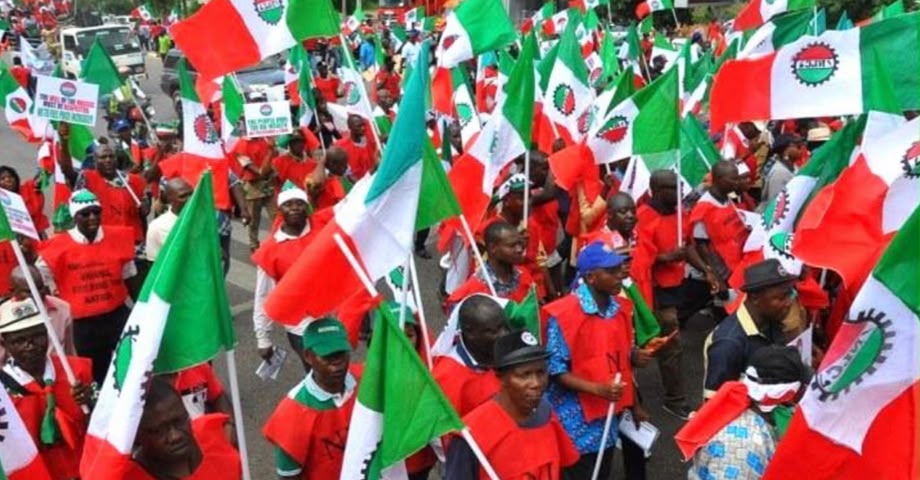
Public servants across Nigeria’s federal, state and local government services have begun a three-day warning strike over worsening economic hardship and the failure of the government to address demands from workers’ unions.
The Joint National Public Service Negotiating Council (JNPSNC) directed workers across the three tiers of government, including employees of ministries, departments and agencies, to participate in the industrial action from midnight on Friday, October 2, until Sunday, October 4, 2026.
The council said the decision followed the Federal Government’s failure to respond to demands contained in a September 21 letter sent to President Bola Tinubu.
The JNPSNC comprises the Nigerian Civil Service Union, Medical and Health Workers Union, Association of Senior Civil Servants of Nigeria, National Association of Nigerian Nurses and Midwives, Amalgamated Union of Public Corporations, Civil Service Technical and Recreational Employees, Nigeria Union of Public Service, Reportorial, Secretarial, Data Processors and Allied Workers, National Union of Printing, Publishing and Paper Products Workers, and National Union of Agriculture and Allied Employees.
In a circular dated October 1 and signed by the council’s National Secretary, Olowoyo Gbenga, union leaders were instructed to ensure full compliance with the strike.
“Consequent upon the above, the strike shall start with effect from midnight of Friday 2nd October, 2026 to Sunday October 4th, 2026,” the circular stated.
The council said workers were being mobilised because the economic and mental pressures affecting employees, their dependants and vulnerable Nigerians had become increasingly difficult to bear.
“The economic and mental hardships are becoming unbearable and frustrating,” it said.
The strike followed an earlier ultimatum issued by the council, which gave the government until September 30 to address key demands before workers would embark on the industrial action.
Among the major demands is a reduction of the pump price of petrol to N500 per litre. The council also called for an immediate wage award to cushion the impact of rising living costs.
It further demanded the immediate establishment of a tripartite committee to begin negotiations for a new national minimum wage ahead of 2027, with workers previously calling for a minimum wage of not less than N500,000.
The JNPSNC said the petrol price reduction could be supported through an intervention fund to address landing costs and support oil and gas operators.
It also called on the government to ensure crude oil is supplied to the Dangote Refinery and modular refinery operators under appropriate terms to encourage greater domestic refining and help reduce the cost of petroleum products.
The council described current petrol prices, which it said range from about N1,450 to N2,000 per litre and can reach N2,500 in some locations, as unacceptable to workers.
The unions also argued that an immediate wage award would help workers cope with the economic pressures while maintaining their commitment and productivity in the public service.
On the proposed minimum wage negotiations, the council said establishing the tripartite committee early would prevent administrative delays that could affect the implementation of a new wage structure in 2027.
The workers had expected President Tinubu to address their demands during his Independence Day broadcast on October 1, but the council said the speech did not provide the specific relief measures it was seeking.
One JNPSNC leader said the unions were “deeply disappointed” that the President’s address did not announce a reduction in petrol prices or concrete measures to ease the hardship facing workers and other Nigerians.
The leader said the council would therefore proceed with the warning strike as planned.
The Nigeria Labour Congress (NLC) has also expressed support for measures aimed at addressing the economic difficulties facing workers.
In its Independence Day message, NLC President Joe Ajaero pointed to rising petrol prices, inflation, unemployment, stagnant wages and insecurity as factors putting additional pressure on Nigerian households.
The labour centre said the real value of workers’ salaries had been weakened by inflation, while higher transportation costs had contributed to increases in food prices, school fees, rent and other essential expenses.
The NLC said petrol was selling for around N1,430 per litre or higher in major cities, with prices even higher in some remote areas.
It also questioned the impact of the savings from the 2023 petrol subsidy removal and called for greater attention to domestic refining to reduce dependence on imported petroleum products.
“Our demands are clear, just, and cannot be delayed any further. First, we demand that government seek ways to immediately reduce the price of petrol as transportation costs are the central transmission mechanism of inflation in Nigeria,” the NLC said.
The congress also demanded an immediate nationwide wage award for federal, state and local government workers, describing it as an emergency measure to cushion the erosion of purchasing power.
It called for the implementation of tax relief measures it said were agreed during the October 2023 government-labour dialogue, as well as negotiations for a new national minimum wage ahead of 2027.
The NLC further demanded a reduction in the cost of governance and greater transparency in the management of public funds, while urging the government to create more economic opportunities for young Nigerians.
On insecurity, the labour organisation said violence was worsening economic conditions and putting farmers, teachers and healthcare workers at risk in some parts of the country. It cited nearly 2,000 deaths from violence in the first quarter of 2026, although it did not identify the source of that figure in its statement.
The NLC also warned political actors against manipulating elections, intimidating voters or exploiting ethnic and religious divisions ahead of the 2027 general elections.
It stressed that workers would make their political choices independently and assess parties and candidates based on their policies and records.
The three-day JNPSNC warning strike is scheduled to run from October 2 to October 4, with the council directing its affiliates and public servants nationwide to participate.