The Central Bank of Nigeria (CBN) says Nigeria’s net usable external reserves have risen significantly from $859 million recorded in the second quarter of 2023 to about $40 billion following a series of foreign exchange and financial-sector reforms.
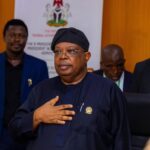
Muhammad Abdullahi, CBN Deputy Governor, Corporate Services, disclosed this at the 38th Seminar for Finance Correspondents and Business Editors in Abuja.
Abdullahi said the current CBN leadership inherited a difficult economic environment in 2023, including a fragmented foreign exchange market, weak external buffers, large outstanding foreign exchange obligations and declining capital inflows.
He explained that Nigeria had several foreign exchange windows operating alongside a large parallel market, making it difficult for businesses to determine the applicable exchange rate or predict when foreign currency would be available.
The gap between official and parallel-market rates averaged more than 60 percent in 2022 and exceeded 100 percent at certain periods, he said.
According to Abdullahi, the World Bank estimated that the implicit subsidy created by the exchange-rate arrangement cost Nigeria about three percent of its Gross Domestic Product in 2022.
He said the pressure on the foreign exchange market also affected the country’s external reserves.
“The pressure extended to our external reserves. The gross figure did not tell the whole story. After accounting for identified short-term obligations, the Bank’s data put net usable reserves at US$859 million in the second quarter of 2023,” Abdullahi said.
He added that outstanding foreign exchange forward claims had exceeded $7 billion at the time, creating further uncertainty for businesses and investors.
Abdullahi said weak capital inflows and uncertainty over access to foreign exchange made it difficult for businesses to price goods, plan investments and meet their financial obligations.
He explained that the problems were interconnected, with administrative allocation weakening price signals, excess liquidity increasing pressure on the foreign exchange market and uncertainty pushing more activity away from the formal market.
CBN Details FX Reforms
Abdullahi said the challenges prompted the apex bank to introduce a series of reforms aimed at improving the foreign exchange market and strengthening the wider financial system.
“The foreign exchange market needed clearer prices and more reliable trading arrangements, but those changes would be difficult to sustain without tighter control of liquidity. We also needed stronger banks capable of operating through the adjustment,” he said.
The first major step came in June 2023 when the CBN consolidated the existing foreign exchange windows and moved towards a willing-buyer, willing-seller framework.
The apex bank subsequently removed restrictions that had prevented 43 categories of imports from accessing the official foreign exchange market.
It also reviewed outstanding forward claims and settled those found to be valid, a move aimed at reducing uncertainty for businesses and investors.
CBN Tightens Bank Supervision
Also speaking at the seminar, Olubukola Akinwunmi, CBN Director of Banking Supervision, said the apex bank had strengthened its oversight of financial institutions to protect the stability of the banking system.
Akinwunmi said the CBN had intensified supervision to prevent weaknesses within individual banks from developing into problems capable of threatening financial stability and the ability of banks to support the economy.
He disclosed that Nigerian banks are restricted from investing more than 10 percent of their shareholders’ funds in offshore subsidiaries.
According to him, the rule existed before the current CBN administration but was not being enforced with sufficient diligence.
The renewed enforcement, he said, forms part of efforts to strengthen risk management and ensure that banks remain resilient while supporting economic activity.
The CBN has continued to link its foreign exchange and banking-sector reforms to efforts to improve market transparency, strengthen financial institutions and restore confidence in Nigeria’s financial system.