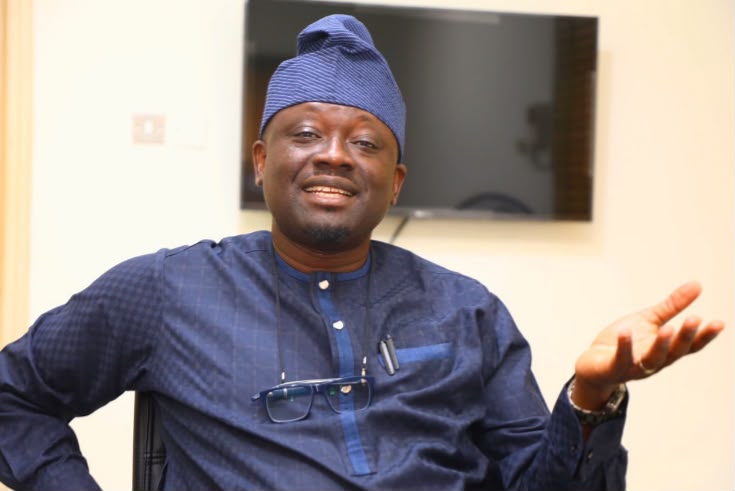
Corruption in Nigeria is not limited to politicians and public officials, according to Simon Kolawole, founder and CEO of Cable Media and Publishing Limited, who warned that professional enablers are helping wrongdoing gain the appearance of legality.
Kolawole made the remarks on Thursday at a public lecture held at the Body of Benchers’ Hall in Abuja to mark the 80th birthday of Kanu Agabi, a senior lawyer and former Attorney-General of the Federation.
Speaking on the theme, “Prioritising Ethical Conduct and Anti-Corruption Measures in Governance in Nigeria: The Role of Senior Lawyers,” Kolawole said the fight against corruption must go beyond arresting officials, recovering stolen assets, passing laws and establishing anti-graft agencies.
“These measures matter, but corruption rarely travels alone,” he said.
He argued that behind many cases of abuse of public power are professionals who help draft documents, construct legal defences, move funds, provide legal opinions, manipulate processes and frustrate accountability.
According to him, lawyers occupy an important position in this system and therefore have a major responsibility in preventing corruption.
He noted that lawyers can be involved in drafting questionable agreements, registering companies, hiding beneficial ownership, validating dubious transactions, obtaining injunctions or prolonging cases in ways that prevent accountability.
“We often speak as if the corrupt public official is a self-contained criminal enterprise. Usually, that is not so. Complex corruption requires complex assistance,” Kolawole said.
He also warned against allowing financial reward to become the main consideration guiding professional decisions.
“The danger begins when earning becomes the governing ethic; when the first question is not, ‘Is this right?’ or ‘Is this lawful?’ but ‘How much is the brief worth?’” he said.
Kolawole stressed that while lawyers deserve to be properly paid for their work, money should not replace professional conscience.
“Money is a legitimate reward for work. It is a disastrous substitute for conscience,” he said.
He identified election litigation, judgment debts, legal opinions, interpretation of court judgments and delay tactics as areas where lawyers’ professional choices can have significant consequences for public accountability.
On election cases, he said litigation had become extremely expensive and commercialised, with political parties assembling large teams of lawyers and turning election disputes into major legal markets.
He also warned lawyers against acting as channels for payments designed to influence judges or public officials.
“Whether described as logistics, facilitation or access, a bribe does not become respectable because it passes through learned hands,” he said.
Kolawole further criticised the practice of clients moving from one lawyer to another until they find an opinion that supports the decision they want to take.
He said legal professionals must also avoid deliberately distorting court judgments.
“Judgments can be complex, and lawyers may legitimately disagree about their implications. But there is a difference between interpretation and distortion,” he said.
According to him, selectively quoting parts of a judgment while ignoring court orders or the factual context can create confusion, worsen political disputes and undermine public confidence in the judiciary.
“Senior lawyers should be the calmest voices when judgments are controversial. They should explain, not manipulate,” he added.
The columnist also cautioned against the use of interlocutory applications, repeated appeals, adjournments and technical objections to prevent cases from being decided on their merits.
He said prolonged delays could weaken accountability because evidence may deteriorate, witnesses may disappear and public attention may shift.
“Justice postponed long enough may become accountability defeated,” Kolawole said.
He described the various practices as symptoms of a culture in which professional influence is converted into personal gain.
“What connects these examples is a creed: everything has a price,” he said.
“Under this creed, access has a price, opinions have a price, adjournments have a price, silence has a price, and sometimes even conscience has a price.”
Kolawole said such a culture ultimately amounts to the privatisation of justice.
“The language may remain polished, the chambers impressive and the invoice properly typed, but the underlying transaction is the privatisation of justice,” he said.
He called for stronger professional discipline, greater transparency in government legal fees, independent scrutiny of major claims against government and safeguards against improper influence on judges.
Kolawole also urged lawyers to resist powerful clients whenever their demands could undermine the justice system.
In his conclusion, he said Nigeria already had laws designed to fight corruption but needed stronger commitment to obeying them.
“Nigeria does not lack laws against corruption. We lack consistent obedience to the spirit and purpose of law,” he said.
He added that the country has talented lawyers but needs more professionals willing to combine their expertise with courage.
Kolawole said the fight against corruption should begin before cases reach the courtroom — in law offices, government departments, corporate boardrooms and political meetings where questionable decisions are first conceived.
He urged lawyers to be willing to tell powerful clients when they would not participate in actions capable of damaging the justice system.
“Let us recover the understanding that law is a public trust, not merely a private business,” Kolawole said.