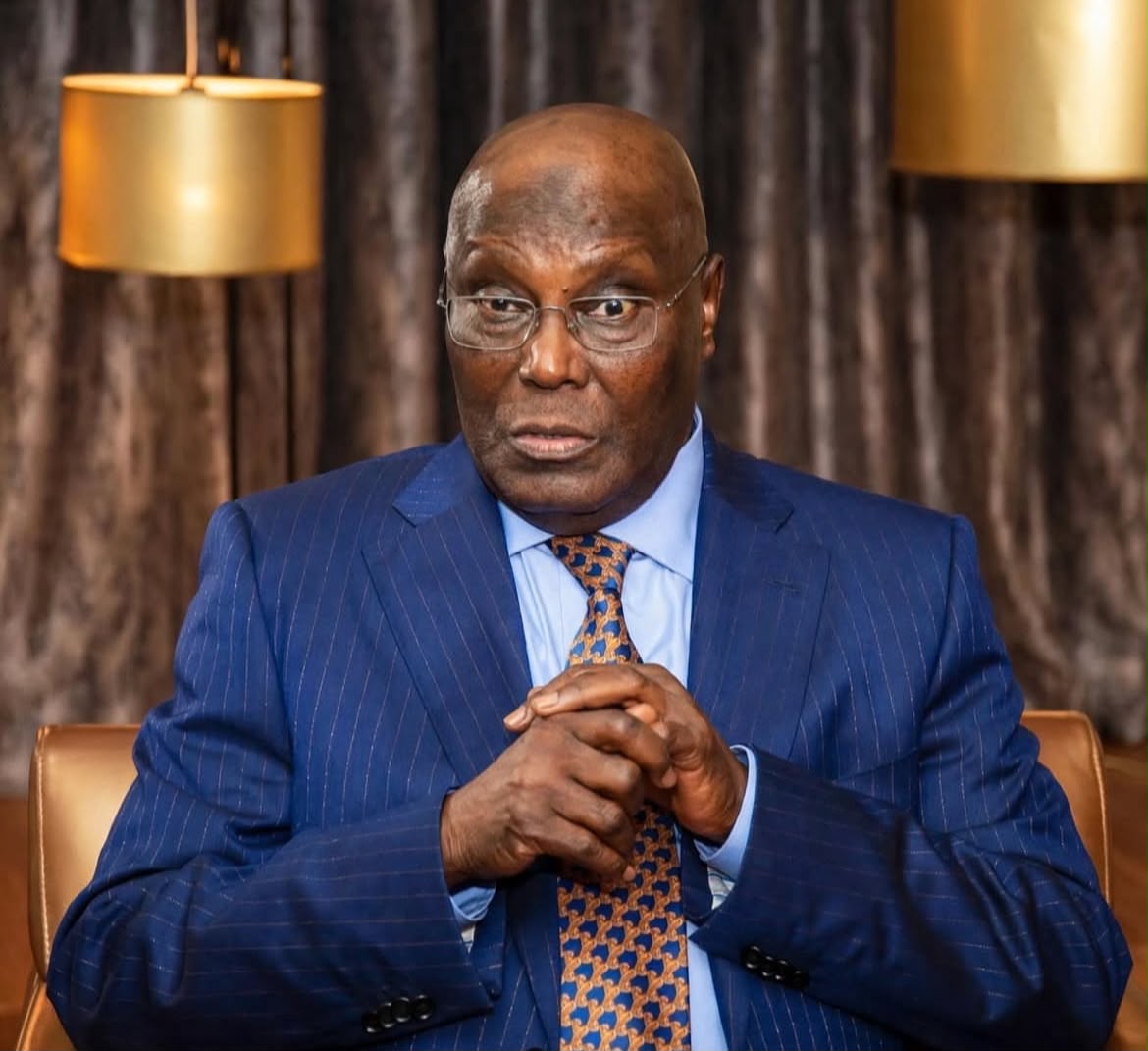
Former Vice President Atiku Abubakar has criticised the Bola Tinubu administration over what he described as an illusion of economic prosperity created by highlighting rising naira-denominated revenues while Nigerians continue to face currency depreciation, inflation, weaker purchasing power and increasing public debt.
Atiku, in a statement issued on Wednesday by his Senior Special Assistant on Public Communication, Phrank Shaibu, argued that the growing figures from the Federal Account Allocation Committee (FAAC) do not automatically indicate that Nigeria’s economy has become more valuable or that citizens are enjoying better living conditions.
He said the increase in monthly allocations should be considered alongside the declining value of the naira and the rising prices of goods and services.
“The arithmetic is brutal,” Atiku said, comparing FAAC distributions in 2019 with those recorded in 2025.
He claimed that FAAC distributions were about ₦7.85 trillion in 2019, equivalent to roughly $25.6 billion at the prevailing exchange rate. By 2025, he said the naira figure had climbed to approximately ₦21.9 trillion but translated to only about $14.6 billion in dollar terms.
Atiku argued that while the nominal naira allocation had nearly tripled, its dollar value had dropped by more than 40 per cent.
“That is not an economic miracle. That is money illusion,” he said. “You cannot batter the currency, allow inflation to ravage purchasing power and then wave bigger naira figures before Nigerians as evidence that the country has become richer.”
He said a similar decline could be seen in workers’ earnings, pointing to changes in the value of the minimum wage.
According to Atiku, the ₦30,000 minimum wage introduced in 2019 was worth about $83 at the time. By May 2023, he said its dollar equivalent had dropped to roughly $65, while the current ₦70,000 minimum wage, based on an exchange rate of about ₦1,320 to the dollar, was worth around $53.
The former vice president said the figures demonstrated what he called the administration’s “money illusion”, where nominal income rises but the actual purchasing power of that income falls.
“The figure in your hand is bigger, but the value in your pocket is smaller,” he said.
He noted that workers could receive higher amounts in naira and still find it increasingly difficult to pay for essentials, including food, transportation, electricity, medicine and housing.
Atiku also questioned why state governments continued to accumulate significant debts despite what he described as unprecedented FAAC receipts.
He referred to a September 2026 report based on Debt Management Office data, claiming that 12 states whose governors are nearing the end of their tenures have a combined debt burden of approximately ₦5.3 trillion. The figure, he said, comprises about ₦2.16 trillion in domestic debt and $2.33 billion in foreign obligations.
The former vice president said the situation raised concerns about how the additional government revenue was being utilised.
“If the states are swimming in unprecedented revenues, why are they still drowning in debt?” he asked.
Atiku maintained that the success of increased revenue should be judged by what it delivers to citizens, including infrastructure, debt repayment and improved public services, rather than simply by the size of government allocations.
“Revenue is not an achievement merely because it enters a government account,” he said. “The achievement is what that revenue buys, what debts it settles, what infrastructure it delivers and how much better it makes the lives of the people.”
He also called for greater scrutiny of government spending, tax concessions, import waivers, revenue exemptions, duplicated projects, abandoned projects and other areas where public funds could potentially be wasted.
“You cannot defend concessions for the powerful, tolerate waste within government and then suddenly become an apostle of fiscal discipline when ordinary Nigerians ask for relief from unbearable living costs,” Atiku said.
According to him, Nigerians assess the state of the economy through their daily experiences rather than government revenue announcements and official figures.
“Nigerians do not eat FAAC figures. They do not pay school fees with percentages. They do not buy medicine with press conferences,” he said.
Atiku said the key issue for the government should be whether Nigerians are genuinely better off despite increases in government revenues and wages.
He argued that economic progress should be reflected in more affordable transportation, reduced pressure from food prices, manageable energy costs, stronger purchasing power and incomes that can adequately cover basic household expenses.
“This is the contrast at the heart of the economic debate: Tinubu made life expensive; Atiku will make life affordable again,” he said.
He concluded that unless the government could show that increased allocations had resulted in improved living standards, lower debt and stronger purchasing power, celebrating higher FAAC figures would remain, in his words, “more naira on paper, less value in reality.”
Source: Statement by Atiku Abubakar’s Senior Special Assistant on Public Communication, Phrank Shaibu