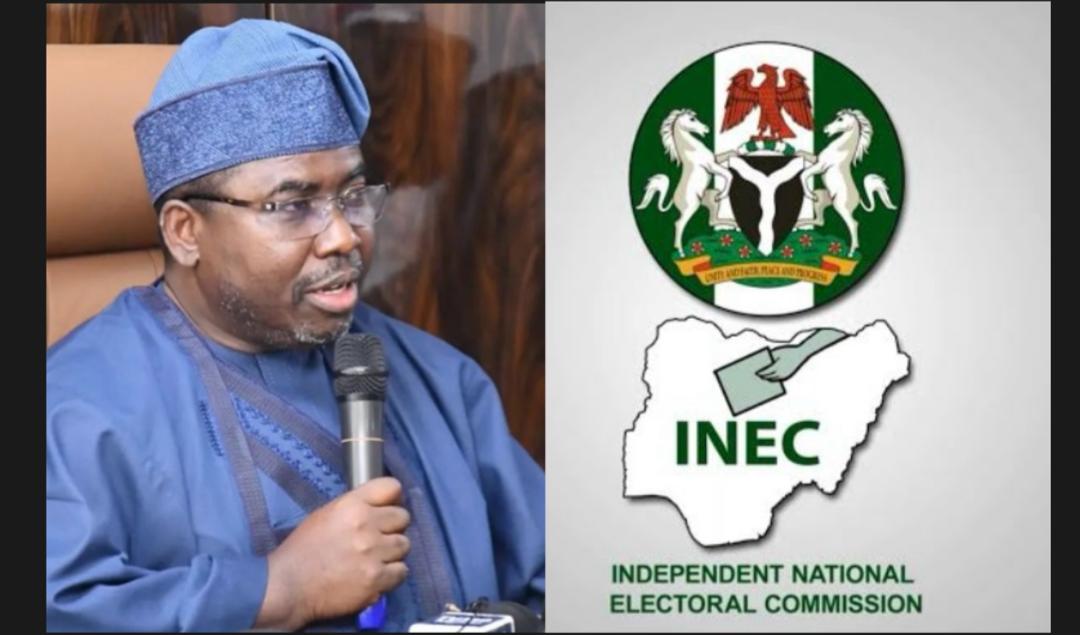
The Independent National Electoral Commission (INEC) has challenged the Nigeria Democratic Congress (NDC) to provide evidence supporting its allegation that unknown candidates were allegedly “smuggled” into the party’s list for some State House of Assembly constituencies in Anambra State ahead of the 2027 general elections.
INEC said any allegation involving its officials must be backed by credible evidence and details that can be independently verified.
The commission’s Chief Press Secretary and Media Adviser to the INEC Chairman, Dayo Oketola, made the position known in Abuja on Monday while responding to the allegations.
Oketola said INEC would examine the relevant records relating to the constituencies identified by the NDC but urged the party to provide evidence if it believed any commission official interfered with its candidate nomination process.
“If the party has evidence implicating any official of the Commission in any unauthorised interference with its candidate nomination process, it should make such evidence and the particulars of the officials concerned available to the Commission.”
He said the commission would not make speculative claims about an issue that could be objectively established through its electronic and documentary records.
INEC Says It Cannot Choose Candidates for Parties
Oketola clarified that INEC does not have the legal authority to nominate candidates on behalf of political parties or substitute candidates chosen by them.
According to him, the responsibility for nominating candidates rests with political parties, subject to the Constitution, the Electoral Act 2026 and other applicable regulations and guidelines.
“INEC does not nominate candidates for political parties.”
He stressed that the commission could neither select a preferred candidate for a political party nor replace a candidate validly nominated by a party in accordance with the law.
The INEC spokesman also explained that political parties submit candidates’ particulars through the commission’s candidate nomination portal using access credentials issued to them.
According to him, the electronic system automatically generates records and an audit trail showing the history and source of entries made on the portal.
He therefore described the NDC’s allegation that INEC officials obtained Form EC9 directly from aspirants and uploaded their details without the party’s authorisation as a serious claim that could nevertheless be verified through the commission’s records.
“Such an allegation is capable of objective verification from the Commission’s electronic and documentary records.”
Party Primaries Remain Responsibility of Parties
Oketola further distinguished between INEC’s responsibility to monitor political party primaries and the parties’ responsibility to nominate and submit candidates.
He said monitoring a party primary does not give INEC the authority to determine who should represent the party.
“The Commission’s monitoring of a political party primary does not amount to nomination of a candidate by INEC.”
He added that disputes concerning who legitimately emerged from a party primary, including matters arising from appeals, must be addressed within the framework provided by the Electoral Act 2026.
The commission, he maintained, has no interest in which candidates political parties choose to field.
Its responsibility, he said, is to administer the electoral process impartially and in accordance with the Constitution, Electoral Act and applicable regulations.
INEC Promises Investigation of Credible Allegations
Oketola also said political parties have a responsibility to ensure that their nomination processes, internal appeals and use of the INEC nomination portal comply with the law and prescribed timelines.
He assured that any credible allegation of misconduct involving an INEC official would be investigated.
The commission, he reiterated, would not nominate candidates for political parties or support the imposition of candidates on any party.