
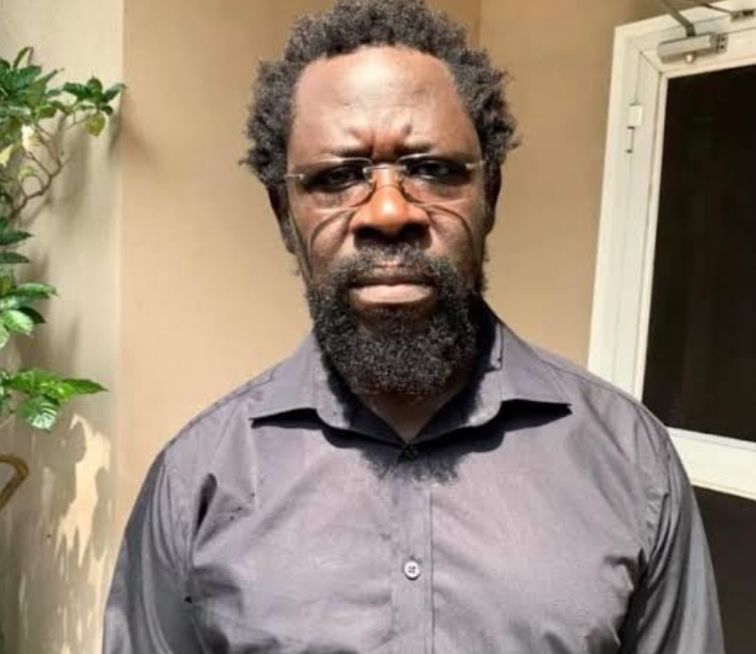
Human rights lawyer and activist Dele Farotimi has warned that more social media activists similar to Martins Otse, popularly known as VeryDarkMan (VDM), will emerge if Nigeria fails to address weaknesses in its justice system.
Farotimi made the remarks in a video shared on YouTube on Saturday while commenting on the controversy surrounding VDM’s invitation to the Nigerian Bar Association’s 66th Annual General Conference in Port Harcourt.
According to Farotimi, the growing influence of VDM reflects the failure of Nigeria’s judicial and law-enforcement institutions to effectively provide justice for citizens.
He argued that in a society with a functional police force, courts and institutions governed by the rule of law, there would be little need for individuals like VDM to assume alternative roles in seeking justice.
“A society that has law and order, that is ruled by law, that has a functional police system, a functional court system, would not even tolerate the presence or existence of a VDM.”
Farotimi described VDM as a reflection of the weaknesses within Nigeria’s justice system, saying attempts to silence or attack the activist would not solve the underlying problems that contributed to his popularity.
“VDM is merely the image in your mirror. The society you have built requires VDM to find justice.”
He also rejected the long-standing description of the judiciary as the “last hope of the common man,” arguing that the situation in Nigeria has changed.
According to him, VDM has increasingly become a source of hope for people who believe they cannot obtain justice through conventional institutions.
“They say the judiciary is the last hope of the common man. Nah, lie. VDM has become the last hope of the common man in the society that you built.”
Farotimi warned that the emergence of similar personalities could become more widespread if institutional failures and public dissatisfaction with the justice system are not addressed.
He said the country could eventually see several figures taking on roles similar to VDM, particularly if citizens continue to believe that formal institutions cannot provide justice.
“Very soon there will be multiplicities of VDM in the society that you have built.”
The lawyer issued an even stronger warning, saying continued institutional failure could lead some future activists to resort to violence in an attempt to enforce their own version of justice.
“The ones who will come after, some of them will come behind him and they will carry guns to enforce their laws.”
Farotimi therefore urged Nigerians and government institutions to focus on fixing the justice system rather than concentrating solely on VDM’s conduct or public statements.
He argued that the controversy surrounding the activist should serve as an opportunity to examine why increasing numbers of Nigerians are turning to social media personalities when seeking redress.
According to Farotimi, the situation was the result of years of institutional failures rather than something that happened suddenly.
“It didn’t happen overnight. It didn’t happen by accident. We didn’t stumble into this. We allowed it.”
He also argued that where truth becomes treated as an offence, it is a sign that the rule of law is not functioning properly.
Farotimi further criticised those who attacked VDM over his participation at the NBA conference, saying the controversy should lead to a broader discussion about the state of Nigeria’s justice institutions.
VDM-NBA Controversy
The comments followed criticism surrounding VDM’s participation in a panel discussion on insecurity at the NBA’s 66th Annual General Conference in Port Harcourt.
VDM had defended his presence at the conference, saying he attended to speak on behalf of poor Nigerians and people without a voice.
He subsequently criticised the legal profession, arguing that law was no longer as noble a profession as it was traditionally regarded.
The activist also questioned the economic prospects of Nigerian lawyers, describing law as one of the country’s “broke” professions and questioning how many lawyers could secure meaningful employment.
Farotimi maintained that addressing the underlying problems in Nigeria’s justice system would require institutional reform and collective action, rather than attempts to silence individual personalities.