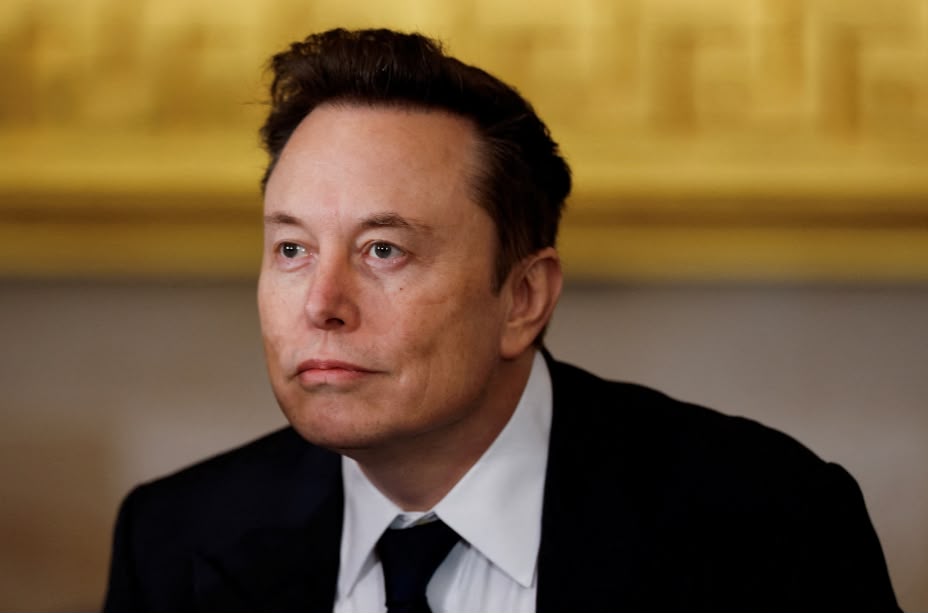
Elon Musk’s political connections and his companies’ exposure to China could create major challenges for a potential merger between SpaceX and Tesla, despite expectations that the deal would face limited regulatory resistance in the United States.
Musk reignited speculation about the proposed combination this week, describing it as “a good idea” and confirming that committees at both companies were examining the possibility.
If completed, the merger could create a company valued at approximately $3.5 trillion, potentially making it the largest corporate merger in history.
However, combining SpaceX, a major US aerospace and defence contractor, with Tesla, whose manufacturing operations are heavily linked to China, could trigger national security concerns in Washington and Beijing.
Analysts believe these political tensions may not necessarily prevent the deal from going ahead, but they could expose the combined company to prolonged scrutiny and disputes on both sides of the Pacific.
Democrats Raise National Security Concerns
The potential merger has already attracted criticism from Democratic lawmakers, who are signalling that the transaction could become a political issue ahead of the November 3 US midterm elections.
US Senator Cory Booker, a New Jersey Democrat serving on the Senate Judiciary and Foreign Relations committees, warned that the deal could raise serious competition and national security questions.
“If Elon Musk moves forward with the merger of Tesla and SpaceX, the deal would carry real risks that antitrust enforcers across the world would scrutinize,” Booker said.
He also indicated that he was prepared to investigate the transaction, arguing that Musk’s control over important infrastructure used by governments and militaries made his business decisions a matter of national security.
Analysts say Musk could attempt to reduce these concerns by keeping the companies’ operations and technologies partially separate rather than fully integrating them.
However, the longer-term political risk could be greater if a future US administration takes a tougher position on the relationship between Tesla and SpaceX.
Derek Scissors, a senior fellow at the American Enterprise Institute, said a merger could include commitments limiting the connections between the two businesses.
While he does not expect the Trump administration to enforce such restrictions, he warned that a future administration could take a different approach.
“This may be the biggest risk to a deal – that it could get unwound in 2029,” Scissors said.
Tesla’s China Operations Could Become a Complication
China presents another potential challenge because Tesla operates a major manufacturing hub in Shanghai, while SpaceX has become closely involved in US defence and national security activities.
SpaceX’s work with the Pentagon and its Starlink satellite communications network, which has played a role in conflicts including Ukraine, could make the proposed merger particularly sensitive to Chinese authorities.
Alicia Garcia-Herrero, a senior research fellow at the Brussels-based Bruegel think tank, said the combination could make it more difficult for Beijing to view Tesla as an ordinary commercial business.
“A formal merger would make it harder for Chinese authorities to treat Tesla as a purely commercial actor, raising risks for future factory expansions, data approvals, or market access,” she said.
Tesla’s reliance on its Shanghai operations already gives Beijing considerable influence over Musk’s business interests in China.
Bringing Tesla and SpaceX under one corporate structure could extend those risks to a wider group that includes satellite communications, rocket launches and military-related technologies.
As a result, Chinese authorities could potentially use Tesla’s business interests in the country as leverage in future disagreements with Washington.
Global Regulators Could Scrutinise the Deal
Beyond the political concerns, a merger would likely face regulatory reviews across several countries.
Competition authorities would need to examine the potential impact on industries including automobiles, satellite communications, artificial intelligence and semiconductors.
In the United States, Musk’s relationship with President Donald Trump could help reduce concerns about regulatory obstacles, while some antitrust experts believe the companies’ operations in largely separate markets could limit traditional competition concerns.
However, regulators elsewhere may be less comfortable with the prospect of one company controlling technologies across several strategically important industries.
China and South Korea, which have significant domestic automotive and aerospace sectors, could examine whether combining Tesla and SpaceX would give the businesses an unfair advantage over local competitors.
Authorities may also consider whether access to SpaceX’s technology could create barriers for rival manufacturers.
Ioannis Kokkoris, a law professor at Queen Mary University of London, said regulators could require the combined company to license certain technologies to competitors as a condition of approval.
South Korean authorities may also conduct an extensive review if the merger proceeds.
Lee Hwang, a law professor at Korea University and former official of the Korea Fair Trade Commission, said the transaction would attract serious attention because South Korea considers both the automotive and aerospace industries strategically important.
“Korean antitrust officials will be wary of the merger. They will take the merger very seriously,” Hwang said.
Political Uncertainty Could Shape the Deal’s Future
Although the potential SpaceX-Tesla combination could create a corporate giant worth trillions of dollars, its prospects may depend as much on international politics as on conventional merger regulations.
The companies’ different roles in the global economy, Tesla’s dependence on Chinese manufacturing and SpaceX’s growing importance to US national security could expose the combined business to pressure from multiple governments.
Even if the transaction receives initial approval, changes in political leadership could bring renewed scrutiny and potentially threaten the long-term stability of the merger.