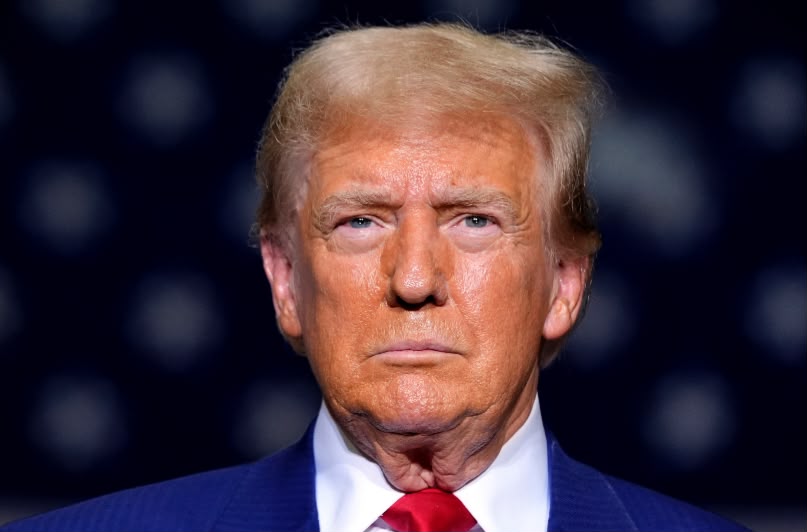
US President Donald Trump has suspended key sanctions and tariffs targeting Russia and countries buying its oil and gas, just days before the measures were due to take effect under a law he signed last month.
In an executive order released by the White House on Friday, Trump said the decision to waive the measures was in the national interest of the United States.
The law was designed to increase economic pressure on Moscow over its invasion of Ukraine, which began in 2022. However, Trump’s decision comes as he has shown a more conciliatory approach towards Russia while repeatedly criticising Ukrainian President Volodymyr Zelenskiy, even suggesting that Ukraine needs a new leader.
The legislation, known as the Lindsey O. Graham Sanctioning Russia and Iran Act of 2026, was signed by Trump in mid-September. It was primarily backed in Congress by the late Republican Senator Lindsey Graham of South Carolina.
Under the law, the US could have imposed tariffs of up to 100 per cent on goods imported from the five largest buyers of Russian crude oil or gas. The penalties could also have targeted countries that knowingly purchased Russian oil or gas 30 days after the law’s enactment, as well as countries among the top five helping Russia evade existing sanctions.
Trump’s order suspends the measures until he or senior administration officials determine that further action is appropriate.
“I have submitted to the Congress a certification that the issuance of such a waiver at this time is in the national interests of the United States,” Trump said in the order.
The decision could have significant implications for major buyers of Russian energy, including China and India, both of which have expressed concerns about the proposed sanctions.
Beijing has opposed what it describes as the use of legal authority beyond a country’s borders without a basis in international law. India has also warned that additional US tariffs could affect its relationship with Washington.
The legislation allows the president to waive the sanctions by notifying Congress that he considers the measures contrary to US national interests.
The timing of Trump’s decision has also raised economic concerns ahead of US midterm elections, in which Republicans are seeking to maintain their narrow control of both chambers of Congress. Analysts have warned that the sanctions could have pushed oil prices higher as Americans face increased energy costs linked largely to the US-Israeli war against Iran.
The waiver has drawn criticism from Democratic lawmakers. US Representative Don Beyer of Virginia accused Trump of giving in to Russian President Vladimir Putin and undermining support for Ukraine.
“Trump’s latest surrender to Putin again betrays our Ukrainian partners and defies clear congressional intent of legislation designed to punish Russia for its illegal war of aggression,” Beyer said.
Trump has also faced criticism from some US senators, including Republicans, over a recent diesel agreement involving Russia. Under that arrangement, Washington agreed to lift sanctions on certain Russian exports, while Moscow agreed to supply diesel to global markets in an effort to ease fuel prices. Critics argued that the deal could provide Russia with additional revenue to support its war effort.
Meanwhile, Kirill Dmitriev, Putin’s investment envoy, welcomed Trump’s latest decision, describing the waiver as “a truly historic moment” in a post on X. He argued that the legislation could otherwise have effectively halted economic cooperation between Russia and the United States.